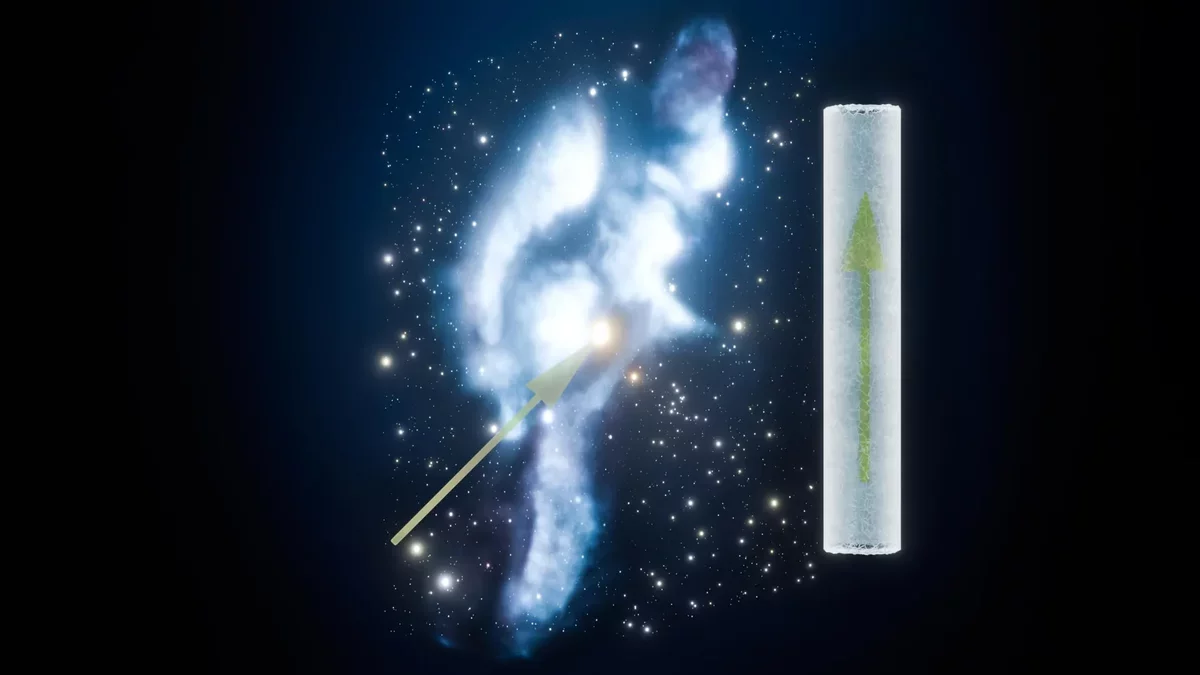
An international research team from the Helmholtz-Zentrum Dresden-Rossendorf (HZDR) has unveiled groundbreaking findings published in Physical Review Letters, indicating that Earth is traversing through remnants of ancient supernovae.
Discovery of Iron-60 in Antarctic Ice
Iron-60, a rare isotope formed within massive stars, is expelled into space during supernova explosions. While prior studies suggested that Earth encountered iron-60 from nearby supernovae millions of years ago, the source of recently discovered iron-60 in young Antarctic snow remained a mystery. "Our hypothesis was that the Local Interstellar Cloud harbors iron-60, which can accumulate over long periods. As the Solar System navigates through this cloud, Earth could gather this material," states Dr. Dominik Koll from HZDR's Institute of Ion Beam Physics and Materials Research.
To delve deeper, Koll and Prof. Anton Wallner analyzed additional geological samples, including deep-sea sediments up to 30,000 years old, which also contained iron-60. However, alternative explanations could not be entirely dismissed.
The latest Antarctic ice samples, aged between 40,000 and 80,000 years, strongly indicate that the Local Interstellar Cloud is the source of this radioactive material. "This discovery links the clouds surrounding our Solar System to a stellar explosion, offering us a unique opportunity to explore the origins of these clouds," remarks Koll.
Solar System's Passage Through an Interstellar Cloud
Researchers believe the Solar System entered the Local Interstellar Cloud tens of thousands of years ago and is projected to exit within the next few millennia. Currently, it resides near the cloud's outer edge. The study utilized an ice core from the Alfred Wegener Institute Helmholtz Centre for Polar and Marine Research (AWI) that corresponds to the period when the Solar System may have entered the cloud.
Comparing results from the ice core with previous measurements revealed that less iron-60 reached Earth during the 40,000 to 80,000-year timeframe than today. "This implies we were previously in a medium with lower iron-60 concentration or that the cloud itself exhibits significant density variations," explains Koll.
The research team observed substantial variations in the iron-60 signal over tens of thousands of years, which is rapid on cosmic timescales, helping to eliminate competing theories regarding the origin of the material.
Extraction and Detection of Iron-60
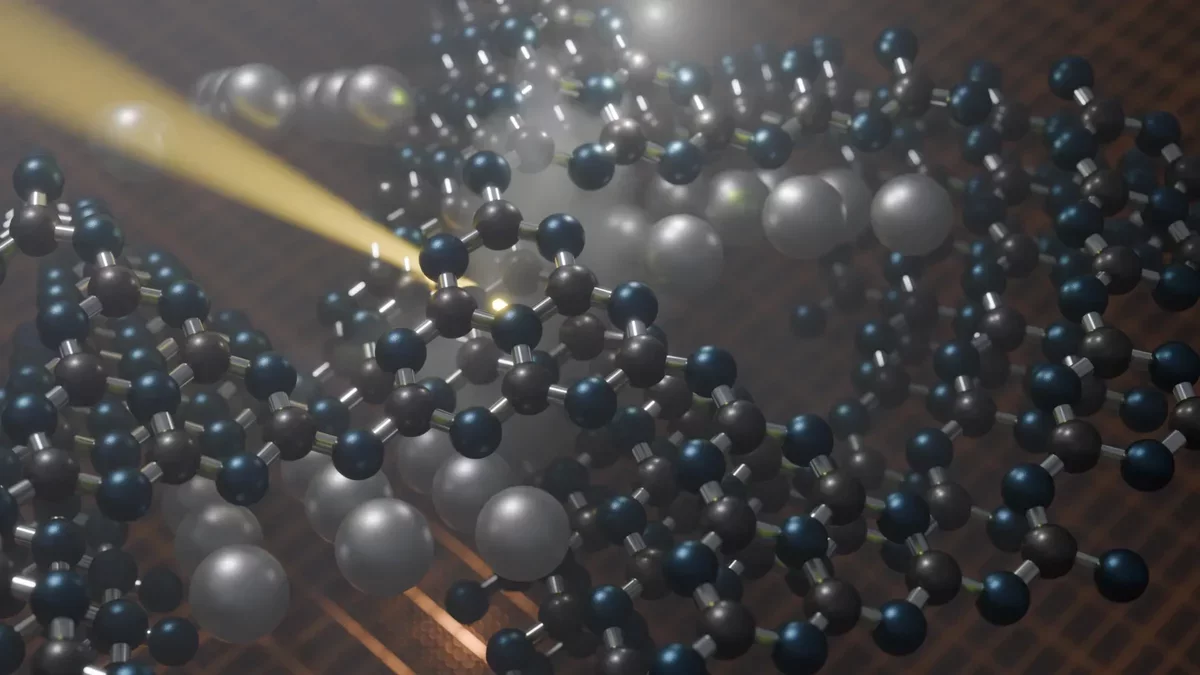
To conduct the study, approximately 300 kilograms of Antarctic ice were transported from AWI to Dresden for chemical processing, yielding only a few hundred milligrams of dust. The team meticulously isolated the iron-60, ensuring minimal loss during the process.
At the DREsden Accelerator Mass Spectrometry (DREAMS) laboratory, the samples underwent testing with additional isotopes, beryllium-10 and aluminium-26, confirming that no iron-60 was lost. The final measurements were conducted at the Heavy Ion Accelerator Facility (HIAF) at the Australian National University, the only facility capable of detecting such minuscule quantities of iron-60.
"It's akin to searching for a needle in 50,000 football stadiums filled with hay. The machine locates the needle within an hour," explains Annabel Rolofs from the University of Bonn.
Researchers are now eager to explore even older ice cores, aiming to recover samples from before the Solar System's entry into the Local Interstellar Cloud, as part of the Beyond EPICA - Oldest Ice project.