Recent findings from Uppsala University have shed light on the burial practices of a 5,500-year-old hunter-gatherer community located at Ajvide on Gotland Island. This study analyzed four shared graves, revealing intricate family connections among the individuals buried there.
Exploring the Ajvide Burial Ground
Ajvide stands out as one of Scandinavia's most significant archaeological sites from the Stone Age, renowned for its remarkably preserved graves and a wealth of artifacts. Approximately 5,500 years ago, hunter-gatherers thrived in this area, primarily engaging in seal hunting and fishing. While agriculture had begun to flourish in other parts of Europe, the inhabitants of Ajvide maintained their traditional lifestyle, remaining genetically distinct from surrounding farming communities.
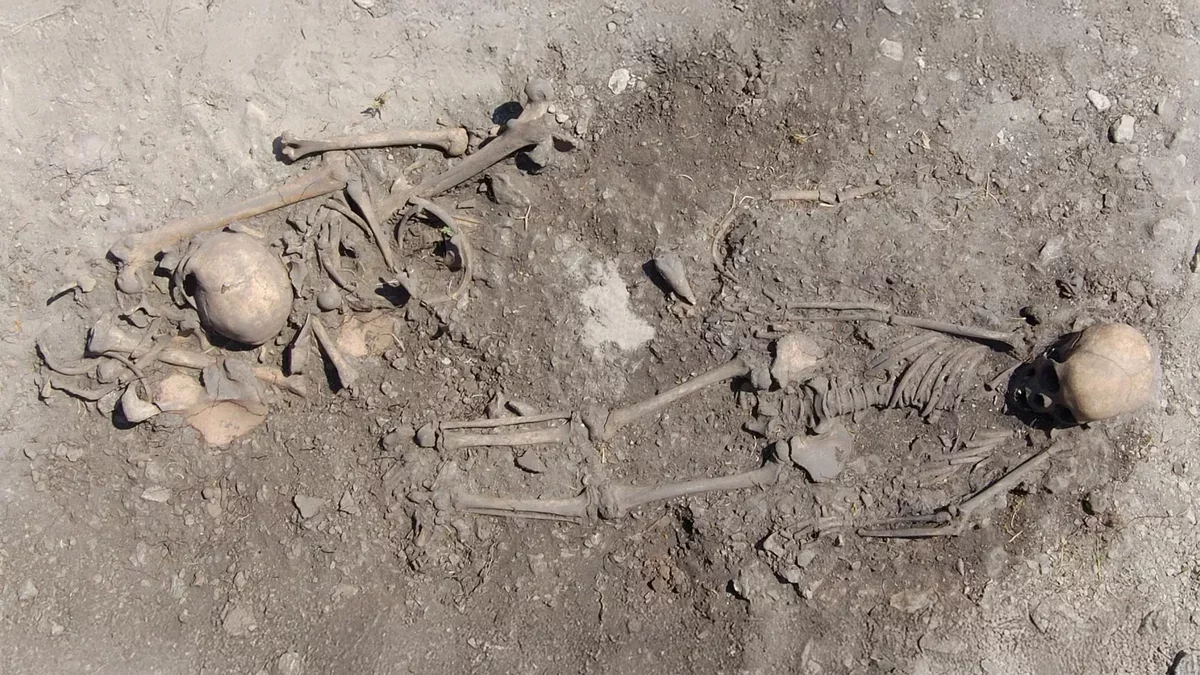
The burial site consists of 85 known graves, with eight containing multiple individuals. Researchers concentrated on four of these shared burials, extracting and analyzing DNA to uncover familial ties.
Surprisingly, the results indicated that many of those interred together were not immediate relatives, such as parents and children or siblings, but rather second- or third-degree relatives. This suggests a sophisticated understanding of family lineage and highlights the importance of extended family relationships in their society, according to archaeogeneticist Helena Malmström, who led the study.
Insights from Child Burials and Extended Kin
Most of the graves examined included at least one child. In one instance, a 20-year-old woman was found lying on her back, with a four-year-old boy on one side and a one-and-a-half-year-old girl on the other. Genetic testing revealed that the children were full siblings, but the woman was likely their aunt, not their mother.
Another grave contained a young girl buried alongside an adult man, whose remains were likely relocated from another site. Genetic analysis confirmed that the man was her father. A third grave revealed two children, indicating a probable cousin relationship. The fourth burial featured a girl and a young woman, also suggesting a third-degree kinship, such as great-aunt and niece or cousins.
Understanding Social Structures of the Stone Age
Well-preserved graves from hunter-gatherer societies are rare, making large-scale studies of familial relationships in these communities uncommon. Population geneticist Tiina Mattila noted the significance of these findings, as they provide valuable insights into social organization during the Stone Age.
This pioneering study marks the first attempt to explore family connections among Scandinavian Neolithic hunter-gatherers through archaeogenetic methods. Researchers aim to expand their investigation by analyzing over 70 additional individuals from the burial site to further understand social structures, life histories, and burial customs of these ancient communities.
Determining Kinship and Biological Sex
Scientists utilized DNA extracted from teeth and bones to ascertain biological sex and familial relationships. Since the sex of children cannot be reliably determined from skeletal remains alone, researchers examined chromosomes to identify gender. To establish relatedness, they measured shared DNA, with first-degree relatives sharing half their DNA, second-degree relatives one quarter, and third-degree relatives one eighth.