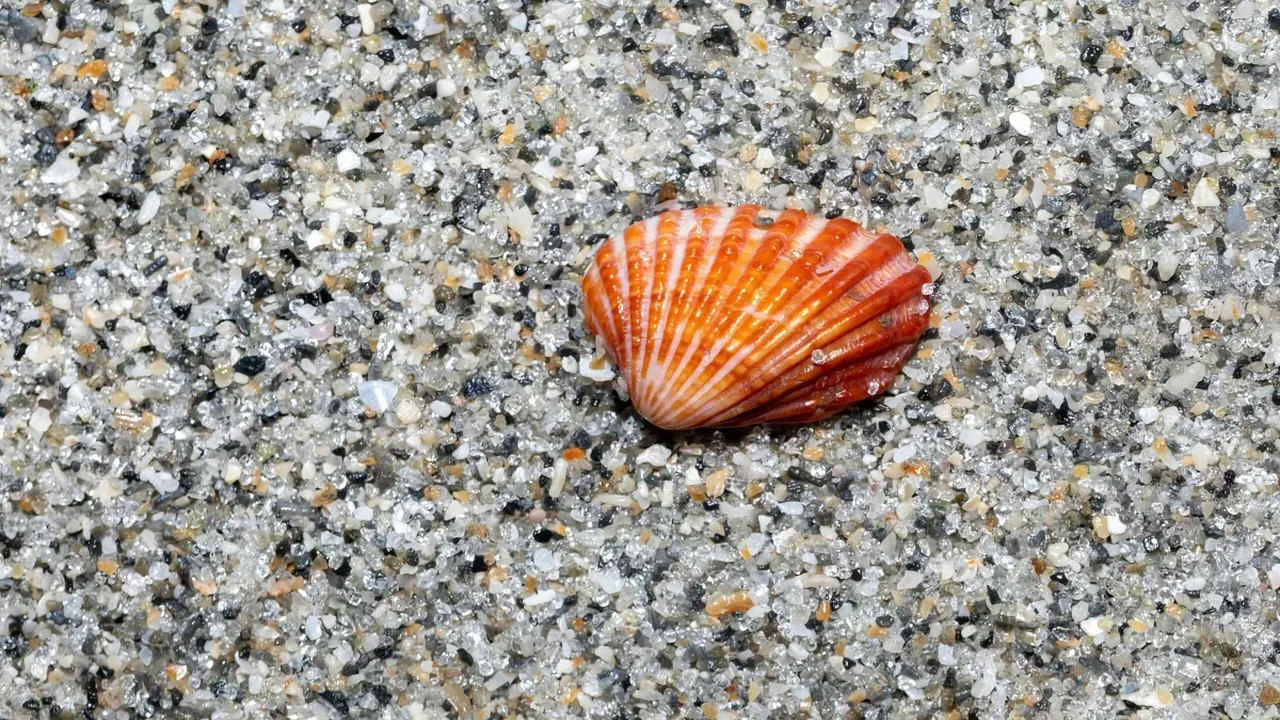
For generations, Indigenous communities on North America's Pacific coast have cared for clam beds by shaping shorelines and adding broken shells to beach sediments. A laboratory study suggests this practice may also give young clams a measure of protection as ocean waters become more acidic.
When carbon dioxide enters seawater, it changes the water's chemistry and reduces the carbonate available to shell-building animals. Clams face added challenges when the water held between sediment grains becomes acidic, particularly while their shells are still developing.
Testing shell-rich sediment
Researchers at the University of California, Davis raised juvenile Pacific littleneck clams for 90 days in four conditions, comparing ordinary and acidified seawater with either sand or a mixture containing crushed shells.
The shell fragments made the water within the sediment less acidic and improved conditions for forming aragonite, a mineral found in clam shells. In acidified conditions, young clams surrounded by crushed shells showed an average of 6.4% new shell growth, compared with 4.7% for those raised in sand alone.
The team also identified 284 genes whose activity varied across the experimental conditions. Clams exposed to acidified water without shell fragments showed a distinct gene-expression pattern; with crushed shells present, their profiles more closely resembled those of clams raised in ordinary seawater. The functions of many of these genes remain unclear.
A local refuge, not a broad fix
The findings offer a possible explanation for how shell-rich clam-garden sediments can benefit young shellfish. However, the experiment took place in a laboratory, and the effects may differ across beaches, species and environmental conditions. The approach is not a substitute for reducing the carbon emissions driving ocean acidification.
The researchers say any real-world use should be tested in coastal settings and shaped in partnership with Indigenous communities. Published in Biogeosciences, the study points to how long-standing stewardship knowledge and scientific research can inform efforts to create small, more supportive habitats for marine life. Such locally tailored practices may become an increasingly valuable part of coastal conservation.