In a remarkable discovery on the Caribbean island of Hispaniola, scientists have uncovered evidence of ancient bees nesting within fossilized bones. This intriguing event likely took place thousands of years ago, following a sequence of natural occurrences that provided a unique nesting environment.
Bees and Fossilized Remains
The story begins with an owl that transported a hutia, a type of rodent, back to its cave to feed its young. After consuming the meal, the owl left the remains scattered across the cave floor. Eventually, a bee arrived, searching for a nesting site among the remnants.
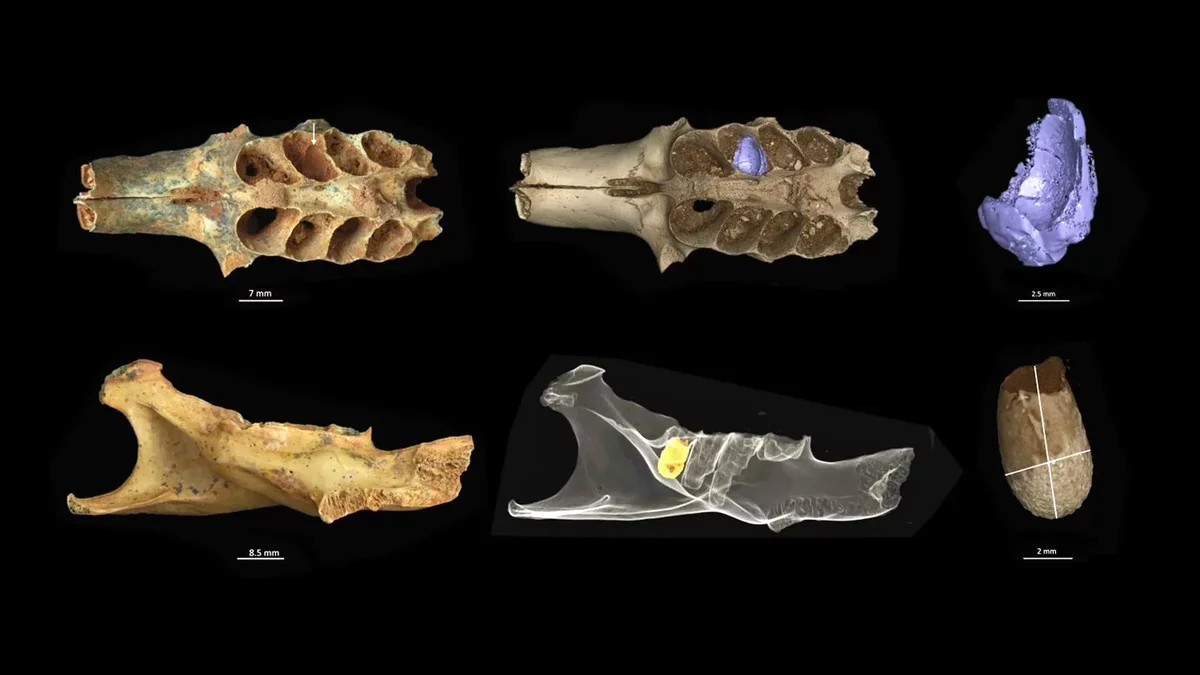
The bee began to dig into the fine clay-rich silt, encountering the remains of the hutia. Though the hutia's teeth were absent, the small sockets, known as alveoli, remained intact and provided the perfect nesting space for the bee.
Over time, more bees followed suit, utilizing these natural cavities within the fossilized bones as nesting sites. This fascinating record of life was preserved in stone long after the original inhabitants had vanished.
Meticulous Excavation Leads to Discovery
The significance of this find could have easily been overlooked without the meticulous excavation techniques employed by Lazaro Viñola Lopez, a doctoral student at the Florida Museum of Natural History. His careful inspection of the fossils revealed a cavity with a notably smooth interior, prompting further investigation.
Initially, Viñola Lopez suspected the presence of wasp nests, having encountered something similar during a previous fossil dig in Montana. However, as he collaborated with his colleague Mitchell Riegler, they soon realized that these were not wasp nests but rather the work of bees.
Unprecedented Nesting Behavior
This discovery is particularly significant as it marks one of the rare instances of burrowing bees nesting inside a cave without altering pre-existing fossil structures. The researchers found that these bees reused existing cavities, creating multiple layers of nests within the same alveolus, akin to Russian nesting dolls.
Why Bees Chose the Cave
The cave's geological makeup, characterized by karst limestone that lacks stable soil, likely drove the bees to seek refuge within its walls. The fine sediment accumulated over time provided a rare opportunity for nesting in an otherwise inhospitable environment.
A Cave Rich with History
The team continues to explore the cave's treasures, with further findings anticipated in future studies. Their research, published in the Proceedings of the Royal Society B, highlights the adaptability of life and how environments can transform into unexpected habitats. This unique cave, once a site for ancient meals, has now revealed itself as a sanctuary for a different kind of life.