Google DeepMind's AlphaFold has already transformed biology by predicting the 3D shapes of hundreds of millions of proteins. Now researchers are using the same AI to answer a deeper question: what do those proteins actually do inside cells?
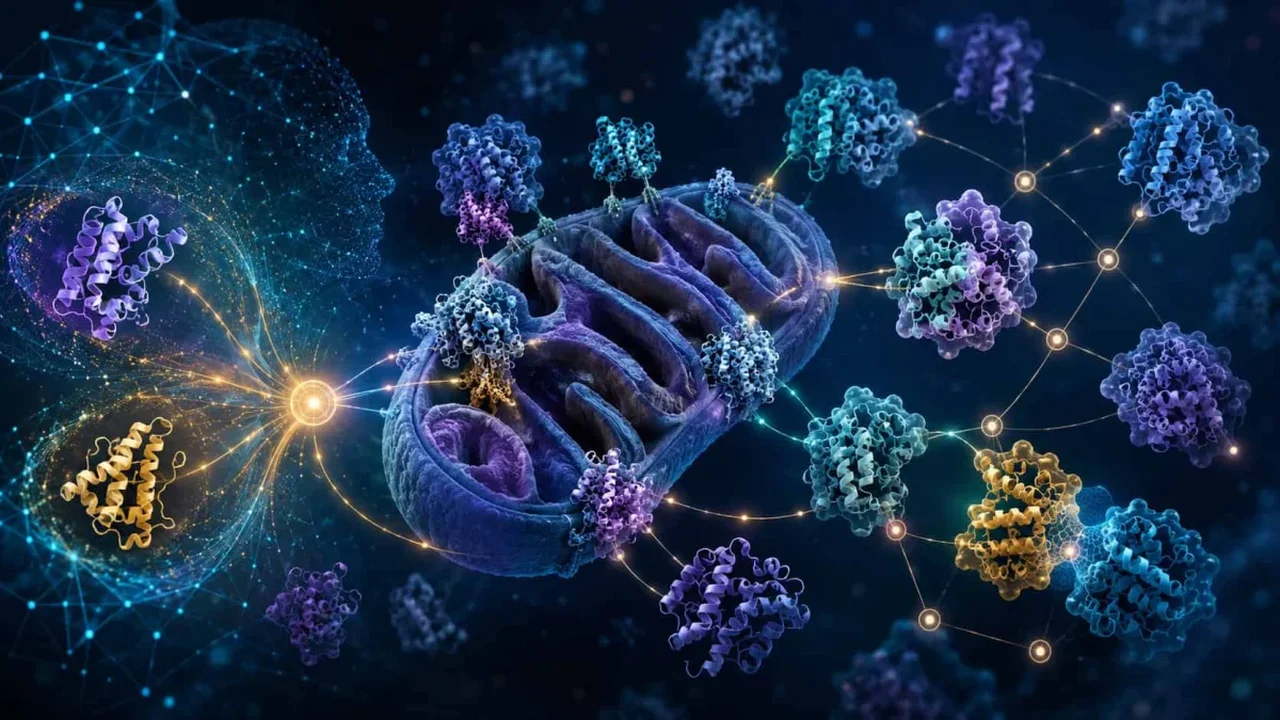
In a study published in Nature Communications, scientists focused on human mitochondria and tested more than 630,000 possible protein pairs. Using an adapted version of AlphaFold-Multimer, they identified 2,895 likely interactions, including many not listed in major protein-interaction databases. The approach also suggested partners for 85 proteins whose roles were previously unclear.
The project, called MitoMatch, shows how AI can move from structural prediction to functional mapping. Instead of only revealing how a protein folds, the system helps researchers see which molecules may work together as part of cellular machinery.
The team validated key predictions experimentally. One important example involved COA4, a little-understood mitochondrial protein. The AI predicted that it binds to COX11, and laboratory tests in yeast and human cells confirmed the interaction. Further experiments linked COA4 to copper delivery, respiratory complex IV, and oxygen use, giving scientists a clearer picture of its role in energy production.
Researchers also compared predicted interactions across 11 species, from yeast to chimpanzees, to see which partnerships were conserved through evolution. That added another layer of confidence to the results and highlighted how protein relationships can remain stable across life forms.
The study does not replace laboratory work. Instead, it narrows the search, turning vast interaction maps into focused hypotheses that can be tested faster and more efficiently. In the future, this kind of AI-guided biology could help accelerate discoveries about health, energy, and the inner logic of living systems.