Clouds above a magma ocean
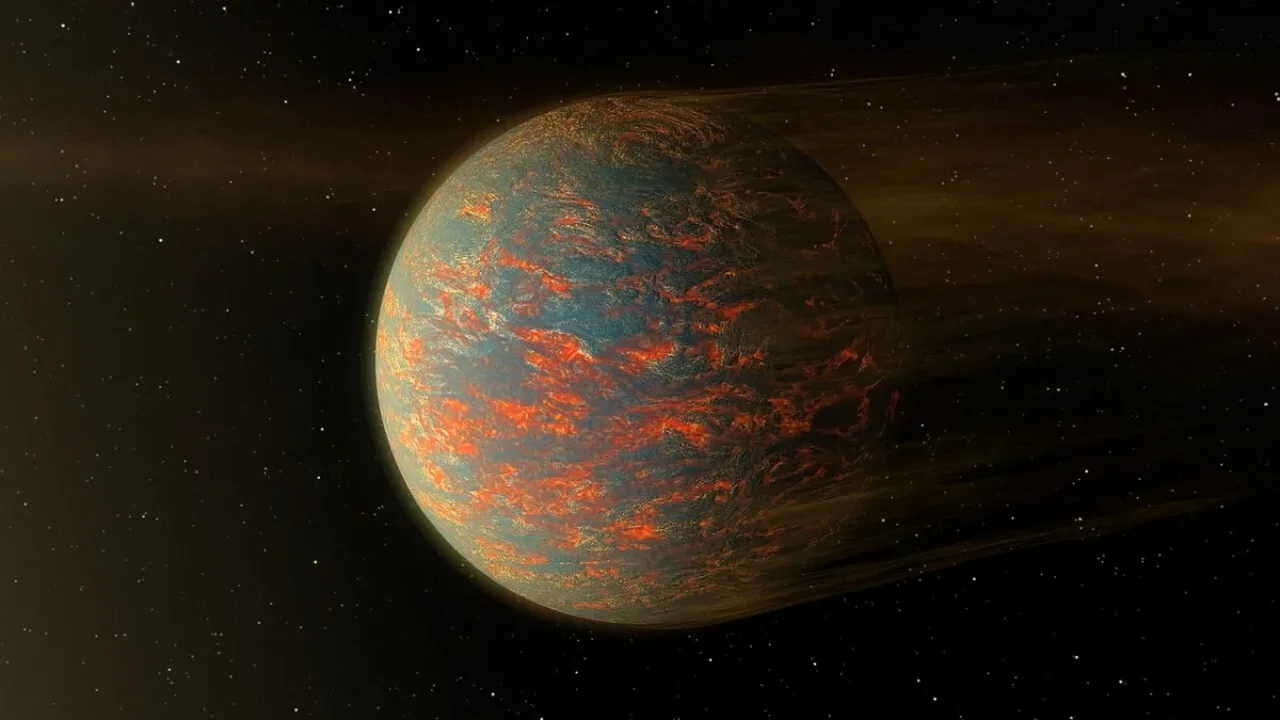
The ultra-hot exoplanet TOI-561 b appears to have kept an atmosphere despite conditions that might be expected to leave it as bare rock. Data gathered by NASA's James Webb Space Telescope indicate that the planet reflects about 75% of the starlight reaching it.
Located roughly 280 light-years away, TOI-561 b is about 1.4 times Earth's width and circles its star in less than 11 hours. Its close orbit likely leaves one hemisphere in permanent daylight and the other in darkness. The dayside is thought to host a vast ocean of molten rock.
Measurements put the dayside temperature near 1,800°C--far below the estimated 2,700°C expected for a dark, airless surface. The observations also suggest that heat moves between the planet's two hemispheres, another sign that an atmosphere may be present.
Research led by Lisa Dang of the University of Waterloo points to bright clouds containing silicate minerals as a possible explanation. In the intense heat, rocky materials such as silicon dioxide and magnesium silicate could vaporize, rise, then cool and condense into clouds. These clouds may reflect incoming light back into space, reducing the energy absorbed by the surface.
The atmosphere's full composition remains uncertain. It could contain abundant carbon dioxide or sulfur dioxide, while the molten surface may continually replenish gases. The findings raise questions about how such a close-orbiting world can sustain an atmosphere over time.
Further observations of extreme exoplanets could help scientists refine models of how atmospheres form, persist and shape the climates of distant worlds.