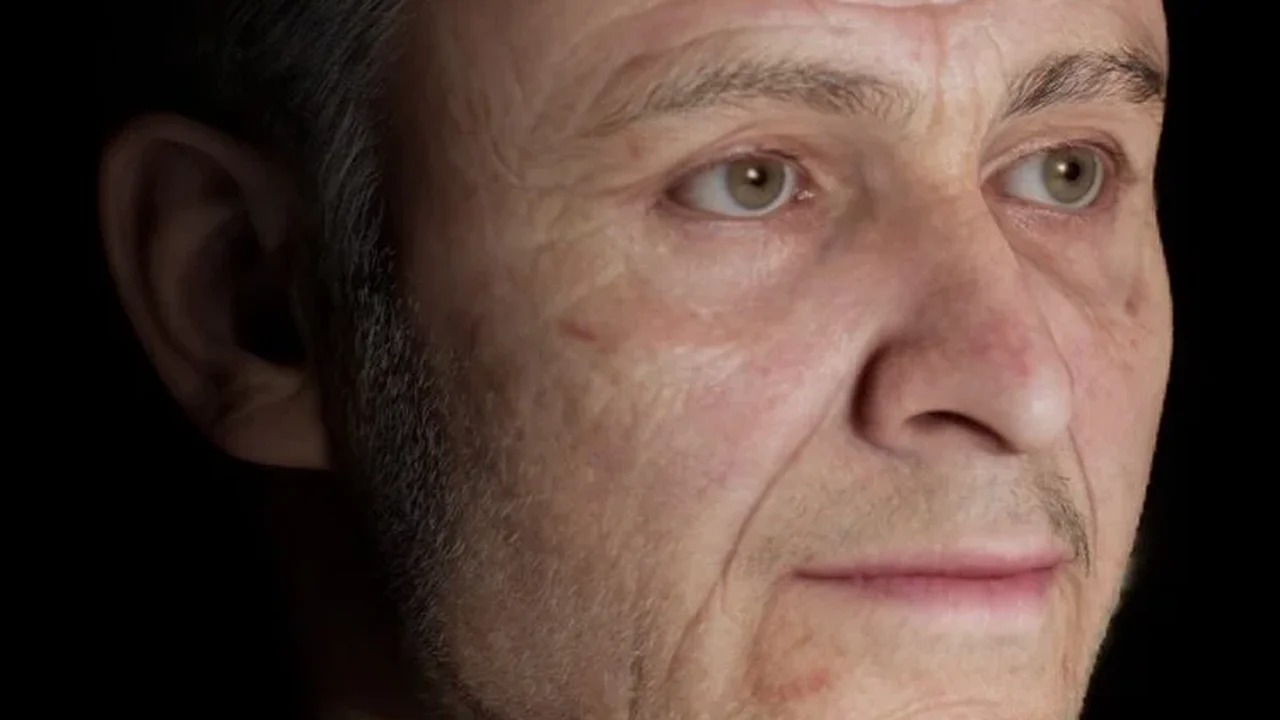
Scientists have recreated the face of a man buried nearly a millennium ago in Barton-upon-Humber, offering a vivid look at a figure known as the Conquest Man. The reconstruction combines skull scanning, bone study, dental analysis and DNA work to explore who he may have been during a transformative era in English history.
A burial with mixed cultural clues
The man is believed to have been laid to rest around 1079 at St. Peter's Church, only years after the Norman Conquest. His burial included three applewood staffs linked to Scandinavian customs, while the church itself was under the control of a Norman knight. That unusual mix has made him a fascinating case for historians and bioarchaeologists.
Research teams from English Heritage, Historic England, the Francis Crick Institute, the British Geological Survey, the University of Southampton and Liverpool John Moores University's Face Lab examined the remains. Their work has not yet been formally peer-reviewed, but the findings already suggest a life shaped by mobility across the North Sea world.
The man was about 155 centimeters tall and likely died in his 50s or 60s. His skeleton shows several healed fractures, pointing to a physically demanding life. Tree-ring dating places the oak coffin around 1079, and the burial appears unusually careful for the period, with his head placed on a grass pillow and supported by local chalk.
What the science suggests
DNA points to strong continental European ancestry, while parts of the skull suggest Scandinavian roots. Strontium and oxygen isotopes add more nuance: some signals fit the geology of Barton, while others hint that he may have spent adolescence in a colder region. Together, the evidence suggests a life that crossed regions rather than fitting a single label.
Researchers say this makes the man a reminder that medieval identities were often more fluid than simple categories like Norman or Saxon allow. He may have been part of the wider movement of people connecting England, Scandinavia and continental Europe long before and after 1066.
The facial reconstruction gives the long-buried individual a human presence again, while the science behind it shows how archaeology, genetics and imaging can reshape our understanding of the past. In the future, similar methods may continue revealing the hidden lives behind history's most enduring names.