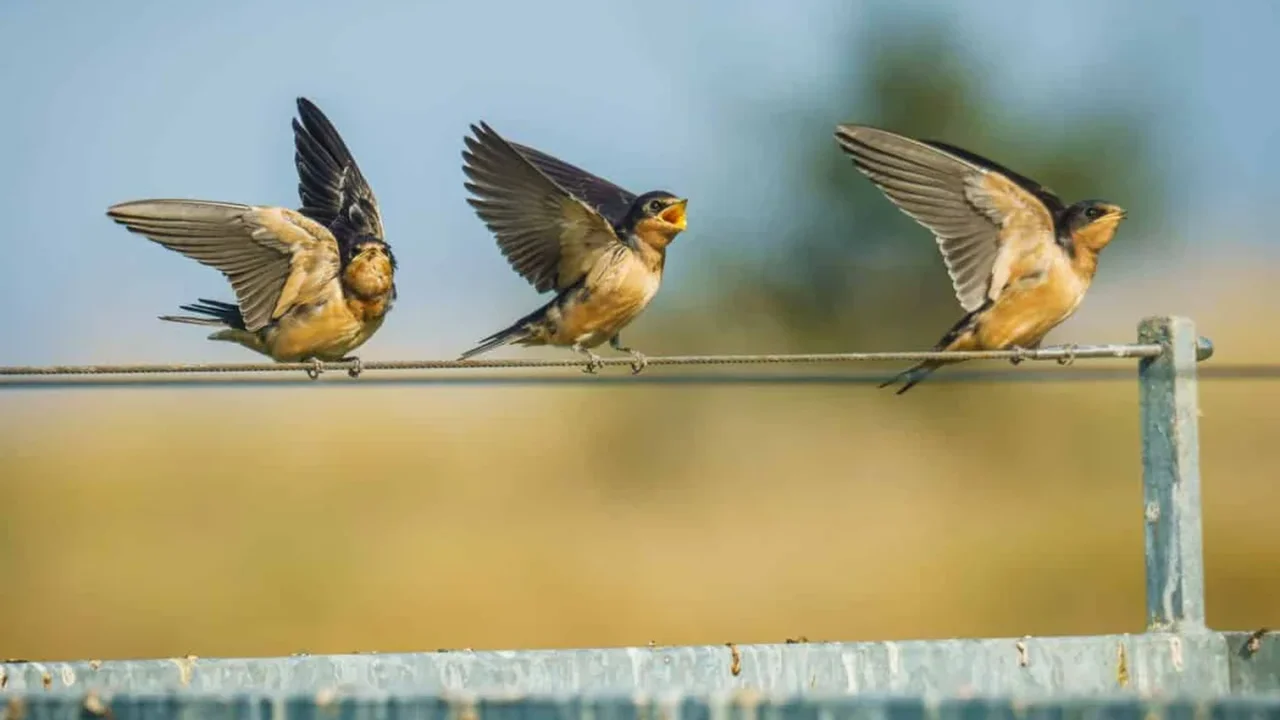
A large study of North American birds has found that females tend to have lower annual apparent survival rates than males. The difference was strongest among species that migrate long distances, pointing to migration and unequal access to resources as possible factors.
Researchers led by Joanna Wu of the University of California, Los Angeles, analyzed more than 563,000 bird-banding records covering 92 species. Across 82 species, females had lower estimated annual survival; the gap was statistically significant in 35.
On average, estimated annual apparent survival was 47.9% for females and 53.8% for males. The measure reflects whether birds were seen again in the monitored population, so it cannot distinguish death from permanent movement elsewhere.
Migration and resources may matter
The sex difference was most pronounced among long-distance migrants and smaller among year-round residents. Researchers suggest that some females may travel farther, while differences in wing shape and access to food could also affect the demands of migration. In some species, males have larger fat reserves, potentially because they secure better feeding areas.
Reproductive effort alone did not consistently explain the pattern: species with larger clutches or greater relative egg loads did not show a clear added disadvantage for females. Genetic differences may also contribute, but the study did not test that possibility directly.
A more complete view of conservation
The findings highlight a research gap: studies and conservation plans have not always tracked males and females separately. Since the sexes can use different habitats, strategies centered on one may overlook places important to the other.
Published in Proceedings of the Royal Society B, the research does not establish that lower female apparent survival drives bird population declines. More sex-specific monitoring could help conservation planning reflect the distinct needs of both sexes.
As monitoring becomes more inclusive, conservation decisions may better protect the full range of habitats that bird populations depend on.