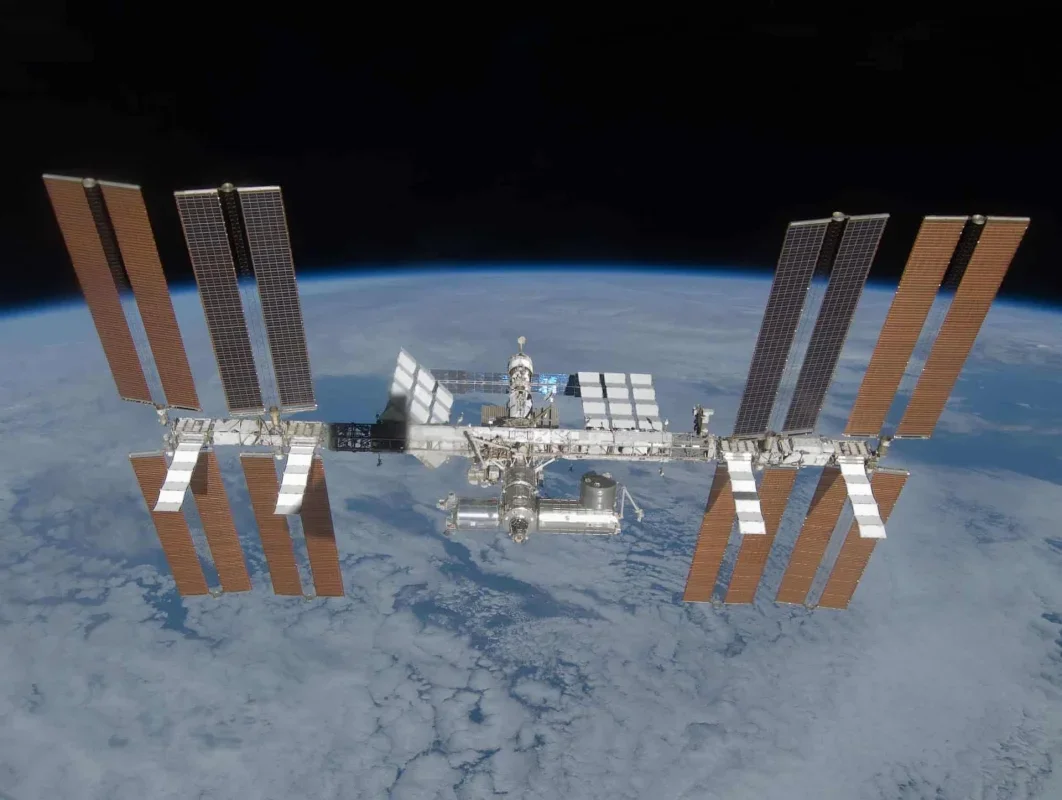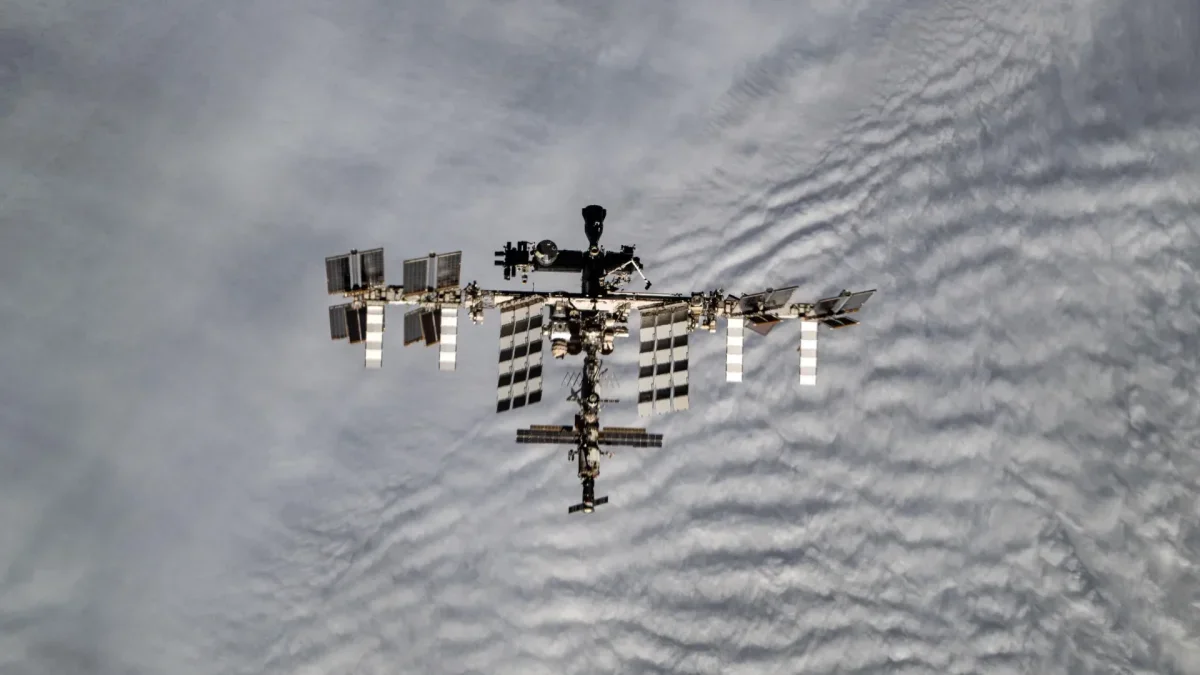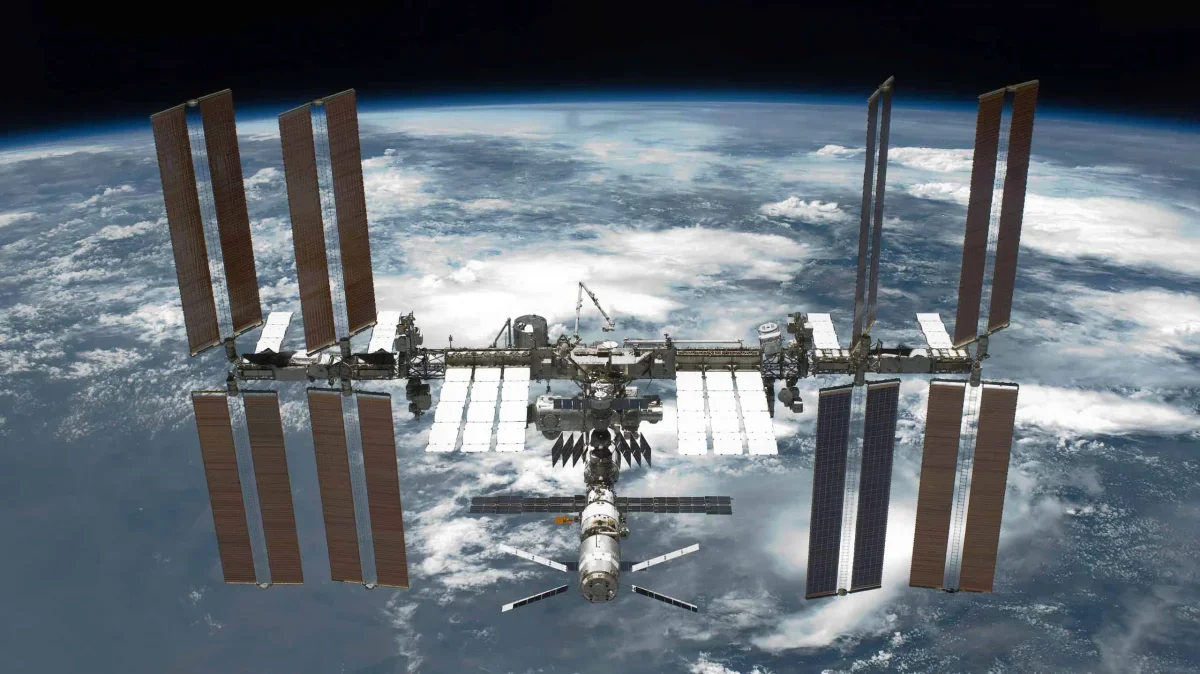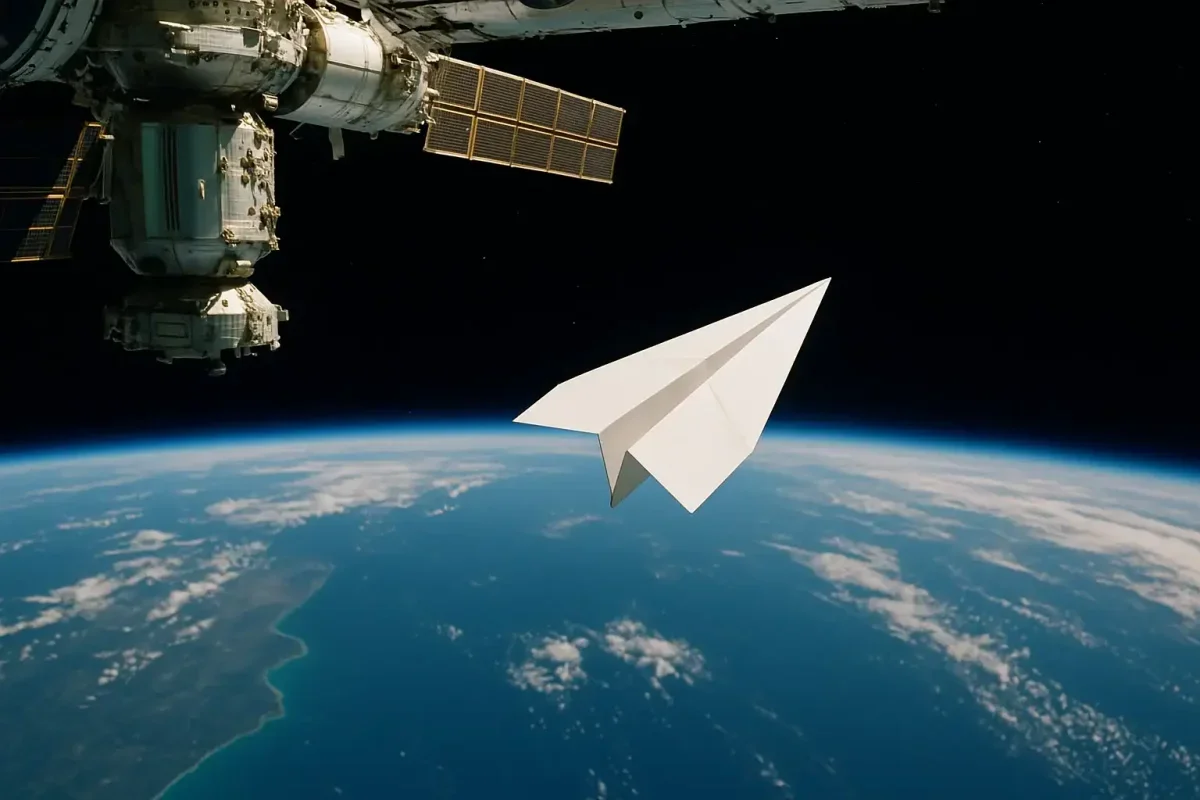
What would happen if an origami paper plane were released from the International Space Station? Researchers Maximilien Berthet and Kojiro Suzuki at the University of Tokyo explored the question through simulations and wind-tunnel testing, turning a playful idea into a serious study of atmospheric entry.
A fragile craft on a long descent
The team modeled a lightweight paper plane, weighing just four grams, as it drifted from roughly 400 kilometers above Earth. In the upper reaches of orbit, the folded shape helps it stay relatively stable and nose-forward as it slowly loses altitude over several days.
That calm phase does not last. Around 120 kilometers above Earth, the air becomes dense enough for drag and friction to take over. The plane begins to tumble, and the model shows that the structure would quickly heat up as it falls through the atmosphere.
Testing the idea in extreme conditions
To check their calculations, the researchers built a scaled version and exposed it to Mach 7 winds in Tokyo's Kashiwa Hypersonic and High Enthalpy Wind Tunnel. The test revealed bending at the nose, a small ridge forming, and charred edges at the wings. The result confirmed that the paper craft could briefly survive extreme conditions, but only on the way to burning up.
Beyond the curiosity factor, the study points to practical possibilities. Paper-based materials may one day help with cleaner disposal of lightweight orbital components through passive reentry. The work also suggests that a simple folded structure could act as a sensitive probe for measuring air density in the upper atmosphere, where data remains limited.
Published in Acta Astronautica, the study shows how an everyday object can reveal new insights about space materials, reentry behavior, and atmospheric science. In the future, such experiments could inspire smarter, lighter, and more sustainable approaches to space design.