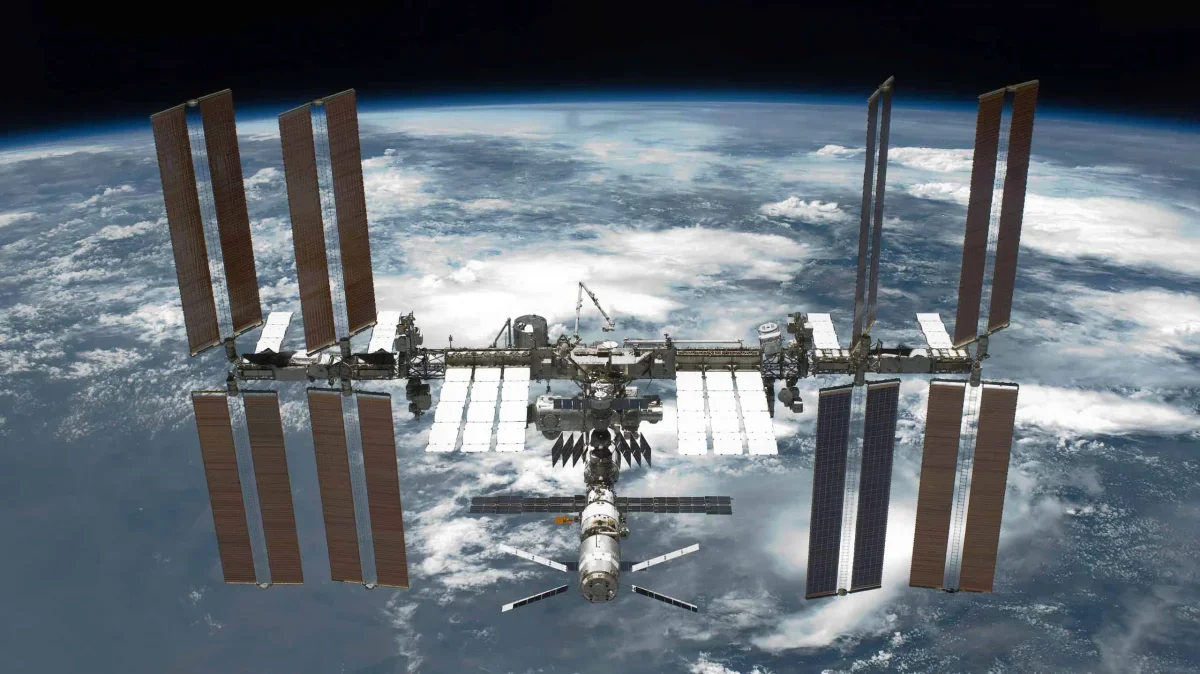
The International Space Station (ISS) continues to face challenges as it ages, with recent reports confirming the reemergence of a leak in one of its Russian modules. Earlier this year, NASA announced a brief reprieve, stating that the pressure in the problematic transfer tunnel had stabilized after years of monitoring. However, this relief was short-lived.
On May 1, during routine supply unloading from the Progress 95 cargo ship, sensors detected a gradual drop in pressure within the PrK module, a corridor connecting to the Zvezda Service Module. NASA confirmed that the leak had returned, with an estimated loss of approximately one pound of air per day. In response, the Russian space agency, Roscosmos, has been managing the situation by allowing the pressure to decrease gradually while occasionally replenishing it with nitrogen and oxygen.
Unraveling a Six-Year Mystery
The saga of the ISS leak began in September 2019 when cosmonauts first observed an unusual air loss. Investigations revealed that microscopic cracks in the aging metal structure--exposed to harsh conditions in low Earth orbit for nearly three decades--were to blame. Despite numerous attempts to seal these cracks, the situation has only worsened over time.
By 2024, the leak rate had doubled, prompting internal discussions at NASA about the potential risks associated with the ISS. While public statements downplay the urgency, there are serious concerns among officials about the possibility of a "catastrophic failure."
Future of the ISS
The ISS is slated for retirement in 2030, with plans for a SpaceX-built vehicle to safely deorbit it over the South Pacific. However, discussions are underway regarding a potential extension to 2032 or beyond, primarily to maintain a continuous human presence in space until private alternatives are fully operational. This would require agreement from international partners, including Russia, and could strain the aging infrastructure even further.
As NASA explores partnerships with private companies to establish new orbital outposts, the need for a timely transition becomes increasingly critical. The ISS, while a monumental achievement in human engineering, is showing signs of its age, and the ongoing leak serves as a reminder of the urgency to develop sustainable solutions for human space exploration.
As we look to the future, the challenges faced by the ISS highlight the importance of innovation and collaboration in space exploration, paving the way for new technologies that can ensure humanity's ongoing presence in orbit.