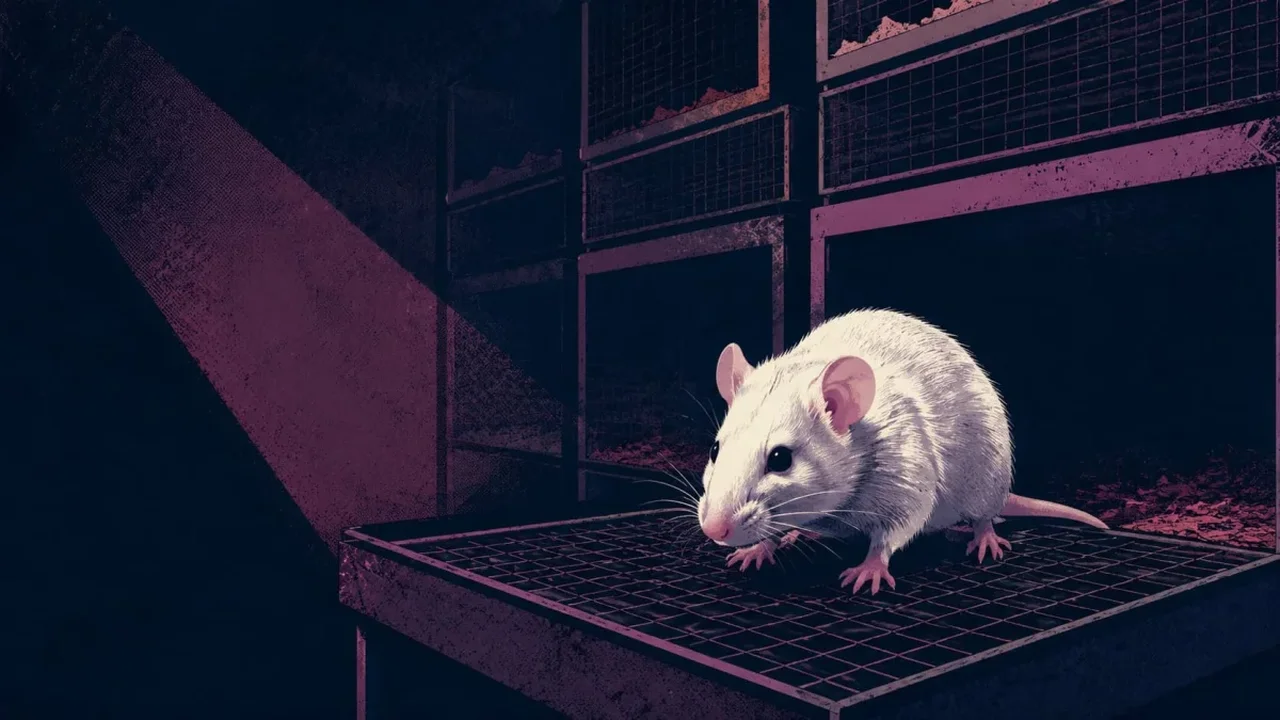
In 1968, a small group of mice entered an enclosure designed to provide everything they needed: food, water, shelter and safety. The project, known as Universe 25, was created by researcher John B. Calhoun at the National Institute of Mental Health in Maryland.
At first, the colony expanded quickly. The mice formed territories, raised litters and adapted to life inside the sealed habitat. Yet as the population grew, the experiment revealed something more complex than a simple story of abundance. The enclosure offered resources, but it did not offer escape, migration or room for new social roles.
As competition for space intensified, social behavior began to shift. Younger mice struggled to establish positions, while established groups defended their areas. Over time, interaction patterns broke down, reproduction slowed and the colony gradually lost the structure that had supported its growth.
Calhoun later observed that the most important issue was not food scarcity, but the collapse of social organization. The experiment suggested that living systems depend not only on material comfort, but also on agency, privacy, movement and meaningful connection. That insight has kept Universe 25 relevant far beyond the laboratory.
Today, the study is often discussed as a reminder that environments shape behavior as much as resources do. Its legacy continues to influence thinking about urban design, animal welfare and the architecture of healthy communities. In that sense, Universe 25 remains a powerful scientific metaphor for how future spaces may need to support both abundance and belonging.