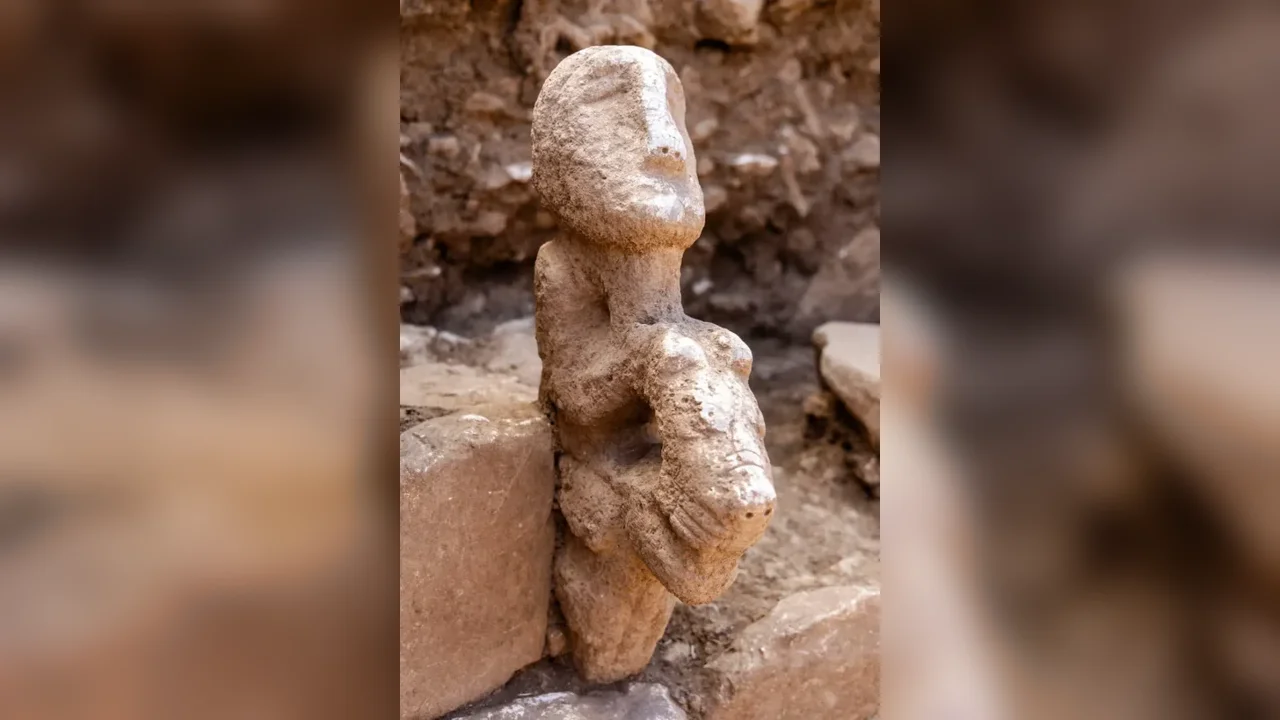
Archaeologists working at Karahan Tepe in southern Turkey have uncovered an extraordinary statue dating back about 11,000 years. The sculpture shows a human figure seated on a leopard, a combination that adds a striking new layer to the story of early Neolithic art.
According to Turkey's Ministry of Culture and Tourism, the piece was found at the Stone Age site in the Şanlıurfa region and stands roughly 28 inches tall. Researchers say it likely once rested on a platform built into the wall of a circular structure about 10 feet across, suggesting it played a role in a carefully designed ceremonial space.
Minister of Culture and Tourism Mehmet Nuri Ersoy described the work as "unlike anything seen before," reflecting its rare form and symbolic power. Scholars believe the leopard may have represented strength, courage, and masculinity, while the figure riding it could have signaled control, authority, or ritual meaning.
Neolithic archaeologist Jens Notroff of the German Archaeological Institute notes that leopards were likely familiar and formidable animals in the region, which may explain their presence in symbolic art. A similar sculpture had previously been discovered at the same site, but this new find offers fresh insight into the imagination and beliefs of some of the world's earliest settled communities.
Built around 9750 BCE, Karahan Tepe is considered one of the oldest known settlements, alongside Göbekli Tepe. The discovery highlights how early societies used art to express identity, power, and worldview, opening new perspectives on humanity's cultural beginnings and the future study of ancient civilizations.