Archaeologists in western Turkey have uncovered a 2,400-year-old tomb in the ancient city of Aspendos, where silver coins decorated with wrestling scenes were found beside the remains of a man buried in a stone-lined grave. The discovery, dating to roughly 475-300 BCE, is drawing attention because it may point to the life of an athlete in one of the classical world's most active urban centers.
A City That Celebrated Wrestling
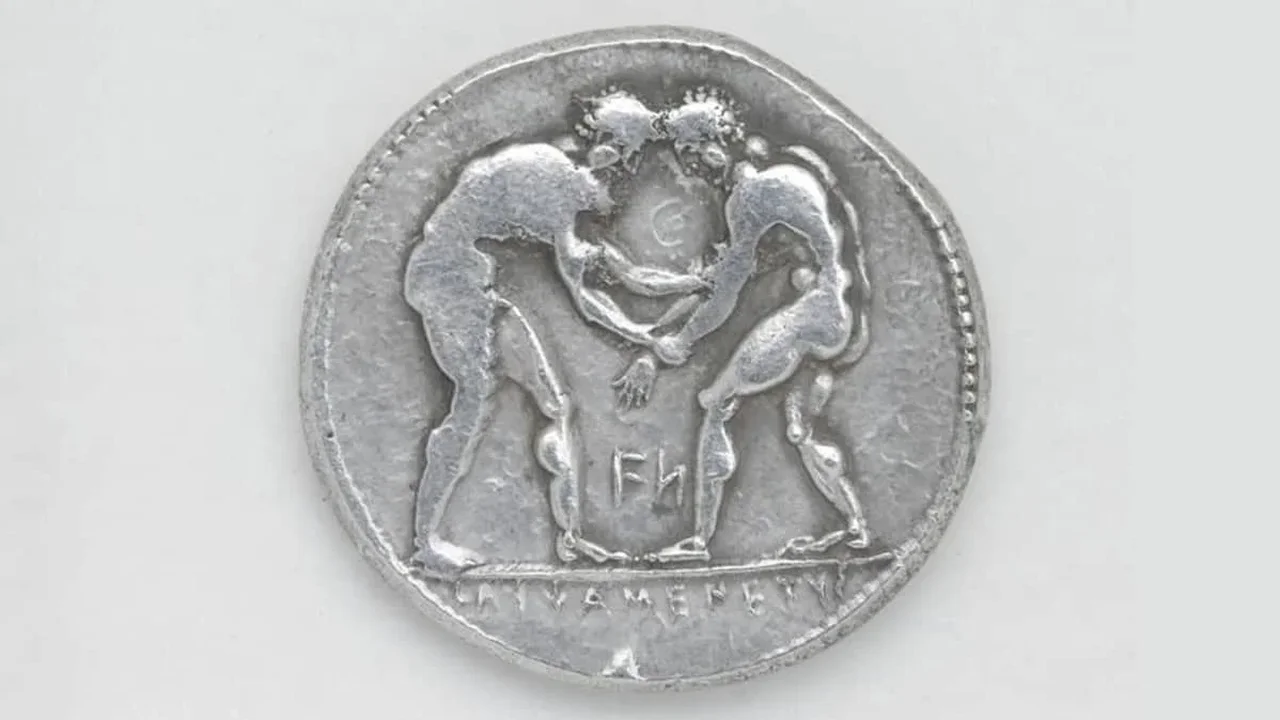
Aspendos, located in today's Antalya region, was a thriving city in antiquity and later became known for its monumental Roman theater and aqueducts. Long before those landmarks rose, however, the city was already minting silver staters that featured wrestlers in action on one side and a slinger on the other. According to Turkish officials, that visual language makes the newly found burial especially intriguing.
Mehmet Nuri Ersoy, Turkey's minister of culture and tourism, said the coins and other objects in the grave suggest the individual may have been connected to sport, possibly as a wrestler. The cemetery itself was previously unknown, adding another layer to Aspendos' archaeological story.
What the Coins Can -- and Cannot -- Tell Us
Specialists are careful not to draw conclusions too quickly. Coins with athletic imagery were widely used in the region, so their presence alone does not prove the buried man was a competitor. Historians note that the strongest clues may come from the bones themselves, which could reveal signs of repeated training, healed injuries, or muscular stress patterns associated with intense physical activity.
Research on Aspendos coinage shows that wrestling motifs were not occasional symbols but a recurring civic theme, appearing in many different combat poses across generations of minting. That consistency suggests the sport held a meaningful place in the city's identity.
Whether the tomb belongs to a celebrated wrestler or simply to someone who lived in a culture that admired athletic strength, the find helps illuminate a more personal side of ancient life. It also shows how archaeology can turn a few coins into a vivid historical narrative. In the future, discoveries like this may deepen our understanding of how sport, identity, and city life were connected in the ancient Mediterranean.