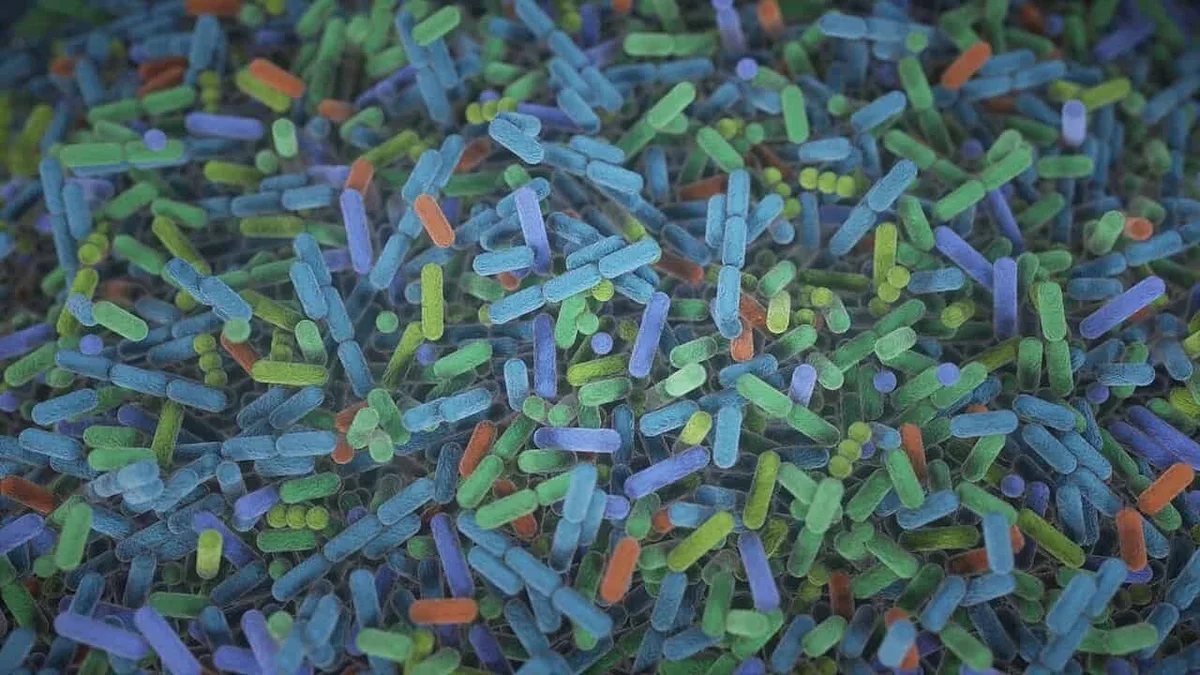
In a remarkable turn of events, scientists at the University of Southern California have discovered that gut microbes from older mice can enhance the fertility of younger mice, contrary to their initial hypothesis. The study, published in Nature Aging, revealed that when fecal matter from older, post-reproductive female mice was transplanted into young adult mice, the ovaries of the younger mice exhibited improved health and functionality.
Instead of showing signs of aging, the ovaries of the younger mice displayed a more youthful gene activity pattern, reduced inflammatory signals, and an increased likelihood of producing offspring compared to those receiving microbes from younger donors. "Our original hypothesis was that we would see damaging effects of the older microbiome on ovarian function, but surprisingly, we found the opposite," stated Min Hoo Kim, the study's first author.
This groundbreaking finding expands the realm of microbiome research, which has previously linked gut bacteria to various bodily functions, including metabolism and immunity. The results suggest that the relationship between the gut microbiome and reproductive aging is more complex than previously understood, indicating a biological dialogue between the ovaries and gut that evolves over time.
Experimental Insights
The research involved a comparison of young female mice, aged four months, against older "estropausal" mice, resembling human menopause. While the older mice exhibited expected declines in ovarian health, they also had distinct gut microbial communities. The researchers developed an "ovarian health index" to assess follicle counts and hormone levels, leading to the pivotal experiment.
Young mice were treated with antibiotics to disrupt their gut microbiome, followed by fecal microbiota transplants from either young or older donors. Contrary to expectations, the ovarian tissues from mice receiving microbes from older donors showed reduced gene activity related to inflammation and a more youthful molecular profile.
Notably, all mice that received the older microbiome successfully reproduced, while some from the younger donor group did not. The older-donor group also demonstrated faster reproduction rates. Bérénice Benayoun, the study's senior author, expressed initial skepticism about the results, but repeated tests confirmed their validity.
Understanding the Mechanism
While the exact mechanisms behind the positive effects of older microbes on younger ovaries remain unclear, several hints have emerged. The older mice's gut microbes formed a unique community rather than showing signs of aging. Researchers are particularly interested in the role of the estrobolome, which consists of gut microbes that help metabolize estrogen and could influence ovarian signaling.
Benayoun and her team propose a compensatory mechanism: as ovaries age and become less responsive to hormonal signals, gut microbes may adapt by sending stronger signals. This adaptation might enhance reproductive function in younger mice, whose ovaries can still respond effectively.
Though this study was conducted with mice, it opens avenues for future research into human health. With the complexity of human menopause and the diversity of human microbiomes, understanding how gut microbes influence reproductive aging could lead to innovative therapeutic strategies.