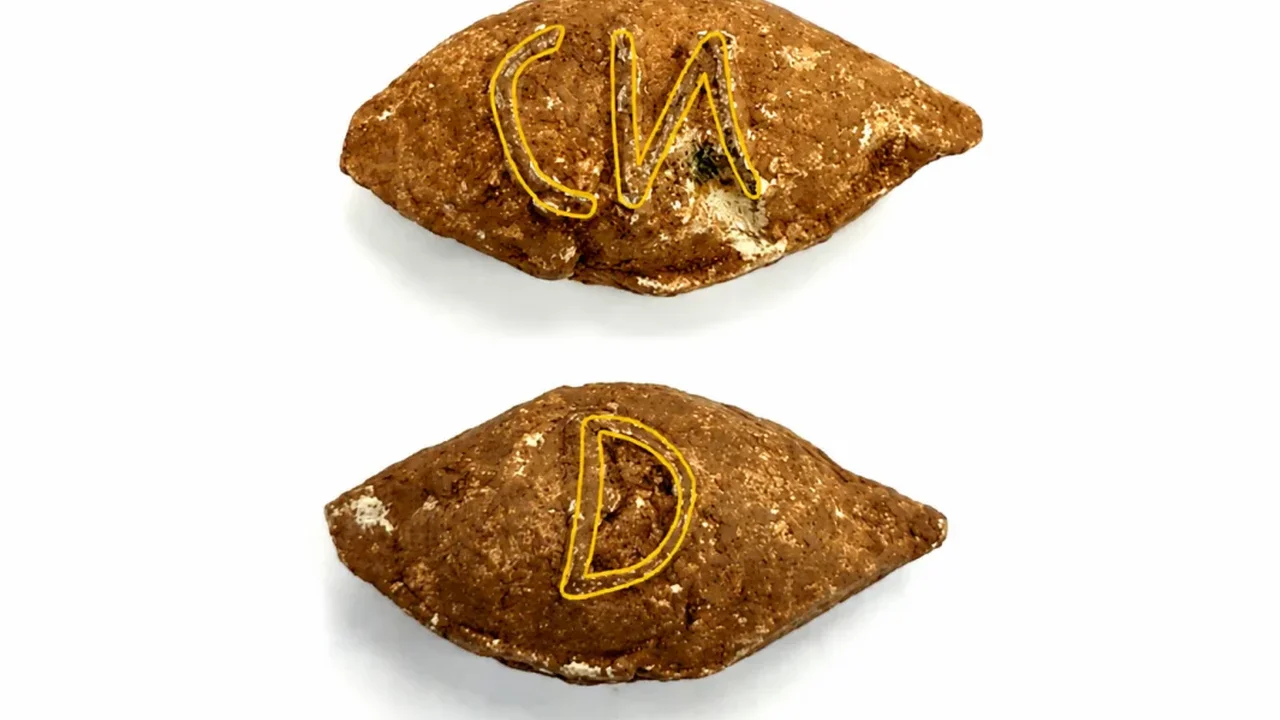
Archaeologists in northeastern Spain have uncovered a striking Roman detail hidden in plain sight: tiny lead sling bullets stamped with the initials CN D. The mark is believed to refer to Gnaeus Domitius Calvinus, the Roman general who led forces in the Pyrenees in 39 BCE.
A small object with a big message
The bullets were found at Collet de Jovell, a wooded archaeological site near Urús in Cerdanya, an area that once controlled key mountain routes through the eastern Pyrenees. The discovery was made by researchers from the Autonomous University of Barcelona during a survey in April 2024, part of a broader project documenting ancient remains in the region.
Along with the sling bullets, the team recorded coins, brooches, and iron hobnails from Roman military sandals. Most of the material dates to the late first century BCE, but the inscribed lead projectiles offer a sharper historical clue. Their initials match Roman naming practices and point to Calvinus's command during a period of unrest in the mountains.
Tracing a Roman campaign
Historical accounts describe a revolt by the Ceretani, the local mountain people who lived in Cerdanya before and during Roman expansion. They farmed, traded, and managed routes linking the Iberian Peninsula with wider Europe, making the region strategically valuable.
The new finds suggest that the fighting took place closer to the Ceretani heartland than many historians had assumed. That detail helps refine the map of Roman activity in the Pyrenees and shows how archaeology can bring precision to events known mainly from ancient texts.
Roman armies sometimes inscribed sling bullets with names, messages, or unit marks. In this case, the initials appear to function as a statement of command and authority, turning a simple weapon into a symbol of military presence.
By linking a few letters on lead to a specific commander and place, the discovery adds a vivid layer to the story of Roman expansion in Iberia. It also shows how small artifacts can reshape our understanding of ancient landscapes and power. In the future, finds like these may continue to redraw the historical map of Rome's frontier regions.