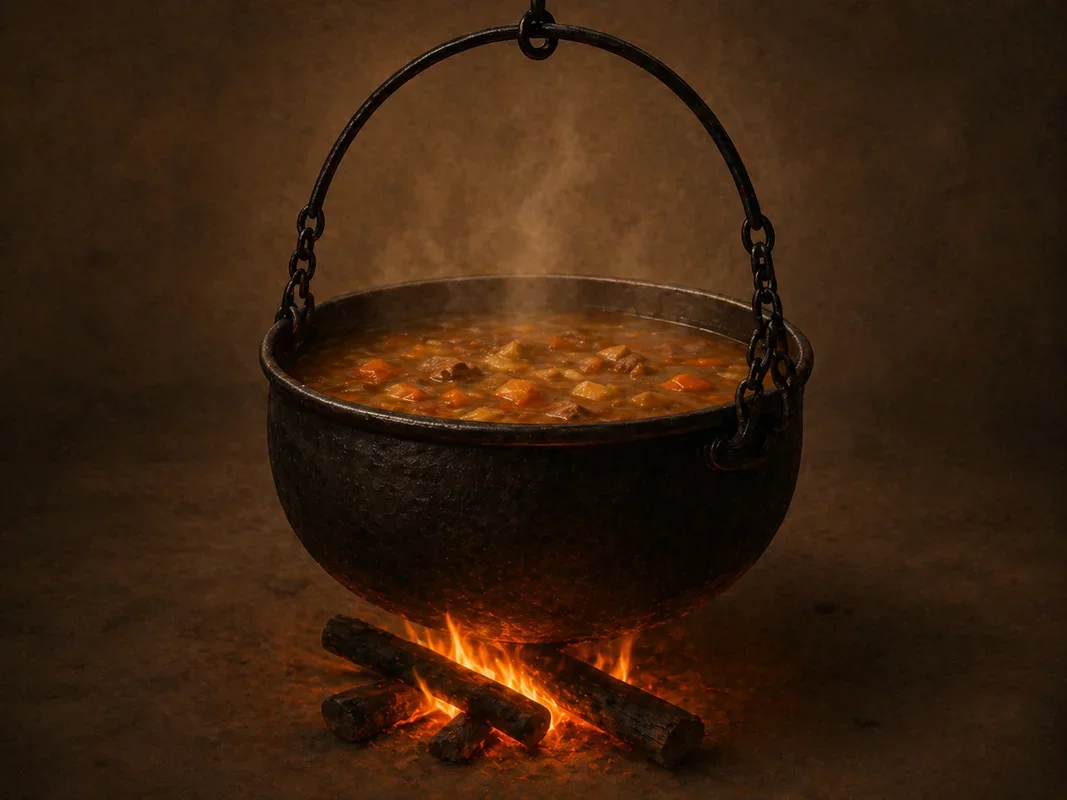
A remarkable culinary tradition thrives in a restaurant in Bangkok, where a dark broth has been continuously simmering for over half a century. This phenomenon, known as perpetual stew, captures the imagination with its blend of history and modernity.
Perpetual stew, also referred to as forever soup or master stock, involves maintaining a pot of broth that is never fully emptied. Instead, fresh ingredients are regularly added, allowing flavors to develop over days, months, or even decades. This practice may sound like a medieval tale, yet establishments like Wattana Panich in Thailand and Otafuku in Japan exemplify its reality, with their stews steeped in history since the mid-20th century.
A Culinary Legend
Historically, many European taverns in the Middle Ages were said to keep their stews simmering indefinitely. While some of these tales may have been exaggerated, evidence suggests that stockpots were often replenished with fresh ingredients, creating a continuous cycle of flavor. Notably, a renowned pot-au-feu in France was maintained from the 15th century until World War II.
However, researchers like Jenni Lares from the University of Tampere question the feasibility of truly perpetual stews in medieval times, citing challenges such as firewood scarcity and church regulations on cooking meat. Instead, these stews may have been semi-perpetual, lasting for days or weeks rather than years.
Modern technology has made it easier to maintain these culinary traditions. For instance, Wattana Panich's copper pot holds a rich broth known as neua tune, a beef noodle soup that has been simmering since 1971. Each day, the kitchen prepares substantial amounts of beef, allowing the flavors to meld and deepen over time.
Modern Interpretations
While Wattana Panich is famous for its perpetual stew, it is essential to note that even this establishment cleans its pot nightly, maintaining a balance between tradition and safety. Similarly, Tokyo's Otafuku has been serving a delicate oden broth since 1945, showcasing a different approach to the concept of a perpetual stew.
Both restaurants exemplify the art of preserving culinary heritage while ensuring the safety of their dishes. The process of long-simmering broth not only enhances flavor but also transforms ingredients into a rich, savory experience.
The Future of Perpetual Stews
The resurgence of interest in perpetual stews in recent years, particularly through social media initiatives and local projects, highlights a growing desire for unique culinary experiences. These stews reflect not only individual and community identities but also a deeper connection to food that transcends the uniformity of modern dining.
Ultimately, the allure of perpetual stews lies in their ability to carry stories and memories, reminding us that food can be a living tradition. As we embrace these culinary practices, we may find new ways to connect with our past while looking forward to a flavorful future.