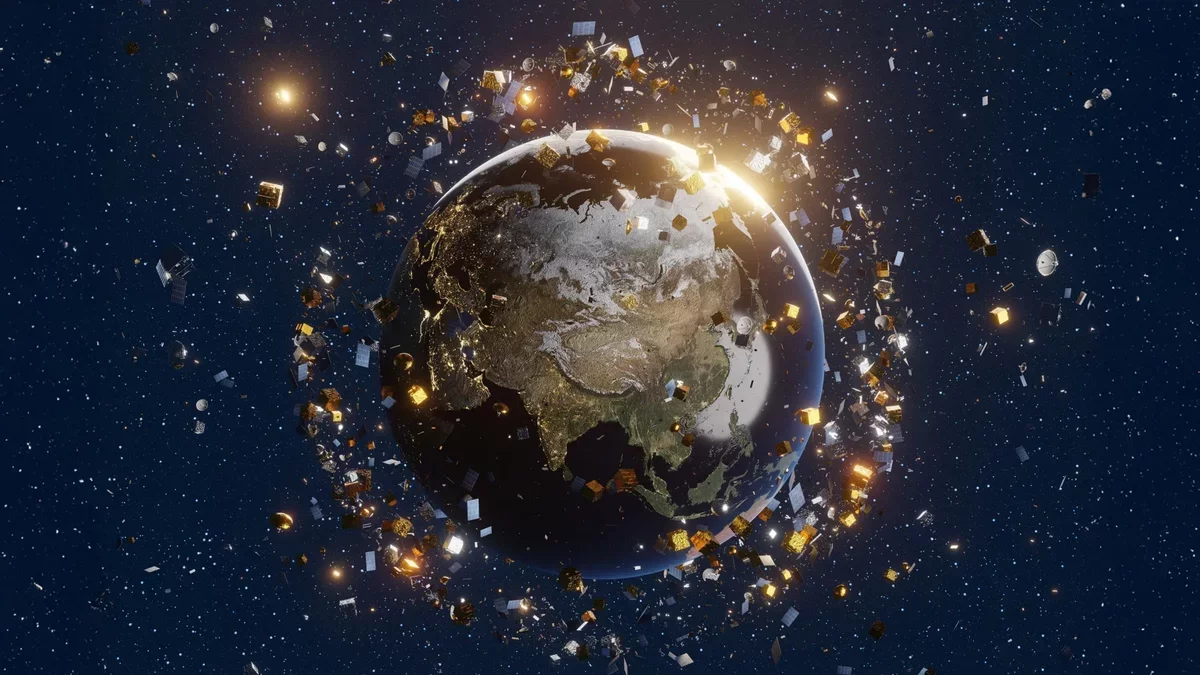
Recent studies reveal alarming statistics regarding the safety of satellites in Low Earth Orbit (LEO). These mega constellations frequently experience "close approaches," where satellites come within less than 1 kilometer of each other, occurring approximately once every 22 seconds. Within the Starlink network, these close encounters happen roughly every 11 minutes, necessitating an average of 41 course corrections per satellite annually to avert potential collisions.
Understanding the Risks of Rare Events
While the frequent maneuvering of satellites might suggest a well-functioning system, engineers understand that true dangers often arise from rare and unexpected scenarios, known as "edge cases." One significant risk is posed by solar storms, which can severely impact satellite operations.
Impact of Solar Storms on Satellite Functionality
Solar storms disrupt satellites primarily in two ways. First, they cause atmospheric heating, leading to an expansion of the upper atmosphere and increased drag on satellites. This results in higher fuel consumption for maintaining orbit and creates uncertainty about their exact positions, forcing satellites to execute additional avoidance maneuvers. For instance, during the "Gannon Storm" in May 2024, over half of the satellites in LEO had to adjust their trajectories to conserve fuel.
The second, and potentially more severe, consequence of solar storms is the interference with satellite navigation and communication systems. Such disruptions can leave satellites unable to respond to impending threats, and when combined with increased atmospheric drag and positional uncertainty, the risk of collision escalates dramatically.
Assessing the Speed of Potential Disasters
The most recognized consequence of satellite collisions is Kessler syndrome, where debris from collisions accumulates in orbit, complicating future launches. Researchers have introduced a new metric called the Collision Realization and Significant Harm (CRASH) Clock to illustrate the urgency of the situation. Their calculations indicate that by June 2025, losing command over satellite avoidance maneuvers could lead to a catastrophic collision within just 2.8 days. In contrast, similar conditions in 2018 would have allowed approximately 121 days before a collision occurred.
Limited Warning and Options
Solar storms present a unique challenge due to their unpredictable nature, often providing only a day or two of warning. Even with this short notice, operators have limited options to protect their systems. The rapidly changing atmospheric conditions necessitate continuous monitoring and control, and if this control is lost, recovery may be possible only within a few days before the entire satellite system is compromised.
This concern is not merely theoretical. The 2024 Gannon Storm, while significant, was not the strongest on record. The Carrington Event of 1859 holds that title, and a similar occurrence today could disrupt satellite control for an extended period, potentially crippling global satellite infrastructure and isolating humanity from space.
Evaluating the Risks of a Connected Sky
Most individuals would not welcome a future without access to space. While satellite mega constellations provide substantial technological advancements, they also introduce serious long-term risks. A comprehensive understanding of these dangers is essential, especially when the consequences could involve losing access to space for generations due to an extreme solar storm. This research emphasizes the importance of informed decision-making in addressing these critical issues.