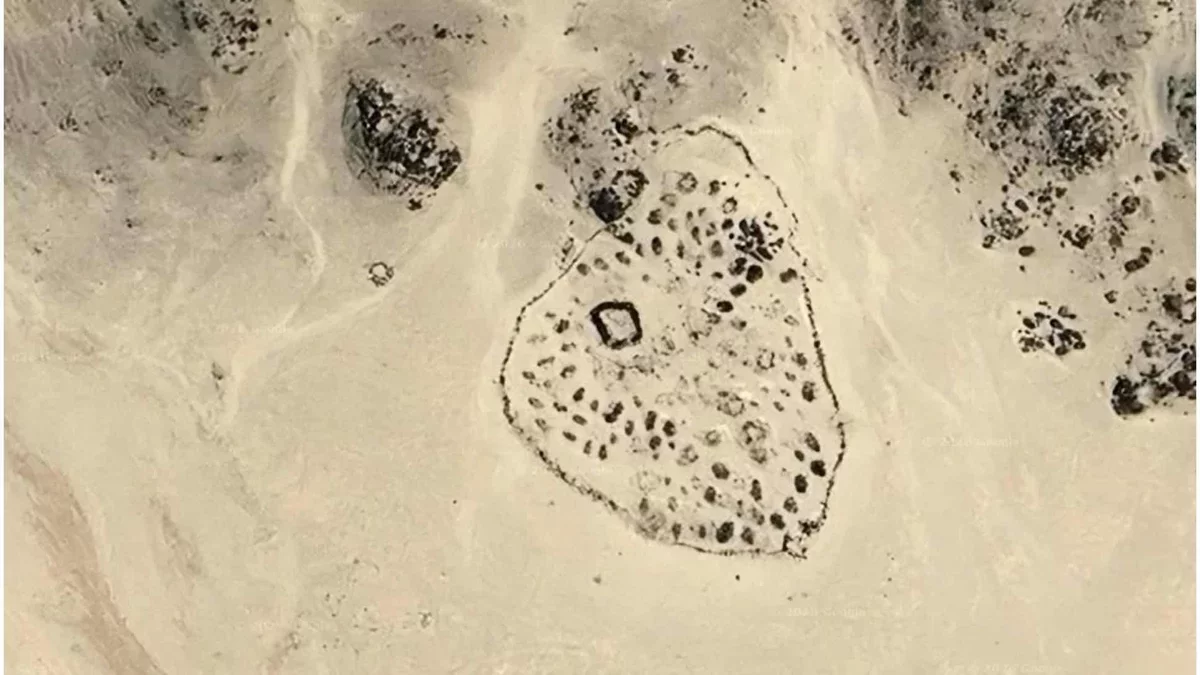
A groundbreaking initiative utilizing satellite remote sensing has unveiled the existence of 260 previously undiscovered mass graves in the expansive Atbai Desert of Eastern Sudan, part of the greater Sahara Desert. This extensive research, conducted by a collaborative team of archaeologists from Macquarie University, France's HiSoMA research unit, and the Polish Academy of Sciences, aimed to explore the archaeological landscape of this arid region without the need for excavation.
Among the significant findings are large, circular burial sites known as "enclosure burials," which date back to the fourth and third millennia BCE. These structures feature substantial circular walls, some reaching diameters of up to 80 meters, containing the remains of both humans and livestock, often arranged around a central figure.
Published in the journal African Archaeological Review, this research highlights how these burial sites, stretching across nearly 1,000 kilometers east of the Nile River, reveal a consistent pattern indicative of a shared nomadic culture across the desert. Previously known only from a few excavated examples, these enclosures now present a more complex narrative of ancient societies.
Understanding the Builders
These burial monuments provide insights into the lives of Saharan nomads, who thrived in the region long before the rise of Pharaonic Egypt. Evidence suggests that these nomads, who lived around 4000-3000 BCE, primarily engaged in herding and maintained a lifestyle distinct from the agrarian Egyptians.
Some enclosures feature secondary burials surrounding a primary burial, likely indicating social hierarchies within these communities. Archaeologists speculate that this marks the emergence of a more structured societal framework during this period, pointing to the beginnings of social stratification.
The Significance of Livestock
Cattle held significant cultural value for these prehistoric nomads, as evidenced by their burial practices. The act of interring livestock alongside human remains reflects a deep-seated reverence for these animals, which were likely a symbol of wealth and status.
Interestingly, these ancient burial sites continued to be utilized by later nomadic groups, demonstrating their lasting importance in the cultural landscape of the region. The durability of these enclosures as cemetery spaces underscores the sophisticated organizational skills of these early societies.
A Broader Context
The discovery of these enclosure burials is part of a larger narrative regarding human adaptation to climate change in North Africa. As the Sahara underwent significant environmental shifts, the ways in which communities interacted with their environment and organized their societies evolved dramatically.
This research not only enriches our understanding of the Sahara's prehistoric landscape but also sets the stage for future investigations into the complex histories of ancient civilizations. As we continue to uncover these archaeological treasures, we gain valuable insights into the resilience and ingenuity of human societies in the face of changing climates.