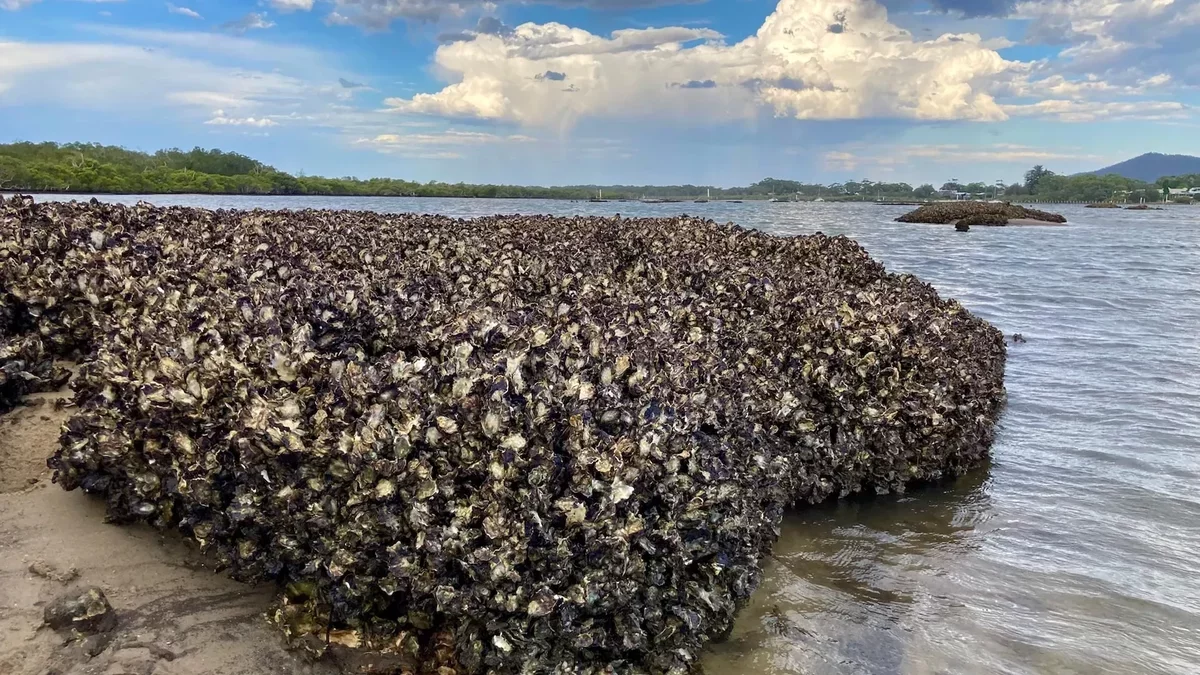
Recent research published in the journal Nature reveals that oyster reefs are intricately structured, with their shapes and arrangements significantly influencing the survival and growth of young oysters. This study highlights that these reefs are not merely random clusters of shells but complex ecosystems crucial for marine health.
Understanding Oyster Reefs
According to lead researcher Dr. Juan Esquivel-Muelbert from Macquarie University, oysters function as "ecosystem engineers," forming reefs from both living oysters and the shells of previous generations. "Reefs are not just piles of shells; they are sophisticated 3D systems that dictate the dynamics of life and death within their structure," he explains.
The research team employed high-resolution 3D photogrammetry to analyze surviving Sydney rock oyster (Saccostrea glomerata) reefs, capturing the intricate geometry of these natural habitats.
Field Testing of Artificial Reef Designs
Using advanced computer modeling, the scientists developed 16 types of concrete "tiles" featuring various ridge heights and patterns that mirrored the shapes found in natural reefs. These tiles were strategically placed in three estuaries in the Sydney area--Brisbane Water, the Hawkesbury River, and Port Hacking--near existing oyster reefs where larvae could thrive. Some setups included protective cages to deter predators, while others did not.
Throughout the study, the team monitored the settlement rates, growth, and survival of young oysters on these structures.
Optimizing Survival Rates
The findings indicated that the most successful designs were not necessarily the tallest or most intricate. Instead, the effectiveness stemmed from specific combinations of features that replicated natural reef structures. "Our experiment demonstrated that the ideal design for both establishment and long-term survival involved creating multiple small spaces for juvenile oysters to grow safely, minimizing their exposure to predators and environmental stresses," Dr. Esquivel-Muelbert notes.
A Global Blueprint for Restoration
The implications of this research extend beyond Australia, offering valuable insights for restoring oyster reefs worldwide, particularly in areas where shellfish and coral ecosystems have suffered significant degradation. Professor Melanie Bishop, a senior author of the study, highlights the historical loss of oyster reefs along the Australian coastline, with an estimated 85% disappearing since European settlement.
Oyster reefs play a vital role in marine ecosystems, providing habitats for diverse plant and animal species while protecting coastlines from erosion. "This research reveals universal architectural principles essential for the longevity of reefs," states Professor Joshua Madin from the Hawaiʻi Institute of Marine Biology. "Nature has already devised effective designs; our challenge is to adapt and scale these solutions to enhance reef resilience and growth."