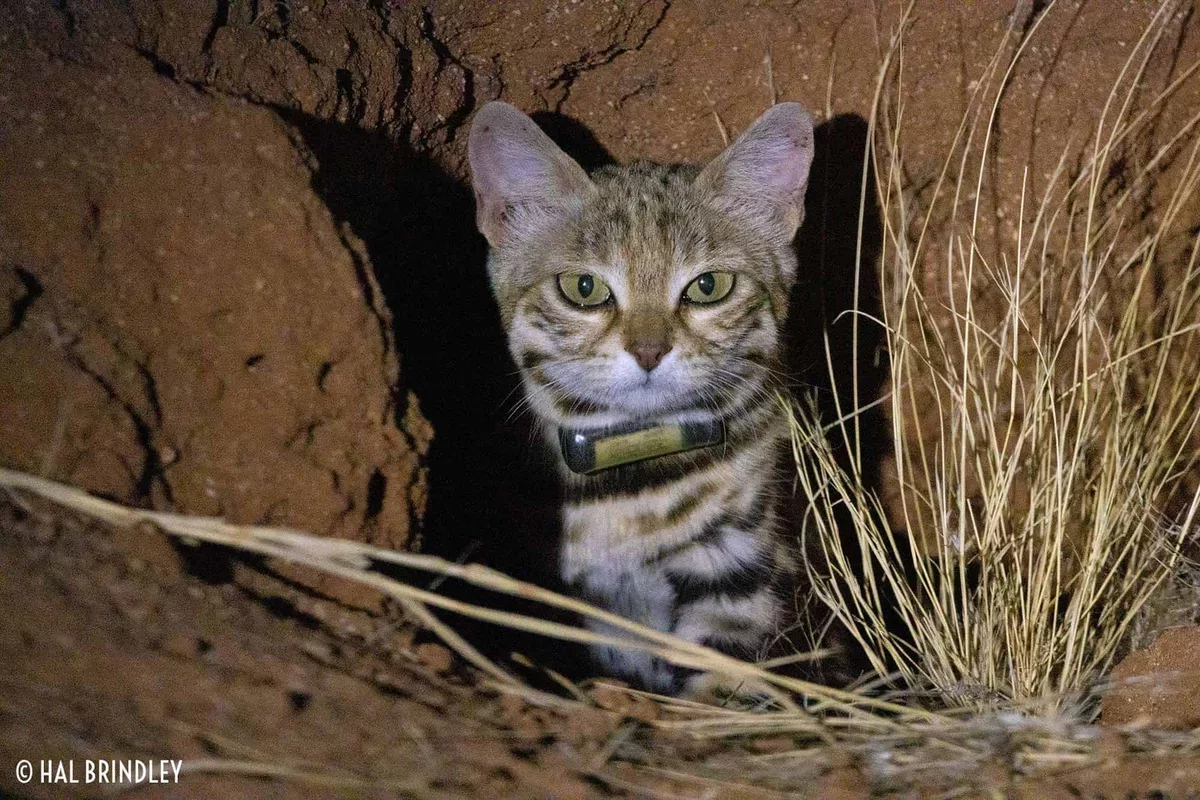
In the moonlit grasslands of southern Namibia, the black-footed cat, a diminutive predator weighing just around two pounds, stealthily navigates its environment, hunting for small rodents, birds, and insects. With its tawny fur adorned with dark spots, it seamlessly blends into the shadows of its surroundings. During daylight hours, this elusive feline seeks shelter in abandoned burrows, a behavior that sets it apart from other cats.
Female black-footed cats (Felis nigripes) patrol territories that can span from 10 to over 80 square kilometers, depending on prey availability, while males cover areas ranging between 15 and 90 square kilometers. Their remarkable energy levels and nocturnal activity continue to astonish researchers. Alexander Sliwa, the leader of the Black-footed Cat Working Group, emphasizes the cat's unique behavior, stating, "Despite its small size, it is incredibly active and has fascinating nocturnal habits."
Recent studies have revealed that these cats heavily depend on burrows created by springhares, large rodents that provide safe havens for raising their young. The mothers frequently rotate between various dens, changing locations almost daily once the kittens start to explore, likely to minimize the risk of predation.
Survival in the challenging semi-arid environment hinges not just on their hunting prowess but also on these intricate ecological relationships.
Utilizing Burrows for Survival
Black-footed cats are renowned for their exceptional hunting skills, often outpacing larger predators like lions and leopards. However, they must find secure locations for their kittens while they are out hunting. A recent study led by researcher Harold Brindley from the University of Cape Town highlights the significance of springhare burrows as crucial shelters for these cats.
Springhares, which are slightly larger than black-footed cats, dig and abandon burrows, creating a dynamic network of underground shelters that also help moderate temperature extremes. This is particularly beneficial for female black-footed cats, who prefer to frequently relocate their young.
Brindley and his team monitored five female cats fitted with radio collars, utilizing advanced lidar technology to scan over 50 burrows in southern Namibia. They discovered that each cat used an average of 12 different shelters over a 138-day period, staying in each den for about two days. Interestingly, mothers with kittens tended to stay longer in one place until the young were ready to venture out.
This strategy not only enhances convenience but also safety, as mothers prefer nearby burrows at dawn to avoid potential threats. The risk of predation increases significantly when kittens begin to explore, making this adaptive behavior essential for their survival.
Black-footed cats are not the sole beneficiaries of springhare burrows; these shelters also support a variety of other wildlife, including mammals, reptiles, and birds. While other larger burrows exist, research shows that male black-footed cats predominantly utilize those created by springhares.
"While we can't definitively say that black-footed cats would vanish without springhares, their survival would be significantly compromised without these shelters," Brindley noted.
Moreover, the relationship between black-footed cats and springhares showcases the interconnectedness of species within their habitat.
Despite their low reproductive rate, with females producing a maximum of two kittens annually, black-footed cats face numerous challenges, including health issues that can increase their vulnerability. The population is small, estimated at around 10,000 individuals, making recovery from mortality difficult.
Coexisting with Humans
Conserving the black-footed cat also involves safeguarding the springhares they rely on. While springhares are generally abundant across the habitats of Felis nigripes, hunting pressures and land-use changes pose potential threats to their populations. Sliwa emphasizes that protecting these cats involves fostering positive relationships with local landowners, as much of their habitat lies within private farms.
Practices such as predator control to protect livestock can inadvertently harm black-footed cats, while overgrazing and hunting of springhares reduce the availability of essential burrows for raising kittens. These activities fragment habitats, leading to isolated populations that are more susceptible to environmental changes and predation.
Raising awareness about the significance of black-footed cats is crucial, as many people may not recognize the value of preserving such a unique species. Martina Küsters, coordinator of the Black-footed Cat Research Project Namibia, passionately states, "If you ever see one, you fall in love. They're tiny, full of character, and very unique. They're beautiful, like miniature leopards."