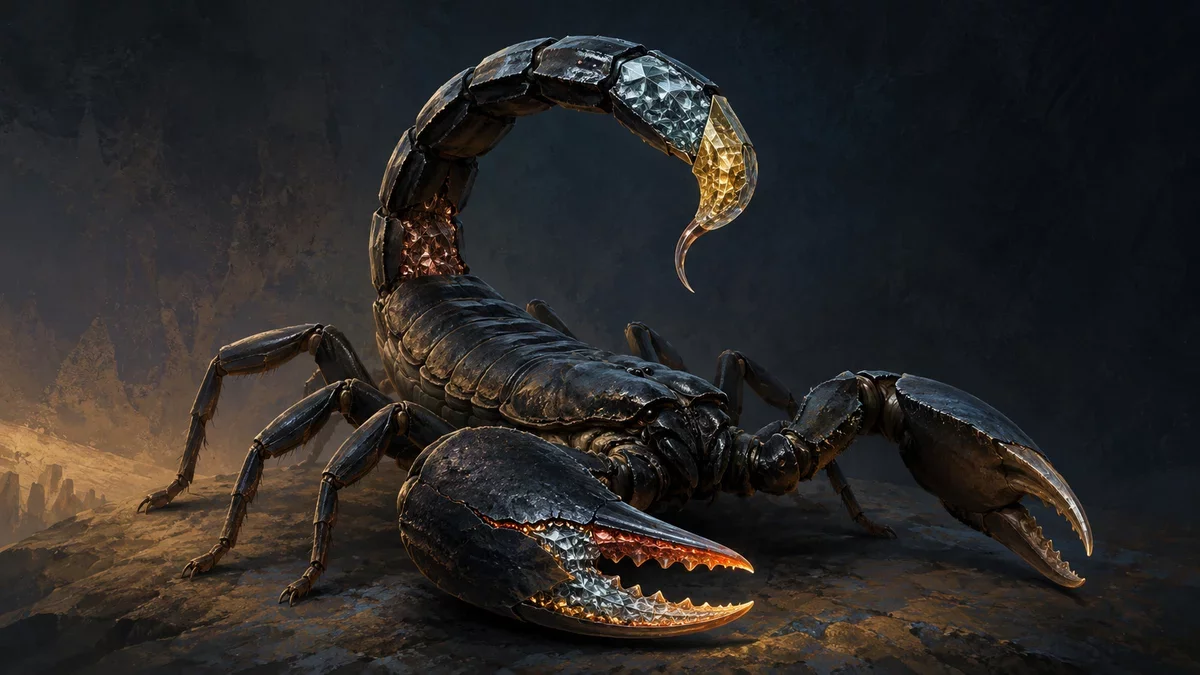
While scorpions may appear to be naturally equipped for survival with their formidable claws and venomous stingers, recent research reveals an astonishing twist: these weapons are reinforced with metals. A study led by Sam Campbell from the University of Queensland explored the claws and stingers of 18 different scorpion species, uncovering that they incorporate elements like zinc, iron, and manganese into their anatomical armaments in unique ways.
These metals serve a dual purpose--not only do they enhance the hardness of each weapon, but they also vary according to the scorpion's hunting strategies and survival tactics. This adaptation showcases an evolutionary solution to a challenge familiar to engineers: reinforcing the most vulnerable components.
A Hidden Metallurgical Marvel
To delve deeper into this phenomenon, researchers examined preserved specimens at the Smithsonian National Museum of Natural History. They utilized advanced techniques such as scanning electron microscopy and X-ray analysis to create detailed chemical maps of the scorpions' weaponry. The results highlighted distinct patterns of metal distribution, with zinc concentrated at the tips of many stingers and manganese located further down.
In the claws, the metal patterns differed significantly, with zinc and iron present along the biting edges, reinforcing areas that endure the most stress. This strategic distribution of metals is crucial, as a broken stinger or claw can lead to lifelong disabilities in adult scorpions.
Weapon Selection Based on Strategy
Interestingly, scorpions do not uniformly reinforce all their weapons. Species that utilize powerful pincers for capturing prey tend to have claws rich in zinc, while those that rely more on their stingers often have less zinc in their claws. This indicates a clear evolutionary trade-off, where scorpions allocate resources to the weapon that is most critical for their survival.
The study also revealed an unexpected finding: slender claws, which apply less crushing force, exhibited higher zinc levels. This suggests that zinc plays a vital role not just in hardness but also in durability and wear resistance, essential for gripping struggling prey long enough for a lethal sting.
As scorpions have thrived for over 400 million years, their evolutionary journey continues to inspire questions about their adaptation strategies. Future research may uncover more about how these creatures acquire metals from their environment and how this affects their evolutionary development.
Ultimately, this fascinating discovery sheds light on the intricate relationship between biology and materials science, paving the way for innovations that could influence future designs in bio-inspired engineering.