Professor Rod Fensham, a botanist at the University of Queensland, emphasizes the necessity for immediate measures to protect the species Rhodamnia zombi from the devastating effects of myrtle rust, a fungal disease threatening its survival.
Since its initial assessment in 2020, this species, which lacked a formal name at that time, has seen a decline of 10 percent in its population. Alarmingly, the remaining trees are unable to produce flowers or fruit due to the disease, according to Professor Fensham.
Myrtle Rust Impedes Growth and Reproduction
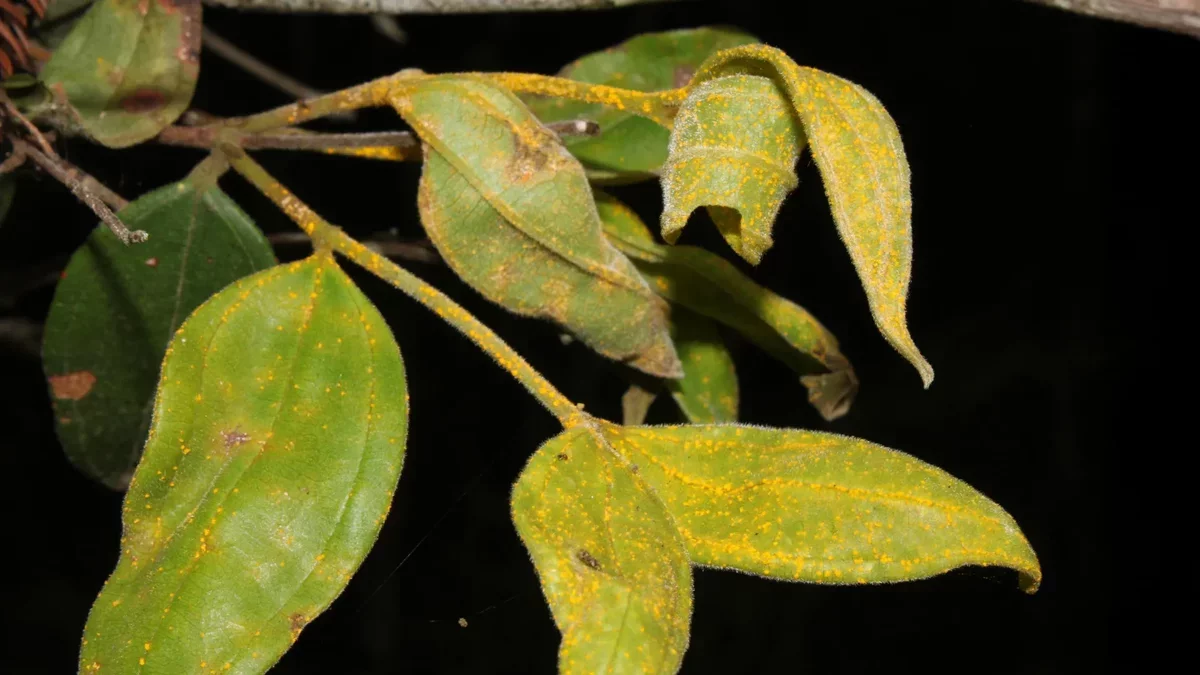
Rhodamnia zombi is characterized as a small to medium-sized tree featuring large, dark green leaves, shaggy bark, and fuzzy white flowers, thriving in the rainforests of Queensland's Burnett region. The bright yellow fungal pathogen recurrently attacks the young shoots, preventing the tree from growing or reproducing, ultimately leading to its demise.
First identified in Australia in 2010, myrtle rust poses a significant threat, prompting the classification of Rhodamnia zombi as potentially critically endangered. Professor Fensham warns that without intervention, the 17 species on the Category X list, including this tree, could face extinction within a generation.
"None of these species show any resistance to myrtle rust, nor do they have any wild populations that remain uninfected," he stated.
Hope for Resistance Through Related Species
Despite the grim situation, researchers are optimistic about the potential for survival. Professor Fensham noted that related species within the Rhodamnia genus have demonstrated some resistance to myrtle rust, suggesting a possible avenue for the endangered tree's recovery.
"Our strategy involves locating clean cuttings in the wild before they fall victim to myrtle rust and propagating them in secure environments," he explained. Currently, specialists in Lismore and Townsville are nurturing seedlings that show promise, although vigilance is essential.
With hope, once these seedlings mature and produce seeds, future generations of Rhodamnia zombi may exhibit resistance to the disease. This scenario presents a rare opportunity to witness an evolutionary process that has unfolded countless times in nature over millennia.
A Vision for Restoration
Researchers aspire that if resistant trees emerge, they can be replanted to reintegrate the species into its natural habitat. "While it's a long shot, the species requires time and space away from the relentless assault of myrtle rust to develop potential resistance," Professor Fensham remarked. "Left unchecked, the trees in the wild face a fate akin to living dead."
The findings regarding this species and its conservation were published in the journal Austral Ecology, shedding light on the urgent need for action.