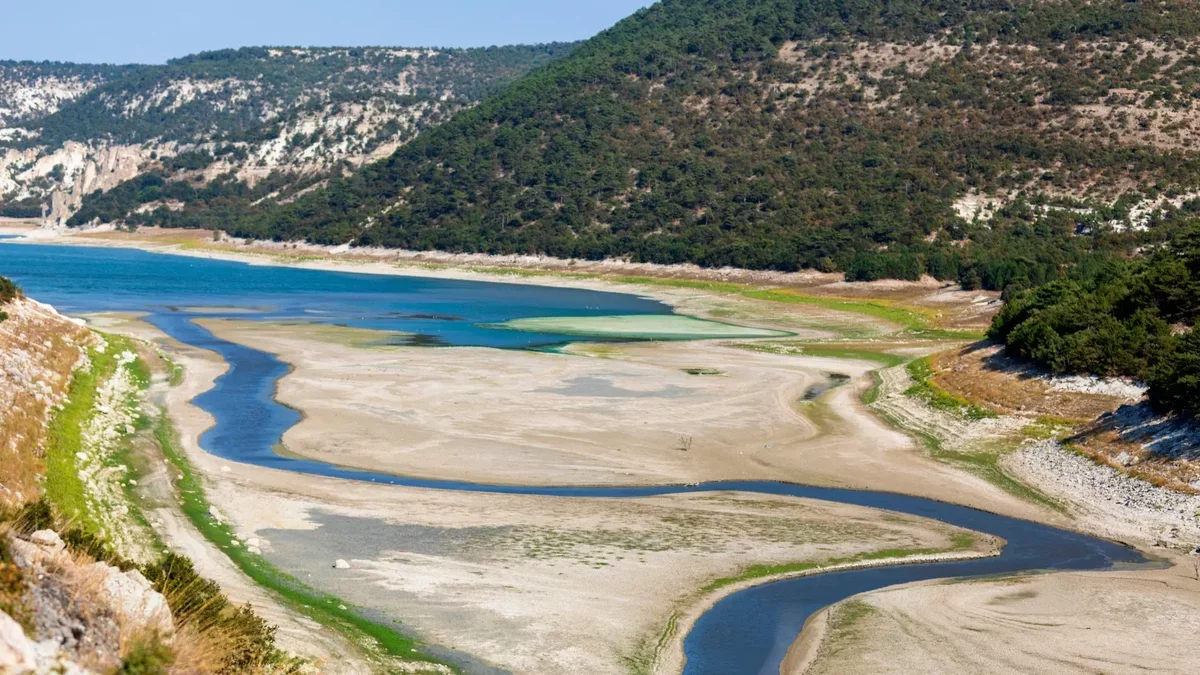
Led by Prof. Kun Shi from the Nanjing Institute of Geography and Limnology (NIGLAS) at the Chinese Academy of Sciences, a recent study highlights a concerning trend in river ecosystems. Dr. Qi Guan, the primary author, along with a researcher from Tongji University, has revealed that the world's rivers are experiencing a significant decrease in dissolved oxygen levels.
The Importance of Oxygen in Aquatic Life
Dissolved oxygen is essential for the health of aquatic environments, sustaining biodiversity and supporting various biogeochemical processes. A decline in oxygen levels can severely impact fish and other freshwater species, leading to deteriorating river health.
To assess changes in oxygen levels, the research team utilized a machine-learning stacking algorithm to analyze data from 21,439 river reaches globally, spanning nearly four decades from 1985 to 2023. Their findings indicate a global trend of decreasing oxygen levels at an average rate of -0.045 mg L-1 per decade, with nearly 79% of the rivers studied showing signs of deoxygenation.
Tropical Rivers: The Most Affected
Surprisingly, the most significant oxygen losses were observed in tropical rivers situated between 20°S and 20°N, including those in India. This contrasts with previous assumptions that higher latitude rivers would be more susceptible to oxygen depletion due to intense warming.
The study reveals that tropical rivers, which already have lower oxygen concentrations, are particularly vulnerable. The accelerated rates of deoxygenation increase the likelihood of hypoxia events, where oxygen levels drop too low to support aquatic life.
Impact of River Flow and Dams
The research also explored how river flow patterns and dam constructions influence oxygen levels. Both low-flow and high-flow conditions were found to mitigate deoxygenation compared to normal-flow situations--low-flow conditions showed an 18.6% reduction in deoxygenation rates, while high-flow conditions contributed to a 7.0% decrease.
Interestingly, the effects of dam impoundment varied by reservoir depth. Shallow reservoirs tended to accelerate oxygen loss, whereas deeper reservoirs helped reduce deoxygenation in the impounded areas.
Climate Change and Heatwaves
Further analysis identified climate warming as the primary driver of oxygen decline, accounting for 62.7% of the observed changes. Ecosystem metabolism, influenced by temperature, light, and water flow, contributed 12%, while heatwave events were responsible for 22.7% of global river deoxygenation, increasing the rate by 0.01 mg L-1 per decade.
These findings underscore the urgent need to address the impacts of climate change on freshwater ecosystems. The researchers advocate for prioritizing tropical rivers in mitigation efforts to combat oxygen depletion, providing a scientific basis for policymakers to formulate effective strategies against river deoxygenation.