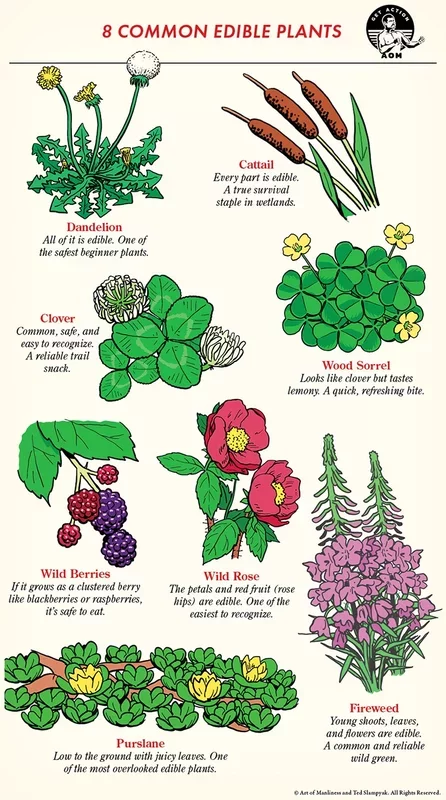
In the great outdoors, food may be closer than you think. The real challenge lies not in finding edible plants, but in identifying which ones are safe to consume, whether for survival or a quick snack during your adventures. The guide presented here showcases a selection of common, easily recognizable plants that can provide a valuable source of calories, nutrients, and hydration when you're exploring nature.
However, foraging comes with its own set of risks. The fundamental rule is: Never consume a plant you cannot confidently identify. If in doubt, it's best to avoid it. Generally, it's wise to steer clear of plants that exhibit milky sap, thorns, or umbrella-shaped flowers unless you are certain of their safety. Additionally, mushrooms should be completely avoided unless you possess expert knowledge, as they are notoriously challenging to identify correctly.
Even when you are certain about a plant's edibility, it's advisable to start with small amounts. Your body might react differently to unfamiliar foods, and it's more prudent to test a bite rather than a full meal. If you find yourself uncertain, there are methods like the universal edibility test, though it is time-consuming and not always reliable.
By familiarizing yourself with a handful of these plants, you can begin to perceive the landscape not merely as a backdrop, but as a potential source of nourishment.