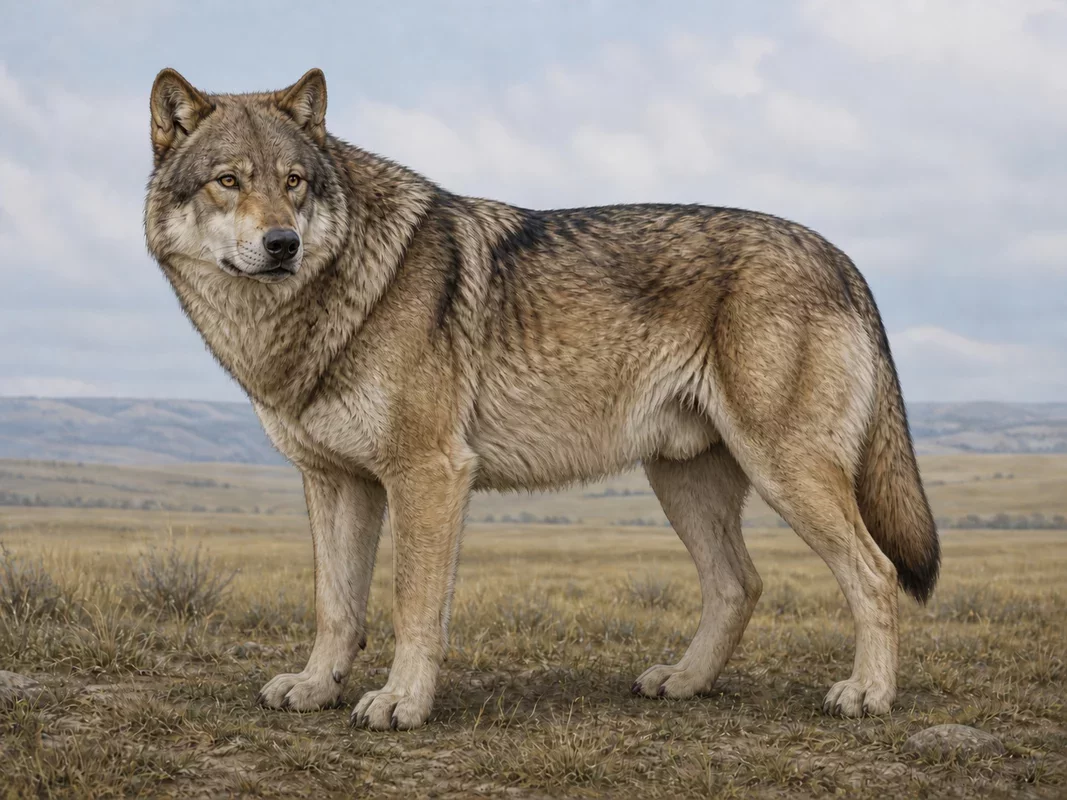
While many may recognize dire wolves from Game of Thrones, these creatures were not mere figments of imagination. They roamed the Americas during the Ice Age, serving as formidable predators long before becoming cultural icons.
Classified scientifically as Aenocyon dirus, the dire wolf thrived during the Late Pleistocene, existing until approximately 10,000 to 13,000 years ago, coinciding with the extinction of many large mammals. This era was populated by diverse species, including horses, camels, and saber-toothed cats, creating an ecosystem that was both familiar and extraordinary.
Despite their recognition, the dire wolf was a unique species, distinct from modern wolves. Unlike the gray wolf, dire wolves were more robust, featuring a heavier skull and larger teeth designed for slicing through flesh. Their average weight ranged between 60 to 68 kilograms, making them one of the largest members of the canid family.
Differences Between Dire Wolves and Modern Gray Wolves
Initially, dire wolves were thought to be closely related to gray wolves due to their similar appearance. However, recent studies have revealed that they diverged from the lineage leading to contemporary canids around 5.7 million years ago, marking them as distant relatives instead of close ones. This genetic isolation suggests that dire wolves did not interbreed with gray wolves or coyotes, which is atypical for canids that often hybridize.
More Than Just Large Wolves
For many years, dire wolves were classified within the genus Canis, alongside other canids. However, advancements in ancient DNA analysis have reshaped this understanding. Research indicates that dire wolves adapted to their environment in unique ways, leading to their distinct evolutionary path. Their resemblance to other canids is a classic example of convergent evolution, where different species evolve similar traits due to comparable ecological pressures.
Hunting Styles and Ecological Roles
Fossil evidence suggests that dire wolves did not hunt in the same manner as saber-toothed cats. Instead, they likely employed a pursuit strategy, relying on stamina and teamwork to catch prey. This contrasts with the ambush tactics of saber-toothed cats, which were built for quick, powerful strikes.
Moreover, dire wolves possessed an exceptionally strong bite force, surpassing that of many contemporary predators. This strength allowed them to efficiently process carcasses, adapting to a landscape where competition for food was fierce.
The Extinction of Dire Wolves
Dire wolves disappeared during a significant extinction event at the close of the Pleistocene, a period that saw the loss of numerous large mammals. Their specialized feeding habits may have hindered their ability to adapt to changing environments, unlike more flexible species such as gray wolves that survived by diversifying their diets.
In recent years, the concept of de-extinction has sparked interest, with attempts to recreate dire wolves through genetic engineering. However, these efforts have raised questions about the authenticity of such creatures, emphasizing that true species are defined by their complex evolutionary histories.
The story of the dire wolf illustrates the intricate tapestry of life that has existed on Earth. Understanding their unique adaptations and eventual disappearance not only enriches our knowledge of evolutionary biology but also highlights the importance of ecological balance in the survival of species.