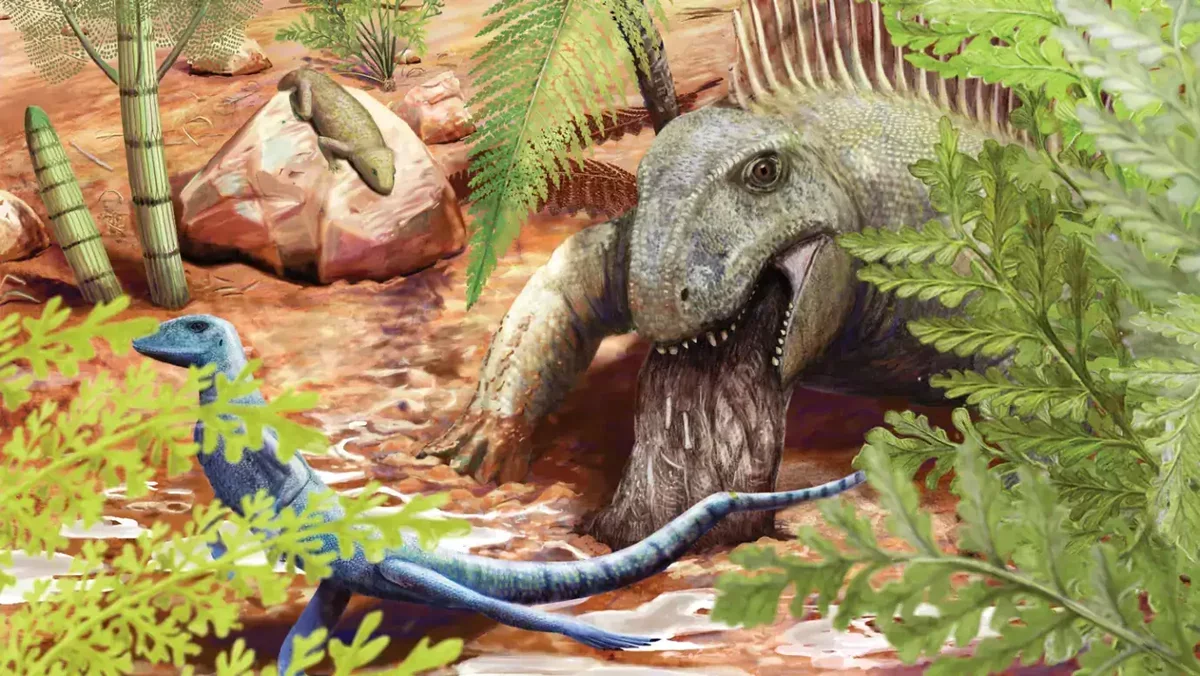
Approximately 290 million years ago, a predator traversing the river valleys of the supercontinent Pangaea ingested more than it could digest, leading to an extraordinary fossilization event. This ancient regurgitation, now identified as the oldest known fossilized land-animal vomit, provides a rare glimpse into the food web of a time long before the dinosaurs.
Dubbed a "regurgitalite," this fossilized material contains a collection of bones from various prey animals, encapsulated in a single moment of predation. According to paleontologist Arnaud Rebillard from the Museum für Naturkunde in Berlin, this find serves as a snapshot of the ecological dynamics of that era, offering invaluable data about the behaviors of ancient creatures.
A Glimpse into Prehistoric Diets
The regurgitalite was unearthed at the Bromacker site in central Germany, a rare location that preserves a comprehensive terrestrial ecosystem from the early Permian period (299-251 million years ago). This era was characterized by lush floodplains and diverse fauna.
Upon examination, researchers discovered an intriguing pattern: the bones were not scattered but clustered tightly together. Micro-CT scans revealed a compact assembly of 41 bones, originating from at least three different species. Among these were remains of a small parareptile, Thuringothyris mahlendorffae, and another small reptile, Eudibamus cursoris, alongside a larger herbivore related to Diadectes.
This unique fossilization process likely occurred when the predator was suddenly buried by sediment after regurgitation, creating an oxygen-free environment that preserved the bones for millions of years. The combination of mucus, stomach fluids, and bones formed a pellet that fossilized over time, allowing scientists to study this ancient behavior.
As Rebillard notes, regurgitalites offer direct evidence of an animal's behavior, providing critical insights into the food web that existed nearly 290 million years ago.
Identifying the Predator
Distinguishing between vomit and feces in fossils requires meticulous analysis. The sediment surrounding this fossil contained little phosphorus, a characteristic of regurgitated material, supporting the conclusion that it was indeed vomit. The bones were remarkably intact, indicating they had not been subjected to extensive digestive processes.
While the exact predator remains unidentified, researchers have narrowed the possibilities to two known species from the same fossil beds: Dimetrodon teutonis and Tambacarnifex unguifalcatus, both members of the synapsid lineage that eventually led to mammals. These predators likely swallowed their prey whole, subsequently expelling the harder, indigestible parts.
The diverse mix of bones suggests an opportunistic feeding strategy, where the predator consumed whatever prey was available, rather than specializing in a single type. This discovery not only enhances our understanding of ancient ecosystems but also highlights the importance of such fossils in piecing together the complex interactions of prehistoric life.
In a remarkable twist of fate, this ancient vomit serves as a time capsule, preserving the intricate web of life that thrived nearly 300 million years ago.