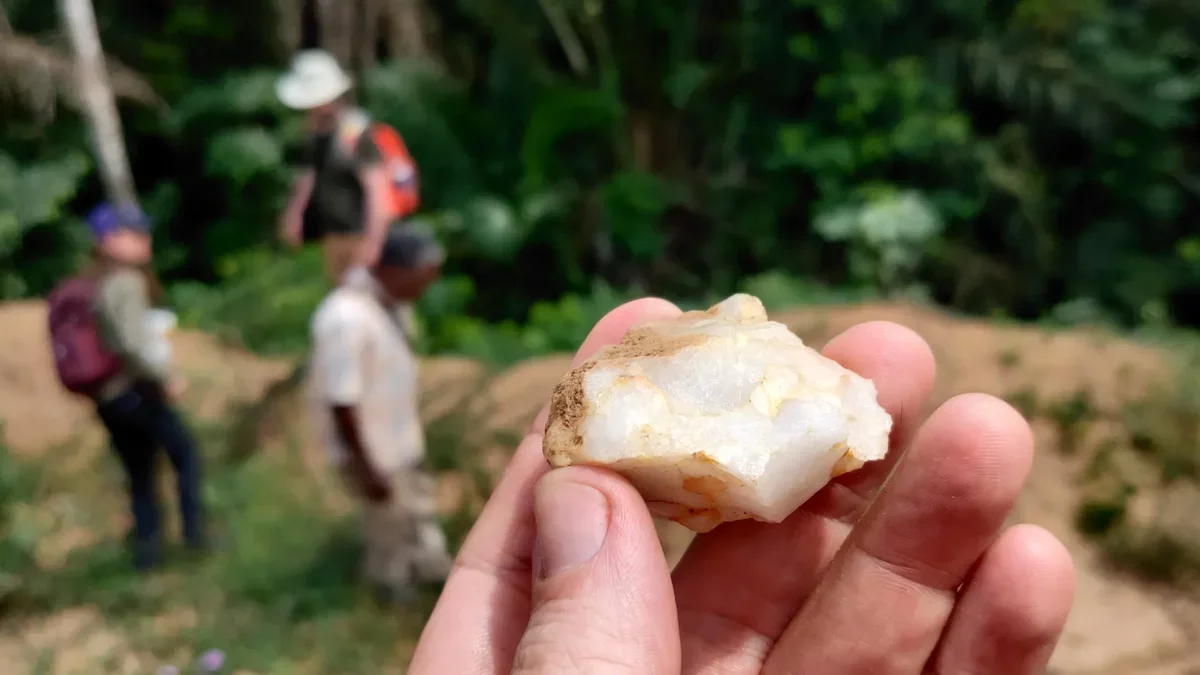
Recent archaeological findings in Côte d'Ivoire have revealed that humans inhabited lush tropical rainforests approximately 150,000 years ago. This groundbreaking discovery significantly extends the timeline of known rainforest habitation, suggesting that early Homo sapiens were far more versatile than previously understood.
The research, published in the esteemed journal Nature, supports the emerging perspective that human evolution did not occur in isolation within a single environment. Instead, evidence indicates that ancient populations thrived in a variety of ecosystems, including arid deserts, coastal areas, and dense forests.
Unearthing Ancient Tools
The exploration of this site dates back to the 1980s when Professor Yodé Guédé from l'Université Félix Houphouët-Boigny participated in a joint Ivorian-Soviet research initiative at a location known as Bété I. Excavations at that time unveiled layers of stone tools buried deep beneath what is now a rainforest.
However, the age of these tools and the environmental conditions of that era remained uncertain until an international team revisited the site with advanced technologies unavailable to earlier researchers. Dr. James Blinkhorn from the University of Liverpool and the Max Planck Institute of Geoanthropology remarked, "With Professor Guédé's assistance, we were able to relocate and re-examine the original trench using state-of-the-art methods."
The timing of this renewed investigation proved crucial, as subsequent mining activities have since compromised the site, making the data recovered particularly invaluable.
Insights into Rainforest Life
To ascertain the site's age, scientists employed various dating techniques, including Optically Stimulated Luminescence and Electron-Spin Resonance, both indicating human presence around 150,000 years ago. Further analysis of pollen, phytoliths, and chemical traces in sediments revealed that the area was predominantly forested during this period.
Notably, the samples contained pollen and plant waxes linked to humid West African rainforests, with minimal grass pollen suggesting a dense woodland environment rather than a sparse forest.
Prior to this research, the oldest confirmed evidence of human habitation in African rainforests was estimated at only 18,000 years ago, while the global record was around 70,000 years in Southeast Asia.
Dr. Eslem Ben Arous, the lead author, stated, "This discovery pushes back the oldest known evidence of humans in rainforests by more than double the previously known estimate."
Reevaluating Human Adaptability
This finding contributes to a growing body of evidence that early humans were adaptable generalists, capable of thriving in diverse habitats. This ecological flexibility may have played a significant role in the successful global spread of Homo sapiens while other human relatives became extinct.
Ongoing discussions around this research highlight the challenges of rainforest archaeology, where fossils are less likely to survive in hot, humid conditions, and dense vegetation complicates excavations. Many scientists believe there could be even older rainforest sites yet to be discovered across Africa.
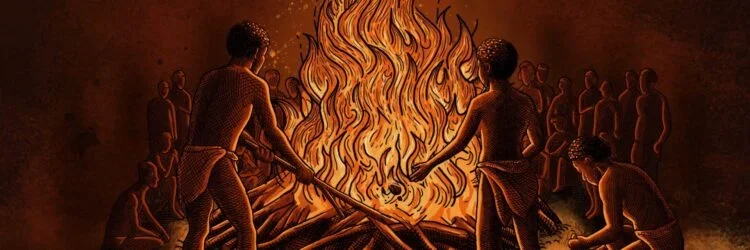
The study also raises intriguing questions about the extent to which ancient humans may have influenced tropical ecosystems, potentially shaping rainforest environments through activities such as hunting, fire use, and plant management.
Professor Eleanor Scerri, a senior author of the study, emphasized, "Convergent evidence shows that ecological diversity is central to our species' history, reflecting a complex narrative of population subdivision across various regions."
This discovery in Côte d'Ivoire may be just the beginning, as several other sites in the region remain unexplored, suggesting the potential for uncovering even older evidence of rainforest-dwelling humans.
The research received funding from the Max Planck Society and the Leakey Foundation.