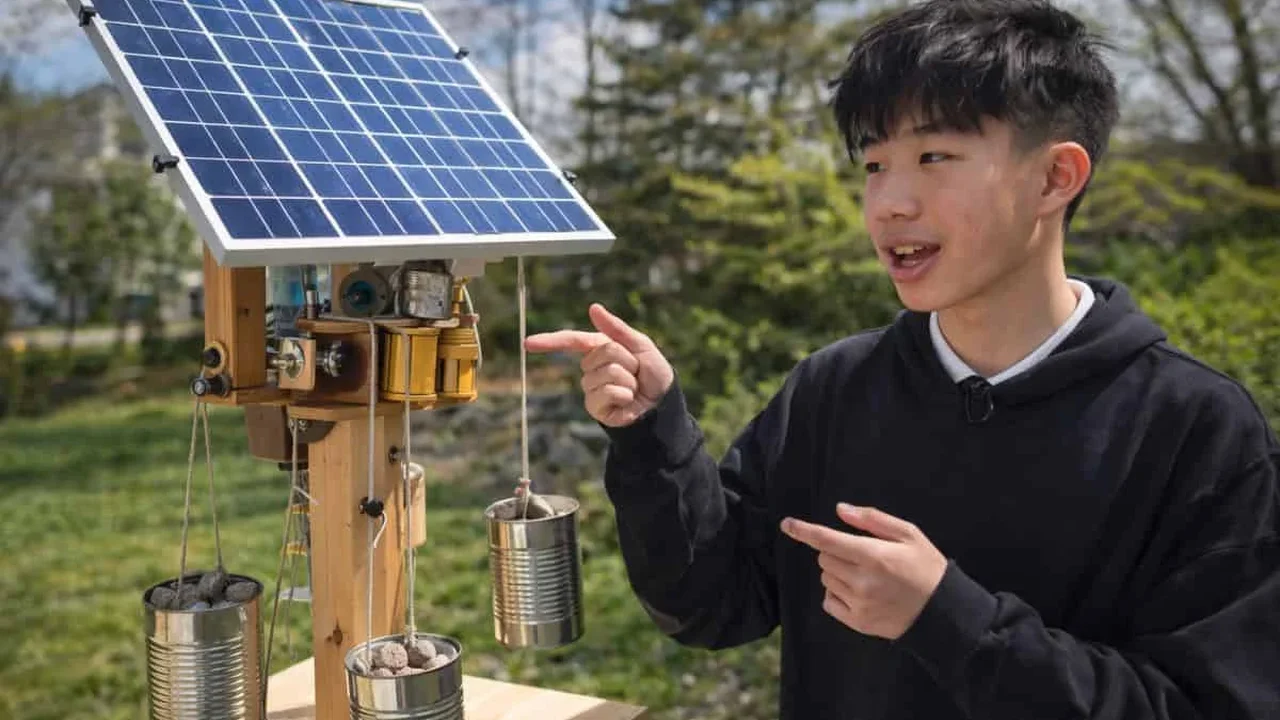
A household chore sparked an inventive solution for 13-year-old Jason Chang. After tiring of repositioning his family's solar-powered holiday decorations, the Worcester Academy student designed a tracker that follows the sun without motors or electricity.
Chang's device uses a balanced, seesaw-like frame and a controlled flow of water. As water slowly collects in a bucket attached to the frame, its changing weight tilts the solar panel over the course of the day. The prototype was built with recycled and inexpensive materials for less than $25.
A simple mechanism, tested outdoors
In an outdoor comparison with a stationary panel, Chang's tracker produced about 20% more voltage during the test. The result points to a low-cost way of adjusting panel orientation as the sun moves, without relying on powered sensors or motors.
After more than a year of refining the fluid-control system, Chang was named a National STEM Champion and invited to present his project at the National STEM Festival in Washington, D.C. The current design has a seasonal limitation: water can freeze in cold weather. He is working on a version intended to function in sub-zero conditions.
If further development confirms its performance and durability, a passive tracker like this could offer a practical option for small-scale and off-grid solar installations. Accessible designs may help more people make effective use of the sunlight available to them.