A large-scale citizen science project in Switzerland turned an unusual idea into a clear scientific signal: buried cotton underwear can reveal how active the soil is beneath our feet.
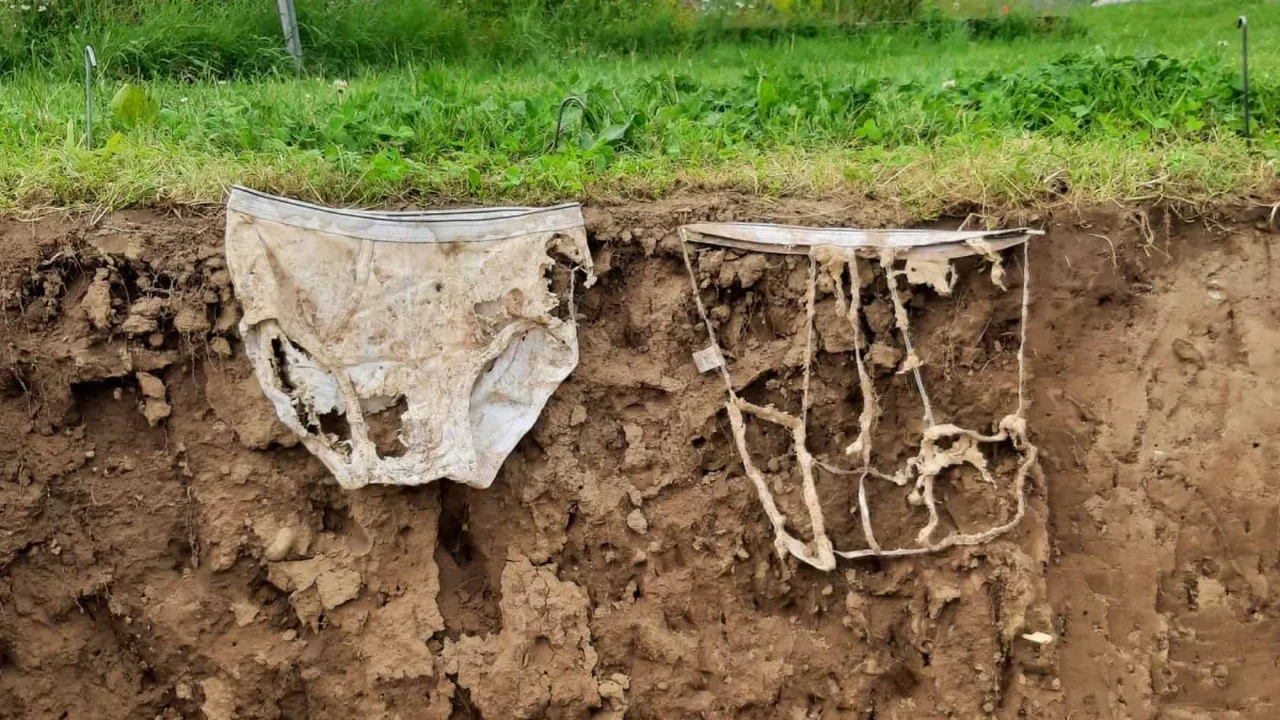
In 2021, around 1,000 volunteers placed standardized white cotton briefs, along with tea bags, into gardens, meadows, fields and lawns across the country. The samples were buried at shallow depth and retrieved after about one month and again after two months. By the end of the trial, some pairs were still intact, while others had been reduced to fragments as soil organisms broke down the cotton.
Researchers at Agroscope and the University of Zurich then measured the damage with image-analysis software rather than visual estimates. After filtering the data, 780 sites remained for analysis. The results showed a strong link between land use and decomposition speed: gardens led with about 58% cotton loss after two months, followed by arable fields at 51%, permanent grasslands at 47% and lawns at roughly 40%.
The study, published in Plants, People, Planet, suggests that the underwear method is a practical way to track decomposition activity and, more specifically, soil fertility. Nutrient availability, especially phosphorus, appeared to matter more than organic carbon alone. In other words, the faster the cotton disappeared, the more active the underground ecosystem tended to be.
Researchers note that the test does not measure soil health in a single, absolute sense. Instead, it highlights how management practices shape microbial life and nutrient cycling. That makes the approach useful for science outreach as well as environmental monitoring, because it turns an invisible process into something easy to understand.
As simple tools like this spread, they could help communities read the living quality of soil more clearly and support smarter land management in the years ahead.