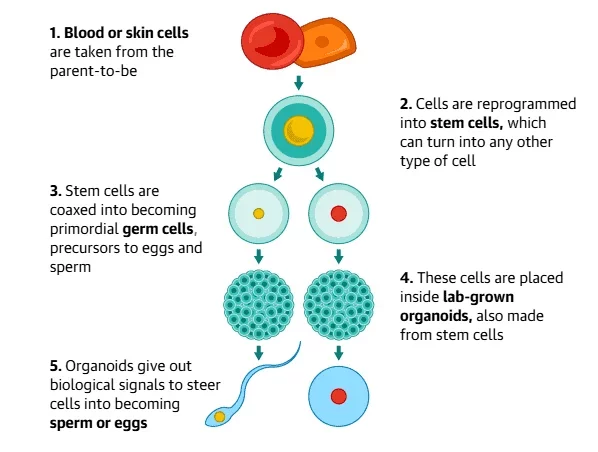
For centuries, the process of human reproduction has been straightforward: sperm meets egg, leading to the creation of life. However, recent advancements in reproductive biology are reshaping this narrative. A startup based in Utah, Paterna Biosciences, has announced a groundbreaking achievement: the successful cultivation of functional human sperm in a laboratory setting. This innovation has even enabled the creation of visibly healthy embryos using these lab-grown sperm.
This remarkable development addresses a long-standing challenge in reproductive science, particularly for men facing infertility due to the absence of sperm. While this offers immediate hope for those affected, it also marks a significant step forward in the field of in vitro gametogenesis--the process of generating gametes outside the human body--potentially redefining the future of parenthood.
Creating the Optimal Environment
Typically, the human body requires over two months to produce mature sperm, with the testes functioning like a continuous assembly line. Inside the testicular tubules, stem cells undergo division and maturation, culminating in the release of sperm. Alexander Pastuszak, CEO of Paterna and a urologist at the University of Utah, explains that his team bypassed the traditional testicular process by extracting sperm-producing stem cells and nurturing them in a lab dish. Utilizing advanced computer models, they identified the precise chemical signals necessary for these cells to thrive.
"We've determined the essential instructions to guide these stem cells into becoming mature sperm," Pastuszak stated. This breakthrough could revolutionize treatment options for approximately 10% to 15% of infertile men who produce no sperm but possess the requisite stem cells.
Experts, such as Larry Lipshultz from Baylor College of Medicine, emphasize the significance of this discovery, noting that it identifies critical growth factors necessary for sperm maturation.
Redefining Parenthood
The implications of this technology extend beyond male infertility. Researchers at Oregon Health and Science University (OHSU) have demonstrated the potential to create early-stage human embryos from skin cells, pushing the boundaries of reproductive possibilities. By replacing the genetic material in a donor egg with that from a skin cell, they have successfully produced functional eggs, which could lead to new avenues for reproduction.
This technology opens up exciting prospects for same-sex couples, allowing for the possibility of both partners contributing genetically to their children. The future may see the creation of embryos from diverse biological sources, fundamentally altering the landscape of family formation.
A Rapidly Advancing Field
The pursuit of in vitro gametogenesis is progressing swiftly. Experts like Prof. Katsuhiko Hayashi from the University of Osaka anticipate that within seven years, viable human sex cells could be produced entirely from scratch. Such advancements promise to address the growing demand for fertility solutions, as many individuals seek options to extend their reproductive timelines.
As this field evolves, it holds the potential to transform societal norms around family planning, enabling individuals to conceive later in life and providing greater accessibility to those facing infertility challenges. The future of reproduction is poised for remarkable change, driven by scientific innovation and a commitment to making parenthood achievable for all.