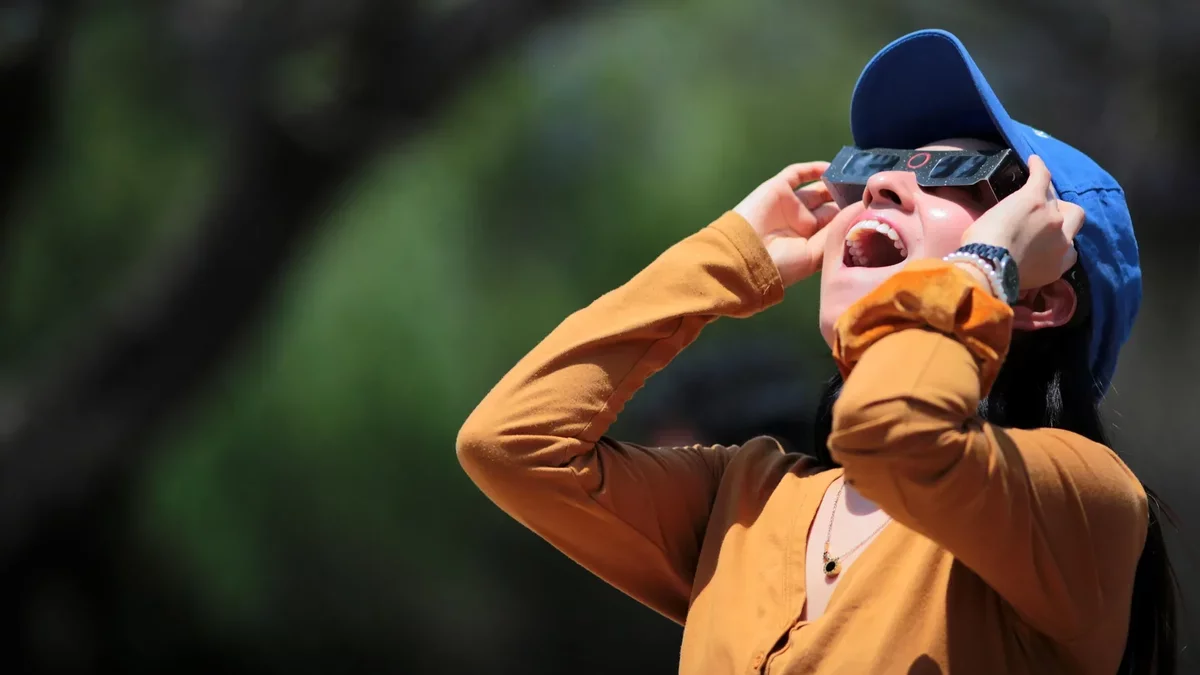
During the recent total solar eclipse, seismologist Benjamin Fernando from Johns Hopkins University experienced an unexpected phenomenon in an Ohio city. He noted a sudden drop in ambient noise levels, prompting him to explore whether this would be reflected in seismic data.
Understanding Seismic Noise Sources
Seismic noise is influenced not only by natural occurrences but significantly by human activities such as construction, traffic, and events like concerts. These activities generate vibrations that propagate through the Earth.
To assess the eclipse's effect, Fernando examined seismic data from hundreds of monitoring stations throughout April 2024. His analysis unveiled a distinct pattern associated with the eclipse.
Seismic Patterns During Totality
In cities located along the eclipse's path, seismic noise exhibited a slight increase just prior to totality, followed by a dramatic decrease as the Sun was completely obscured. After the eclipse, noise levels rebounded, surpassing the monthly average.
This observable trend was confined to urban areas directly experiencing totality, with rural locations showing no similar changes. For instance, despite achieving 97% totality, New York City did not exhibit any notable seismic variations, as Fernando pointed out.
A Collective Pause in Urban Life
The results indicate that the eclipse transcended mere visual wonder, as residents in cities where totality was visible seemed to momentarily halt their daily routines, leading to a quantifiable drop in human-induced vibrations. Given the constant seismic activity in urban settings, even a brief reduction is easily detectable.
A comparable phenomenon occurred during the Covid-19 lockdowns of 2020, when seismic noise from human activities decreased by 50% between March and May.
Debunking Myths: Eclipses and Earthquakes
This study also dispels a prevalent myth that eclipses can induce earthquakes due to celestial alignments. Fernando's findings provide no evidence to support this notion. "Some narratives suggest that eclipses cause earthquakes, but this research clearly refutes that idea," he stated.