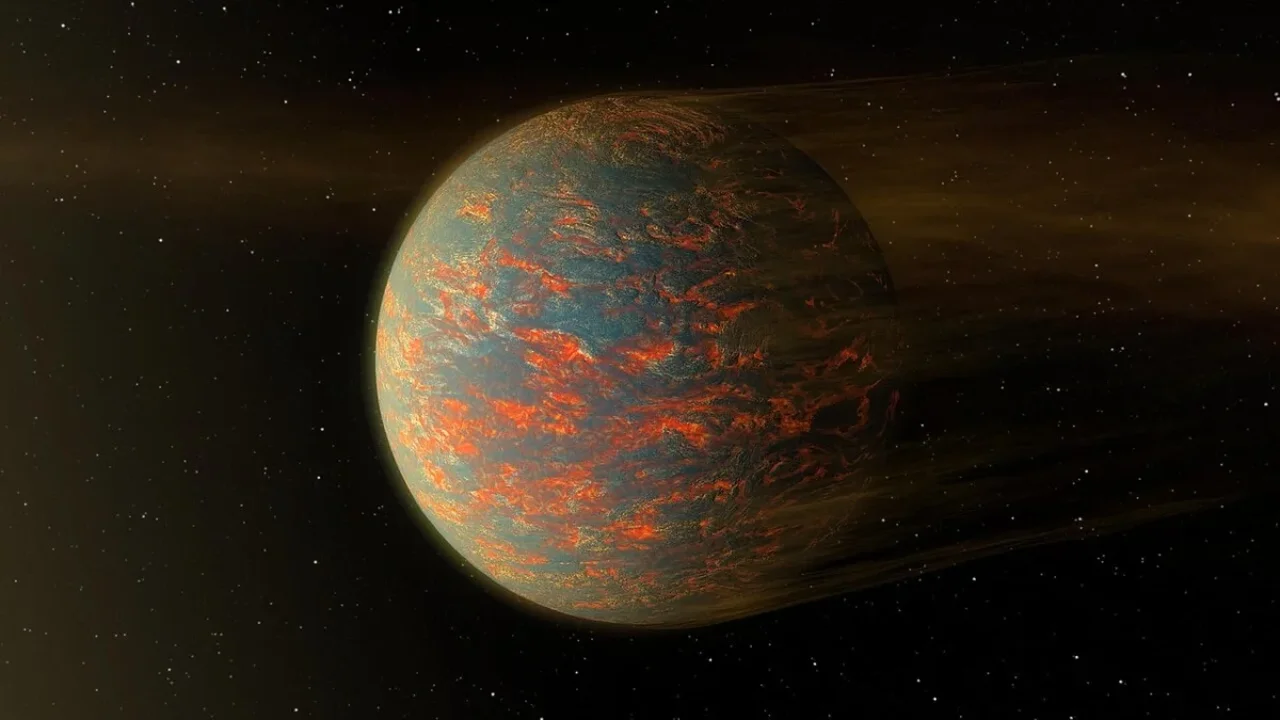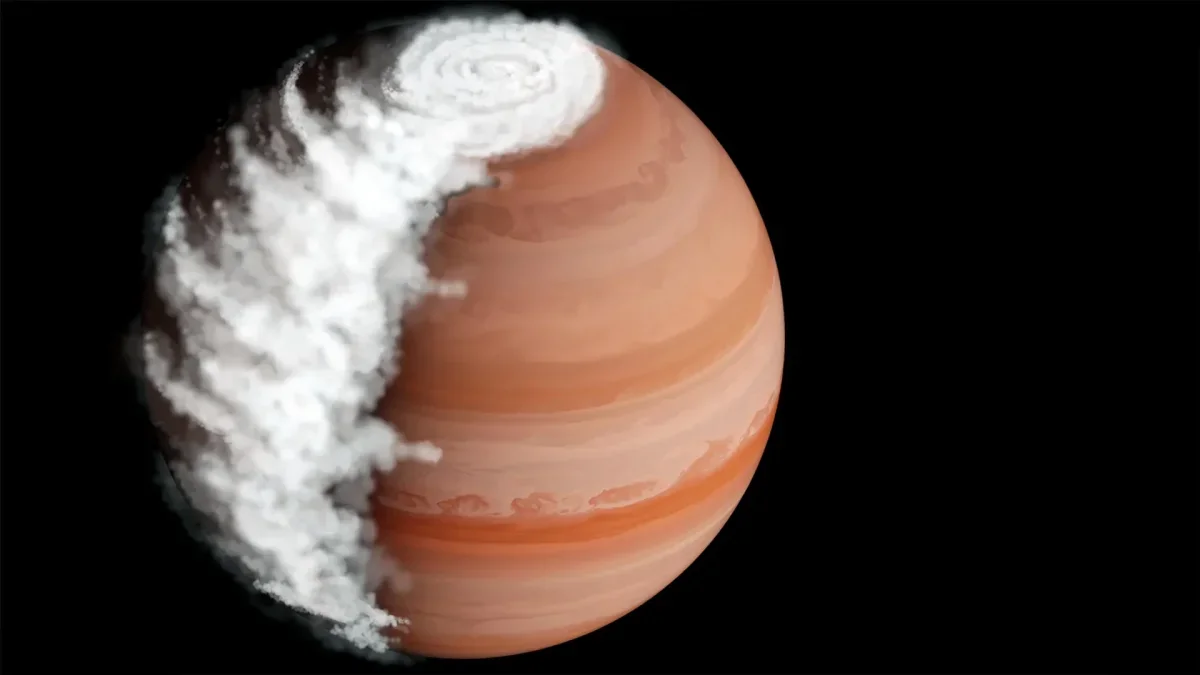
The James Webb Space Telescope (JWST) has made a groundbreaking discovery regarding the atmospheric phenomena of a distant planet, located nearly 700 light-years away in the constellation Microscopium. This finding showcases a remarkable daily weather cycle on a Hot Jupiter exoplanet, marking a significant achievement in the field of astronomy.
Through these observations, researchers gained unprecedented insights into the planet's atmosphere, enhancing our understanding of its composition and meteorological behavior. The study detailing these findings was published in the journal Science.
David Sing, a Bloomberg Distinguished Professor of Earth and Planetary Sciences at Johns Hopkins University and co-author of the study, expressed his excitement: "For two decades, I've explored exoplanets, and the issue of cloudiness has always been a challenge. While we knew that clouds are common on Hot Jupiters, it was akin to peering through a foggy window. Now, we've cleared that view, allowing us to analyze the composition and dynamics of these clouds."
Extreme Weather Patterns on WASP-94A b
To investigate WASP-94A b, scientists monitored the planet during its transit across its host star. This allowed JWST to differentiate between the leading and trailing edges of the planet as it passed through the star's light.
The leading edge represents the planet's morning side, where cooler air from the night side is drawn toward the intensely heated day side. Conversely, the trailing edge symbolizes the evening side, where air returns to the darkness.
The observations unveiled a striking contrast between the morning and evening conditions. The morning side was dense with clouds composed of magnesium silicate, a mineral prevalent on Earth, while the evening side appeared nearly devoid of clouds.
Researchers propose two theories for this cloud disappearance: powerful winds may be pulling the clouds deep into the planet's atmosphere on the scorching day side, or the clouds could evaporate in temperatures exceeding 1,000 degrees, much like morning fog dissipating on Earth but under far more extreme conditions.
Sing remarked, "The results were astonishing. While we anticipated some differences, the stark contrast in weather patterns and cloud coverage was unexpected, reshaping our understanding of this planet."
James Webb's Unprecedented Observations
The clearer skies during the evening provided scientists with an opportunity that previous telescopes, such as Hubble, could not offer. By focusing on the cloud-free side of the planet, researchers could analyze the atmosphere without the interference of cloud cover.
Sagnick Mukherjee, a postdoctoral fellow at Arizona State University and the study's lead author, noted, "With Hubble, we obtained an averaged view that combined data from both clouds and atmosphere. JWST's capabilities allowed us to localize our observations and reveal the cloud cycle."
This new data also resolved a long-standing question regarding the planet's chemical makeup. Earlier estimates suggested WASP-94A b had significantly higher levels of oxygen and carbon than Jupiter, a finding that conflicted with established theories of planetary formation.
Now, scientists believe the planet contains only about five times more oxygen and carbon than Jupiter, aligning it more closely with the gas giant of our solar system than previously thought.
A New Era of Exoplanet Research
Hot Jupiters, massive gas planets orbiting exceptionally close to their stars, serve as natural laboratories for examining atmospheric chemistry and cloud dynamics in extreme environments. Following their study of WASP-94A b, the research team explored eight additional Hot Jupiters, discovering similar cloud cycles on two more: WASP-39 b and WASP-17 b.
Looking ahead, researchers plan to expand their investigations using a broader JWST observing program aimed at exploring cloud cycles across various exoplanets, including an intriguing gas giant traversing the habitable zone on an eccentric orbit.