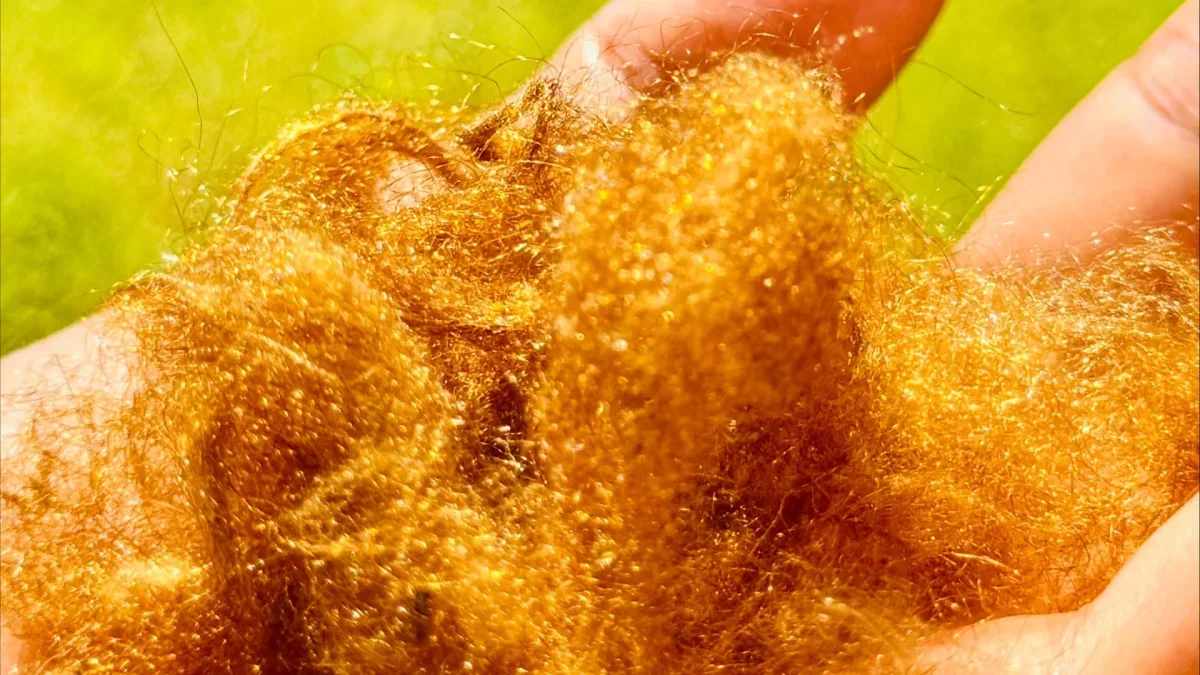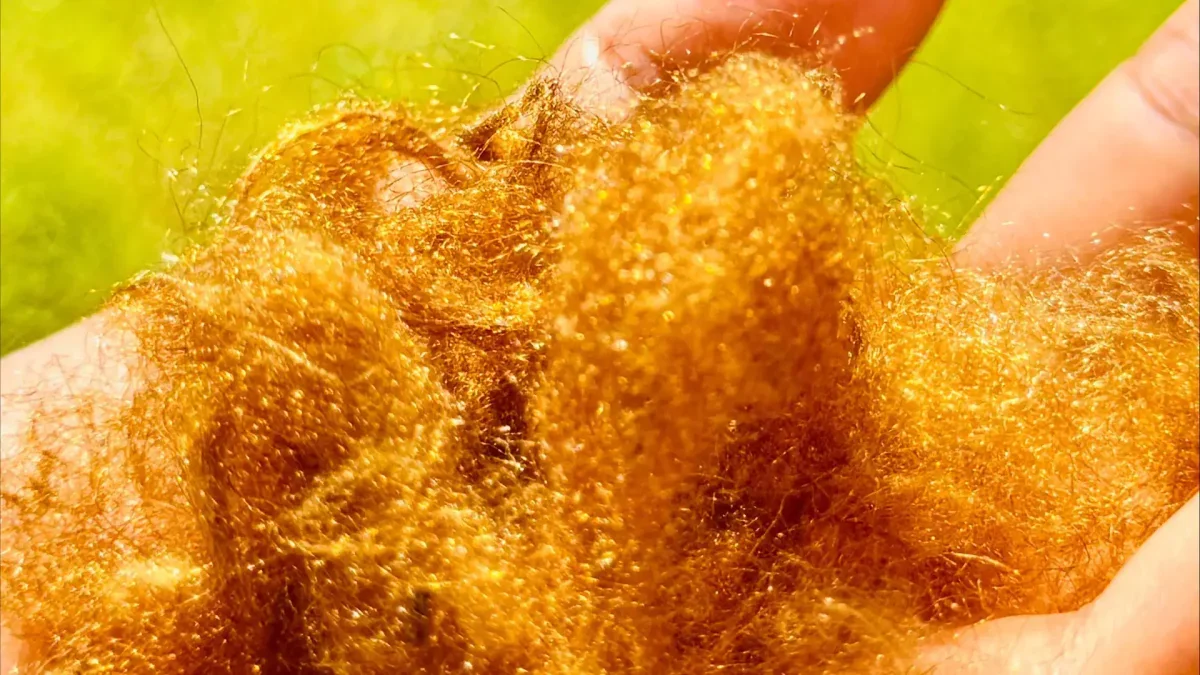
Researchers in South Korea have brought a rare textile tradition back into focus by recreating a version of sea silk, the luminous fiber once prized by emperors and elites. The material begins as byssus, the natural anchor thread produced by certain mollusks to attach themselves to rocks and the seafloor.
For centuries, artisans cleaned, combed, and spun these threads into a fabric with a warm golden glow. The most celebrated source was Pinna nobilis, a Mediterranean pen shell whose fibers became a symbol of prestige. Today, however, that species is protected, pushing researchers to look for a more sustainable alternative.
A New Source for an Ancient Craft
The team, led by Professor Dong Soo Hwang of POSTECH and Professor Jimin Choi of the Environmental Research Institute, turned to Atrina pectinata, a pen shell cultivated in Korean coastal waters for food. Its byssus threads closely match the structure and chemistry of traditional sea silk fibers.
Using established processing techniques, the researchers transformed the discarded threads into a golden textile that echoes the look and feel of the historic material. Beyond its cultural value, the approach suggests a way to give shellfish byproducts new purpose in sustainable material design.
Why the Shine Lasts
The study also explains sea silk's enduring brilliance. Its color does not come from dye, but from structural coloration -- microscopic arrangements inside the fiber that shape how light is reflected. At the center of this effect are protein structures called photinin, organized in layered patterns that create the shimmering gold tone.
Because the color is built into the fiber's architecture, it resists fading far better than many pigment-based textiles. The researchers also found that the more ordered the protein layers are, the stronger the shine becomes. Sugar molecules help stabilize the structure, adding both durability and visual depth.
Published in Advanced Materials, the study points to a future where heritage textiles and advanced materials science can meet through cleaner, more resourceful production methods.
This breakthrough could inspire next-generation fabrics that combine beauty, durability, and sustainability in the years ahead.