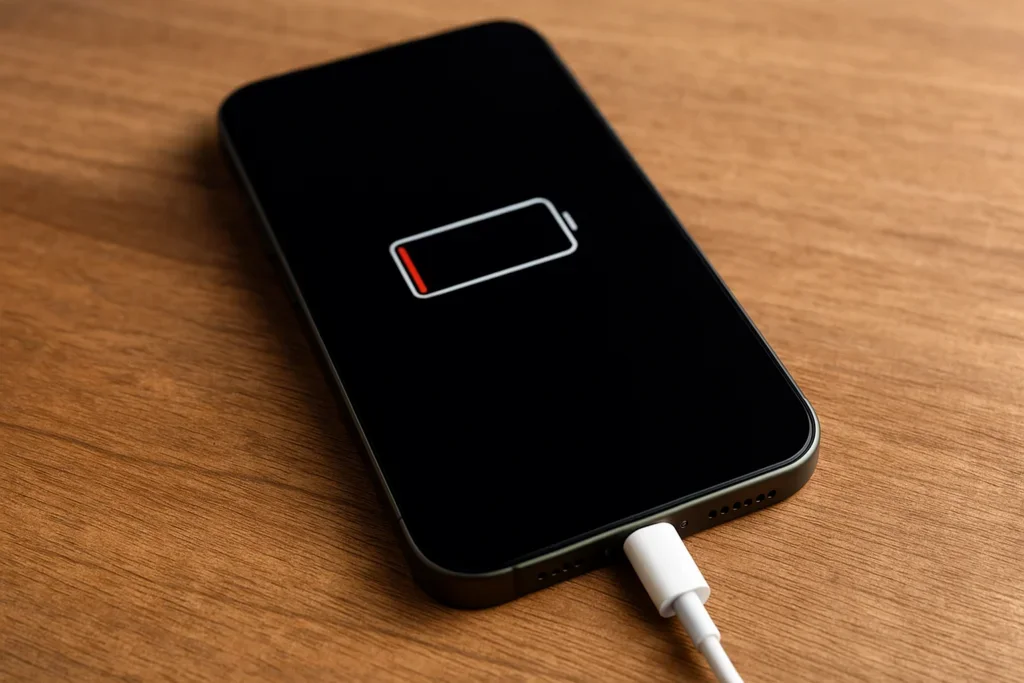
Battery aging is often blamed on heat, fast charging, and repeated full cycles. But a new study from South Korea shows that for a major class of lithium-ion batteries, another factor may be quietly accelerating wear: deep discharge.
A closer look at battery wear
Researchers at POSTECH and Sungkyunkwan University examined layered cathode materials widely used in electric vehicles, including NMC622 and NMC811. Using microscopy, spectroscopy, and computer simulations, they found that damage can intensify not only during charging, but also when batteries are drained too far during use.
The team observed that the lower the discharge cutoff voltage, the faster the battery performance declined. In the most affected cells, the surface of the cathode changed structure, oxygen atoms were lost, and unwanted gas formation increased sharply.
Why the surface matters
The study suggests a quasi-conversion reaction is happening at low voltages. As lithium re-enters the cathode, oxygen near the surface becomes unstable, creating defects that push the material toward a rocksalt-like phase. That surface-level shift blocks lithium movement and weakens the battery over time.
Gas analysis reinforced the finding: deeply discharged cells produced far more byproducts than protected ones. In one test, high-nickel batteries that were repeatedly drained nearly to empty retained only a tiny fraction of their capacity after 250 cycles, while batteries kept above the critical threshold preserved much more of their storage ability.
A software-level solution
The practical fix is straightforward: raise the discharge cutoff voltage so the battery stops before the most vulnerable zone, around 3.0 volts. That adjustment, managed through battery software, can slow oxygen loss and reduce structural damage without changing the hardware.
The trade-off is a slightly shorter runtime per charge, but the benefit is a longer overall battery lifespan. The finding is especially relevant for nickel-rich cathodes, while other battery types such as lithium iron phosphate may behave differently.
As battery systems become smarter, small software changes could help devices and electric vehicles stay efficient for longer, shaping a future where energy storage lasts more predictably and sustainably.