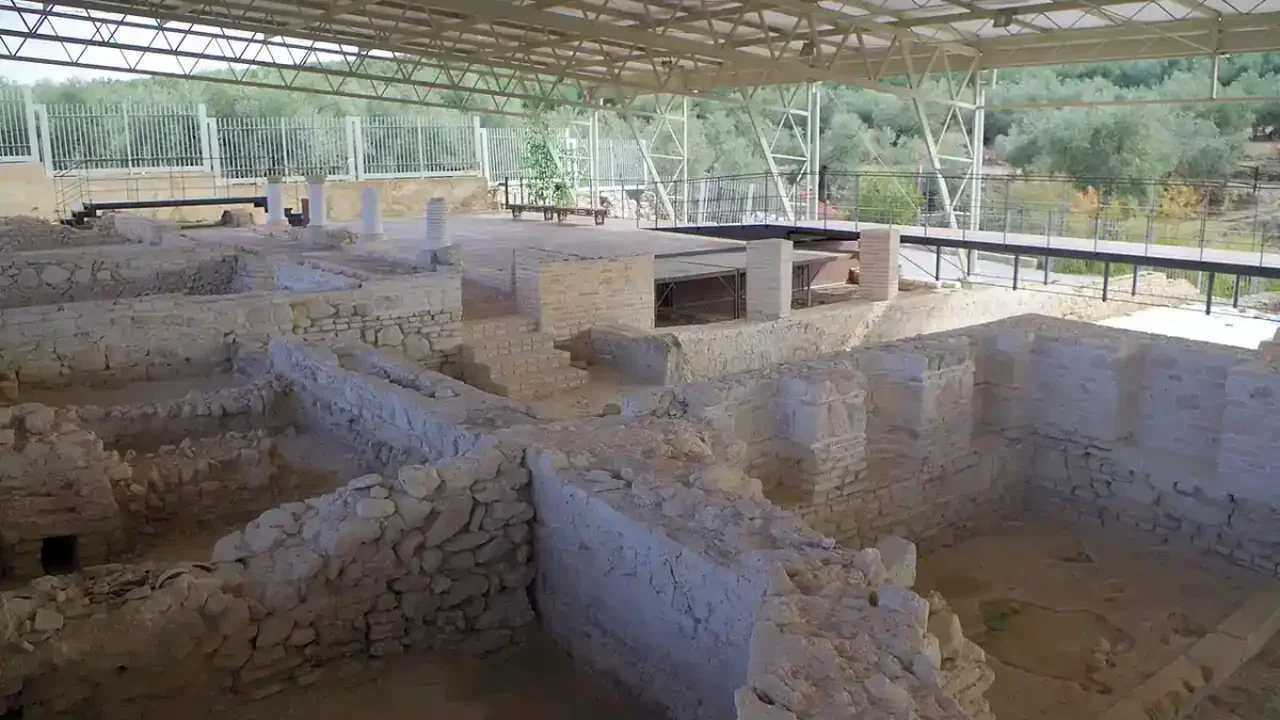
Archaeologists studying the Roman villa of Fuente Álamo, near Córdoba in southern Spain, believe one of its most puzzling rooms may actually have been a private library. If confirmed, it would be the oldest known library in Iberia and one of the best-preserved private reading spaces from the Roman world.
A room reinterpreted
The villa began as a bath complex before evolving into a grand estate in the third century CE and being remodeled again in late antiquity. Room 10 has long resisted clear interpretation, with earlier ideas suggesting it may have been a Mithras sanctuary. The new study, however, points to a different reading.
According to the researchers, the room's layout fits known Roman library design. Its apse, rectangular and semicircular niches, raised podium, and nearby spaces for support functions all suggest a setting built for books, display, and study.
The team used a method known as shape grammar, which examines how architectural elements work together rather than treating them as isolated details. That approach helped them compare the room's structure with patterns seen in other Roman intellectual spaces.
Why the case matters
Ancient libraries are notoriously hard to identify because papyrus, parchment, and wood rarely survive for centuries. In this case, the building itself may be the clearest evidence. The researchers describe Fuente Álamo as the westernmost documented library in the Roman Empire and one of the rarest surviving examples of a private library structure.
The study also raises the possibility that the room belonged to a wealthy landowner connected to literary culture. A nearby Roman sarcophagus, known for scenes linked to reading and teaching, may offer a clue, though no inscription confirms the connection.
Published in the Journal of Mediterranean Archaeology, the research adds a new architectural chapter to the history of Roman knowledge spaces. If future work supports the interpretation, Fuente Álamo could become a key reference point for how private learning and status were expressed in the ancient Mediterranean, shaping how we understand the future of archaeological interpretation.