For centuries, sailors have recounted tales of two maritime phenomena: vast holes in the ocean that seem to swallow water and towering waves that rise unexpectedly. Initially dismissed as mere folklore, modern science has begun to validate these stories, particularly regarding the existence of rogue waves, which are now recognized as real occurrences. However, the concept of "rogue holes," the inverse of rogue waves, remained unproven until recent research.
In 2011, a landmark study confirmed the existence of rogue holes--temporary, deep depressions on the ocean's surface that contrast with the height of rogue waves. These findings have sparked renewed interest in understanding the ocean's complex behavior.
Uncharted Waters: The Mystery of the Ocean
Despite advances in oceanography, much of the ocean remains unmapped. Less than 0.001% of the seafloor has been directly observed. This lack of detailed knowledge complicates our understanding of oceanic phenomena, including rogue holes and waves. Historically, sailors were keen observers of the sea, relying on their senses to report unusual occurrences. However, the accuracy of these observations is often debated.
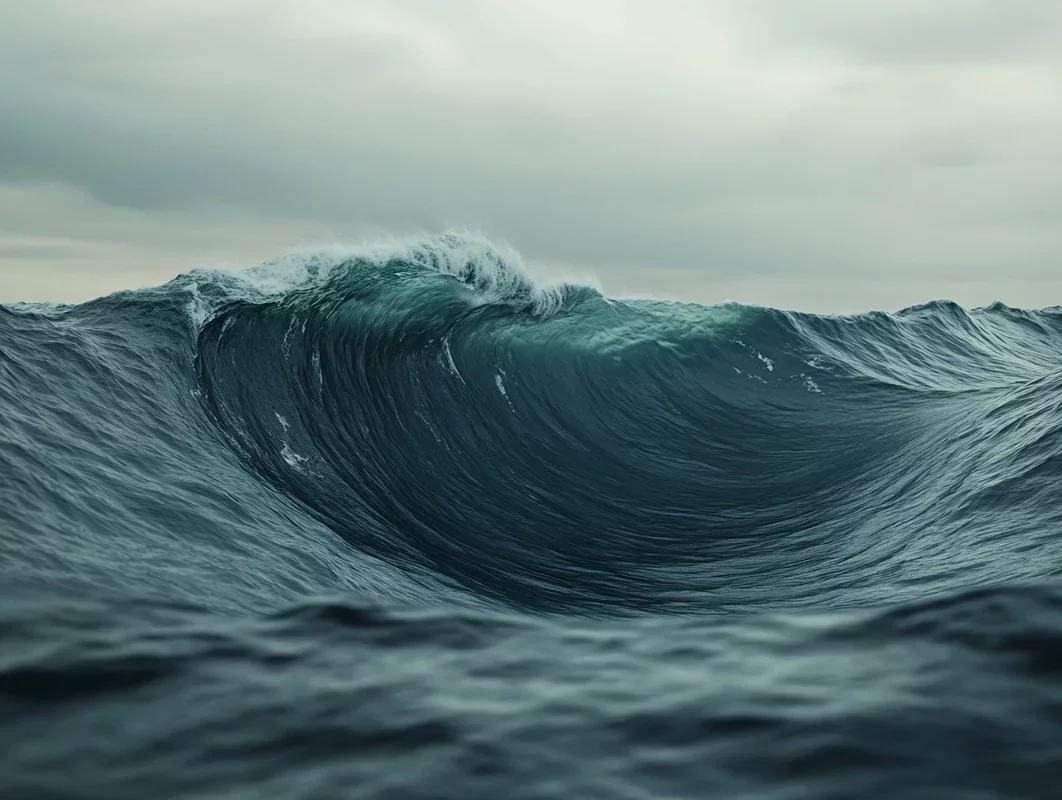
Rogue waves, also known as freak waves, are massive, spontaneous swells that can be hazardous to vessels. Unlike tsunamis, they arise from the ocean's natural dynamics, where energy is concentrated into a single wave. These waves can pose significant risks to maritime operations.
Conversely, rogue holes manifest as sudden, localized dips in the ocean's surface, flanked by larger wave crests. The 2012 study that validated their existence demonstrated that both rogue holes and waves stem from the same physical processes.
From Historical Accounts to Modern Data
Historical accounts of massive waves date back to Christopher Columbus, who described a wave during his voyages that towered above his ships. The first scientifically measured rogue wave, known as the Draupner wave, was recorded in 1995 and measured 25.6 meters in height. This measurement fundamentally changed the field of oceanography, proving that rogue waves are indeed real.
Subsequent research, including the European Space Agency's MaxWave project, confirmed the prevalence of rogue waves globally. However, rogue holes remained elusive until recent studies demonstrated their existence in controlled environments and suggested they occur in natural settings as well.
Implications for Maritime Safety
Understanding rogue holes is crucial for enhancing maritime safety. A vessel caught in a rogue hole could experience severe structural stress, especially if followed by a rogue wave. As offshore infrastructure expands, comprehending these rare events can prevent financial losses and, more importantly, save lives.
This research opens avenues for interdisciplinary applications, as the mathematical models used to describe rogue holes can also apply to fields such as optics and finance. The exploration of rogue holes not only confirms a long-held maritime myth but also enhances our understanding of the ocean's unpredictable nature.
As we continue to unravel the mysteries of the ocean, the implications of these findings could reshape maritime safety protocols and inspire innovations across various scientific disciplines.