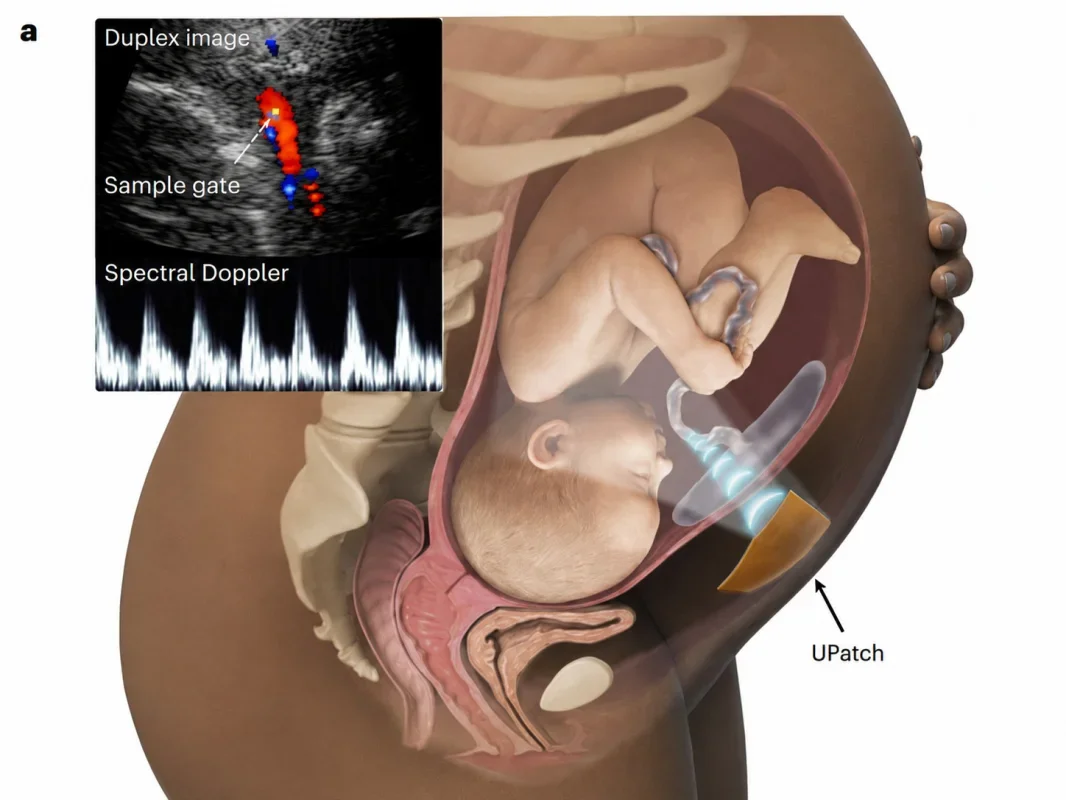
A groundbreaking development in prenatal care, the UPatch, is a flexible ultrasound patch designed to monitor fetal blood flow continuously. This innovative device, which adheres to a pregnant abdomen, has the potential to transform how high-risk pregnancies are managed by eliminating the need for constant sonographer presence.
Although still in the experimental phase, initial tests have demonstrated that the UPatch can produce measurements comparable to traditional clinical ultrasound machines. It effectively identifies blood-flow patterns associated with various conditions, including preeclampsia and gestational diabetes, enabling ongoing monitoring without requiring frequent doctor visits.
Advancing Prenatal Monitoring
Current prenatal care methods offer significant insights into fetal health, yet they often provide only brief glimpses during scheduled appointments. As fetal conditions can change rapidly, it is crucial to have a system that allows for continuous observation. Traditional monitoring tools, such as cardiotocography, primarily track heart rate, which can sometimes lead to misinterpretations, especially in complex pregnancies.
In contrast, the UPatch employs a sophisticated array of ultrasound components to monitor blood flow and anatomical images simultaneously. It is designed to conform to the body, allowing for prolonged use without discomfort.
Clinical Testing and Results
Led by Professor Sheng Xu from Stanford University, a team tested the UPatch on 62 pregnancies, comparing its performance to that of standard handheld ultrasound systems. The results were promising; the UPatch's measurements aligned closely with clinical devices for critical indicators like fetal heart rate and Doppler blood-flow indices.
In a subset of 52 pregnancies, the UPatch successfully tracked vital signs over time, distinguishing between healthy and high-risk conditions. Notably, it identified a case of preeclampsia by detecting abnormal umbilical artery blood flow, prompting timely medical intervention.
Future Prospects
While the UPatch is still tethered to external electronics for power and data transmission, its potential for widespread use in clinical settings is significant. Future iterations may incorporate wireless technology and advanced algorithms for real-time monitoring, enhancing its usability in everyday scenarios.
The implications of this technology are profound. With pregnancy-related complications affecting a substantial percentage of births, a device like the UPatch could provide critical, continuous monitoring, ultimately enhancing maternal and fetal health outcomes.
As research progresses, the UPatch could evolve from a promising prototype into a revolutionary tool in prenatal care, paving the way for safer pregnancies worldwide.