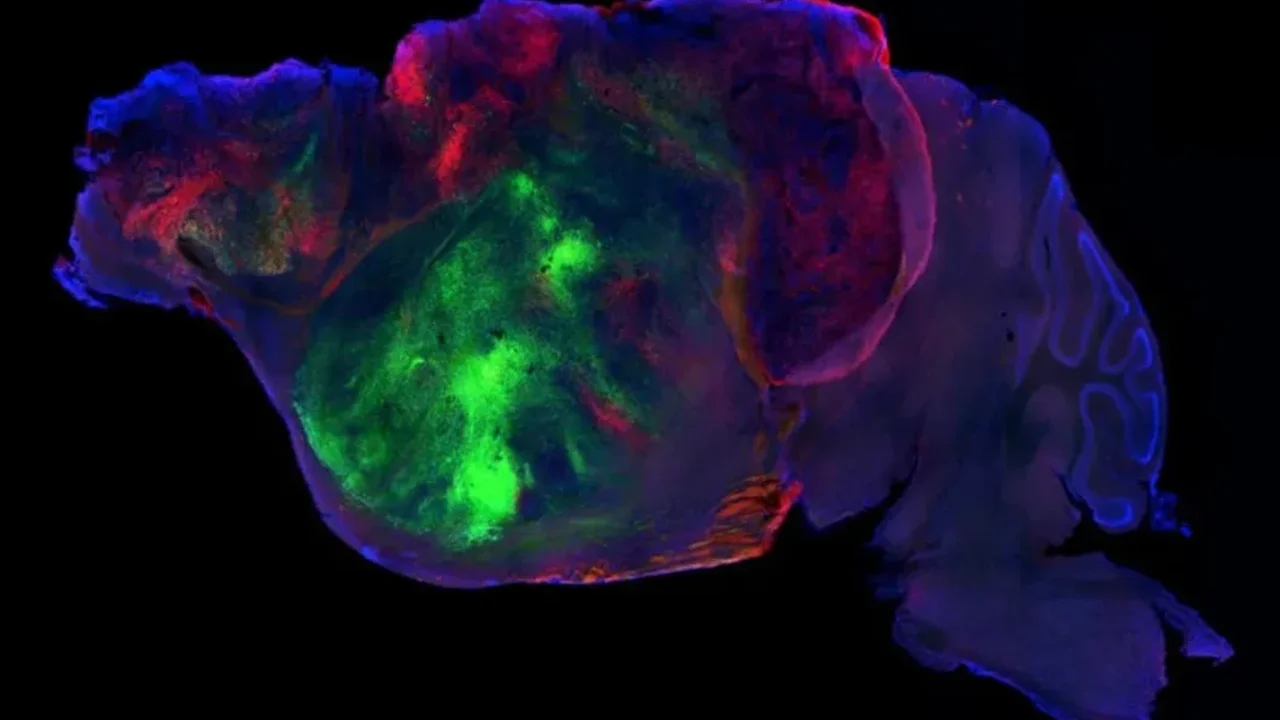
A Stanford University-led study offers a fresh perspective on how the human brain takes shape: its earliest development may follow two distinct biological programs that later unite into one highly integrated organ.
Two developmental paths
Researchers found that the forebrain and midbrain emerge from one lineage of embryonic neural cells, while the hindbrain develops from another. The hindbrain coordinates essential automatic processes and many motor functions, whereas the forebrain and midbrain contribute to sensory processing, cognition and movement.
In mouse embryos, the team identified two separate progenitor populations at a very early stage. Cells associated with the gene Otx2 developed into forebrain and midbrain structures, while cells marked by Gbx2 remained on a path toward the hindbrain.
Experiments using human pluripotent stem cells supported the same idea. Once cells had entered either developmental route, they showed a strong tendency to retain that identity--even when exposed to signals designed for the other region. Their chromatin patterns, which influence how DNA is accessed, also appeared programmed for these different futures.
An evolutionary blueprint
Similar front-and-back neural programs were observed across species including macaques, chickens, zebrafish and acorn worms. This broad pattern suggests that the split may date back hundreds of millions of years, long before modern vertebrates emerged.
The researchers propose that evolution may have brought two formerly separate neural systems into close physical alignment, eventually creating the connected brain architecture seen in humans and other vertebrates today.
A more precise route for stem-cell science
The findings also helped the team generate specialized hindbrain motor neurons from human stem cells. Rather than attempting to redirect cells already committed to anterior brain regions, scientists produced posterior progenitors directly and guided them toward the desired neural identity.
Published in Nature Neuroscience, the work provides a more detailed developmental map for neuroscience research. By revealing how early cellular decisions shape the brain, this approach could refine future models of neural function and support increasingly precise regenerative biology.
This new framework may help science design more accurate brain-cell models, opening a path toward a deeper understanding of human development and next-generation biomedical innovation.