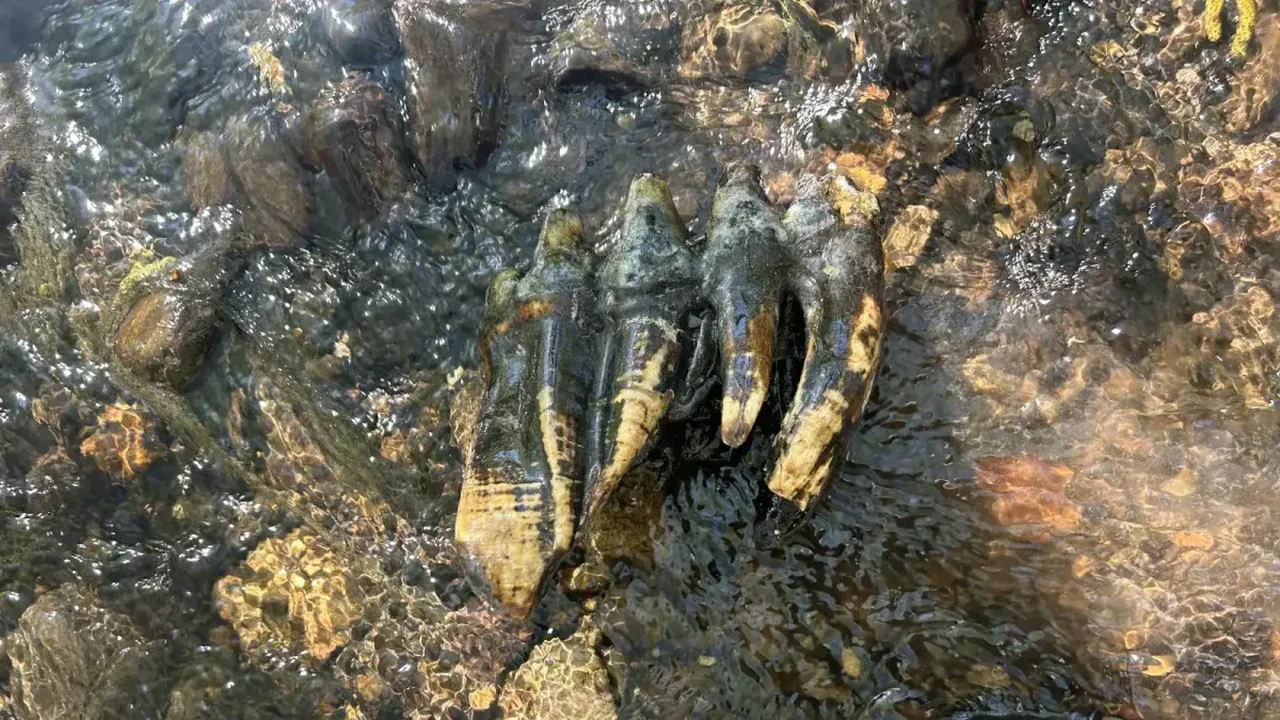
A field survey in California's San Mateo County has led to an unexpected Ice Age discovery: an exceptionally preserved mastodon molar estimated to be at least 10,000 years old.
Geomorphologist Brigid Lynch encountered the fossil while assessing creek habitat for the California red-legged frog. Partly embedded in the streambed, the tooth measured about 23 centimeters and retained both its crown and roots--an unusual level of preservation for a find of this age.
A Window Into California's Ice Age
Specialists identified the specimen as belonging to Mammut pacificus, also known as the Pacific mastodon. This distinct species was formally described in 2019 after researchers compared mastodon fossils across western North America.
Pacific mastodons differed from the more widespread American mastodon through features including narrower molars, sturdier leg bones and a different sacral vertebrae structure. Current research indicates that known Pleistocene mastodon remains from California belong to this regional species.
Unlike mammoths, which were largely adapted to grazing, mastodons had cone-shaped teeth designed for processing leaves, twigs and other woody plants. During the Pleistocene, Pacific mastodons inhabited western North American landscapes alongside Columbian mammoths, giant ground sloths and ancient camels.
Research and Public Learning Ahead
The tooth is now housed at Stanford University's Doerr School of Sustainability, where researchers aim to establish a more precise age. Plans also include producing a 3D replica to support public education and make the discovery more accessible for future learning.
Its remarkable condition may help scientists better understand the animal's biology, the region's past ecosystems and the preservation processes that bring fossils back to the surface through changing creek and river environments.
This discovery shows how modern environmental fieldwork can uncover deep geological history, opening new opportunities to connect biodiversity research, digital preservation and public science education.