The rapid advancement of artificial intelligence has raised questions about its sustainability. To address these concerns, researchers at a prestigious School of Engineering have developed a groundbreaking proof-of-concept AI system that promises to drastically reduce energy consumption--by as much as 100 times--while simultaneously enhancing performance.
A Hybrid Approach: Neuro-Symbolic AI
This innovative research, led by Matthias Scheutz, Karol Family Applied Technology Professor, focuses on neuro-symbolic AI. This approach integrates traditional neural networks with symbolic reasoning, emulating the human problem-solving process by categorizing and breaking down tasks into manageable steps.
The findings will be showcased at the upcoming International Conference of Robotics and Automation in Vienna this May, with details to be published in the conference proceedings.
Empowering Robots with Vision and Action
Unlike conventional large language models (LLMs) such as ChatGPT, this research emphasizes AI applications in robotics, specifically through visual-language-action (VLA) models. These systems enhance LLM capabilities by incorporating visual input and physical actions.
VLA models process visual data from cameras alongside language instructions, translating this information into tangible actions. For instance, they can direct a robot's movements to complete various tasks.
Challenges of Traditional AI
Traditional VLA systems often depend on extensive data and trial-and-error methods. When tasked with building a block tower, a robot must first interpret the scene, identify each block, and determine the correct placement. This approach can lead to errors, such as misidentifying a block due to shadows, resulting in structural failures.
Such inaccuracies are reminiscent of challenges faced by LLMs, where chatbots might generate misleading outputs or fabricate information.
Improving Precision with Symbolic Reasoning
By employing symbolic reasoning, this new system departs from mere data pattern recognition. Instead, it utilizes rules and abstract concepts like shape and balance, enabling more effective planning and reducing unnecessary trial-and-error.
"While VLA models rely on statistical outcomes from extensive training datasets, this neuro-symbolic approach applies rules that minimize trial and error, leading to quicker solutions," remarked Scheutz. "This not only accelerates task completion but also significantly shortens training time."
Exceptional Results in Testing
In tests involving the Tower of Hanoi puzzle, a classic problem requiring strategic planning, the neuro-symbolic VLA achieved a remarkable 95% success rate, compared to just 34% for traditional systems. Even with a more complex version of the puzzle, the hybrid system succeeded 78% of the time, while standard models failed entirely. Training time was also drastically reduced, with the new system mastering the task in just 34 minutes, compared to over a day and a half for conventional models.
Significant Energy Savings
Energy consumption saw a dramatic decline as well. Training the neuro-symbolic model required only 1% of the energy that a standard VLA system uses, and during operation, it consumed just 5% of the energy needed by traditional approaches.
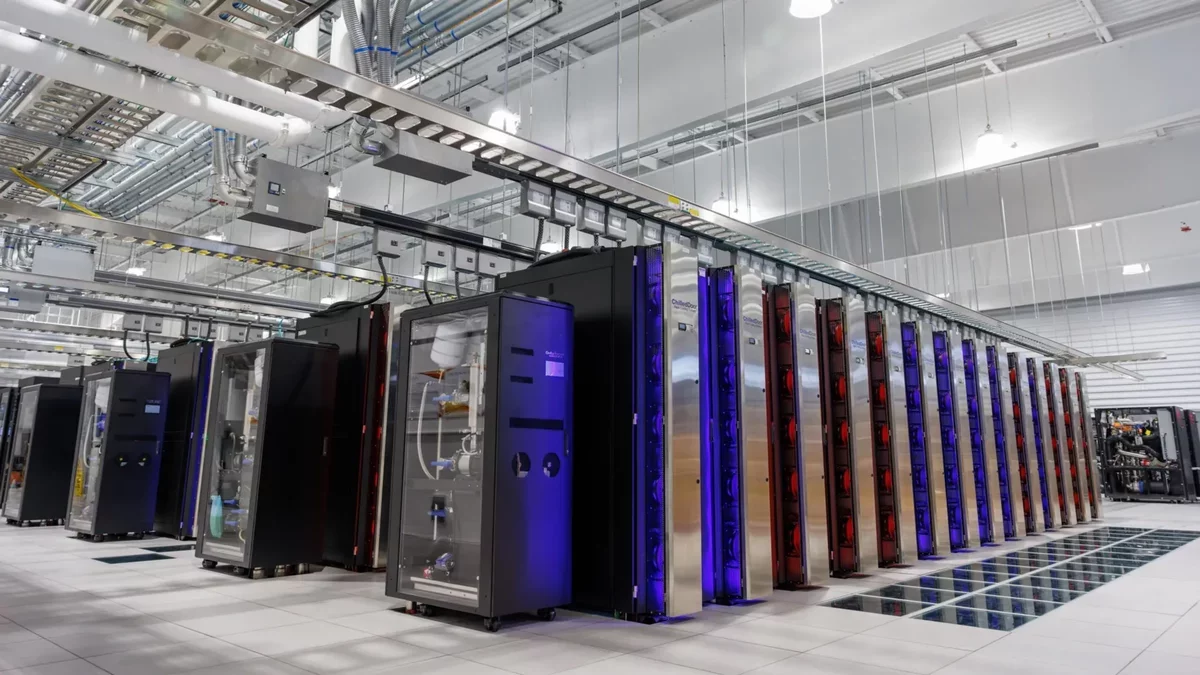
As AI adoption surges across various sectors, the demand for computing power is escalating, prompting the construction of large data centers that can consume electricity equivalent to entire small cities. This trend emphasizes the need for sustainable AI solutions.
A Vision for Sustainable AI
Current AI strategies based on LLMs and VLAs may not be viable long-term due to their high energy demands and potential for inaccuracies. In contrast, neuro-symbolic AI presents a promising alternative, merging learning with structured reasoning to pave the way for more efficient and reliable AI systems in the future.