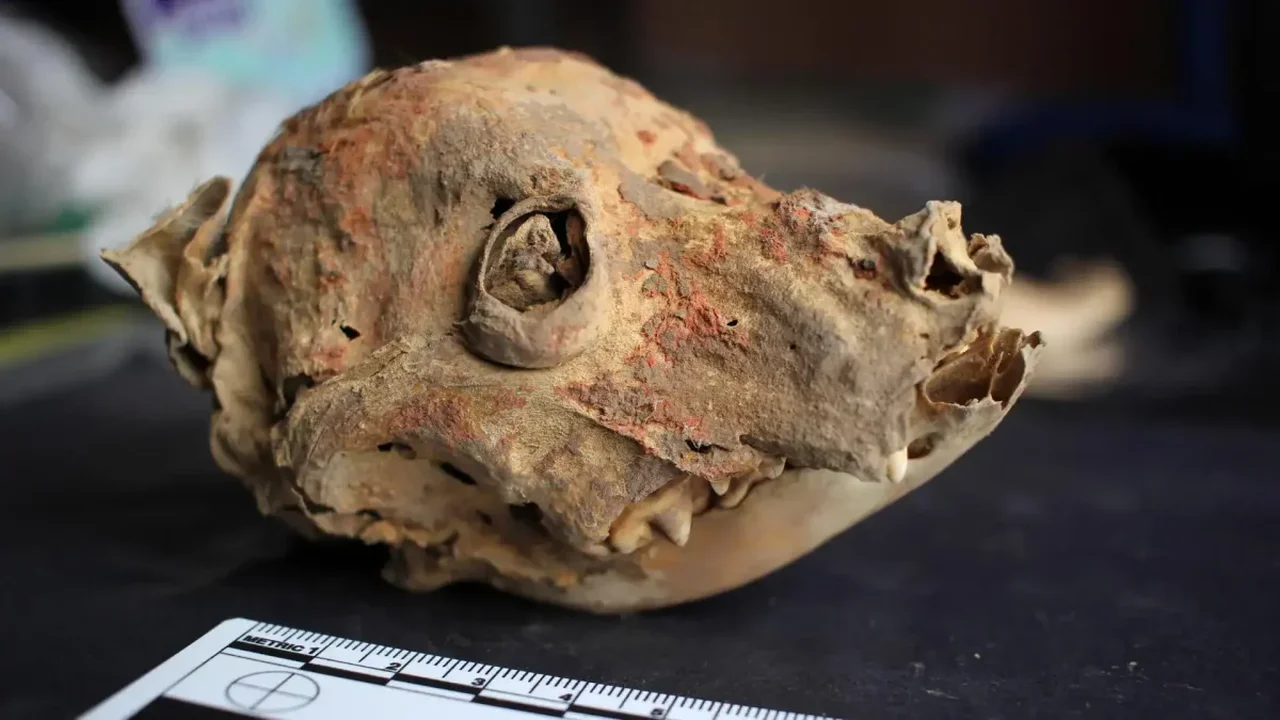
A remarkably preserved dog mummy found at Castillo de Huarmey on Peru's coast appeared so recent that archaeologists initially considered whether it dated to looting at the site in the 20th century. Radiocarbon analysis instead placed the animal's life between 688 and 870 CE, during the Wari Empire.
The dry coastal climate helped preserve the dog's skin and nearly complete skeleton. Sparse hairs on its skin, together with a pattern of missing teeth associated with hairless breeds, suggest it was an early Peruvian hairless dog. The find provides the first physical evidence of the breed at a Wari archaeological site.
Dogs with different lives
Researchers also recovered 341 dog bones, representing at least 19 other animals. Some dogs were buried alongside people, including an elite craftsperson and a man who may have been placed in a tomb as a guardian. These burials may reflect spiritual beliefs, though their exact meaning remains uncertain.
Isotope analysis of eight dogs offered clues to their diets. Many had consumed maize or animals that ate it. The suspected hairless dogs had dietary signatures in puppyhood similar to those of human children, before their diets became more varied. This could suggest close human care, but researchers note that the evidence cannot distinguish deliberate feeding from access to leftovers.
The dogs' remains point to varied relationships with people: some may have been cared for, worked alongside herds, or scavenged near settlements. The findings are reported in the Journal of Anthropological Archaeology. As archaeological and scientific methods advance, such discoveries can deepen understanding of how human-animal relationships evolved across ancient societies.