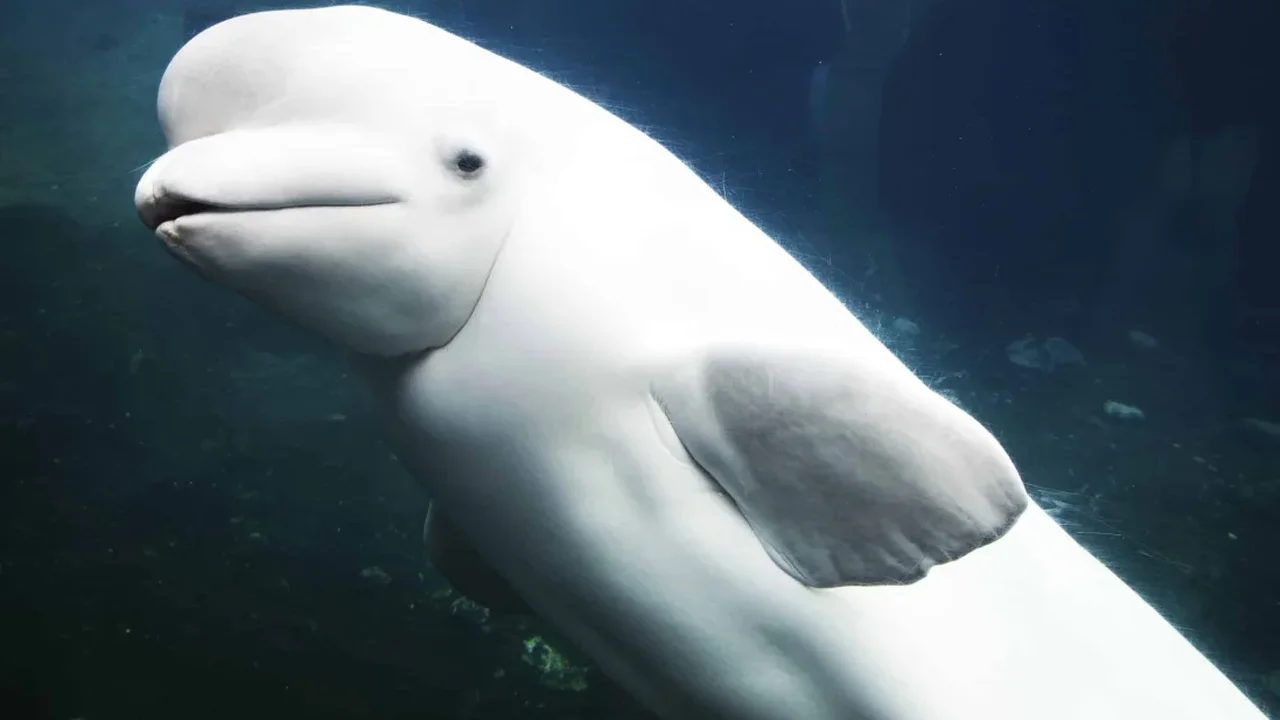
In the Arctic winter of 1984-85, an unusual rescue mission unfolded in the Senyavin Strait near the Chukchi Peninsula. Thousands of beluga whales had become trapped by fast-forming ice, leaving only a handful of breathing holes and little chance of reaching open water on their own.
Local hunters first spotted the stranded herd and alerted authorities. Scientific accounts later estimated that between 2,500 and 3,000 whales were caught in the frozen passage, with around 1,000 not surviving the ordeal. To support the animals while a solution was planned, helicopters dropped fish into the area and specialists monitored the ice.
The key to the operation was the Soviet icebreaker Moskva, a powerful vessel built in Finland and known for its strength in Arctic navigation. Sent from the Soviet Far East, it began carving a channel through the dense pack ice in February 1985. Progress was slow, but the ship gradually opened a route that the whales could follow.
One of the most memorable details from the episode is the claim that the crew played music over the ship's loudspeakers to encourage the belugas to move toward the corridor. Soviet-era reports suggested that the whales responded to the sound, though the exact role of music remains uncertain. What is clear is that repeated advances by the icebreaker helped the herd adapt to the path.
By the end of February, roughly 2,000 belugas had reached open water through the newly opened route. The story has endured because it combines engineering, local knowledge, and marine biology in a single Arctic rescue. It also highlights how human technology can support wildlife in extreme environments, offering a model that may inspire future conservation efforts in changing polar seas.