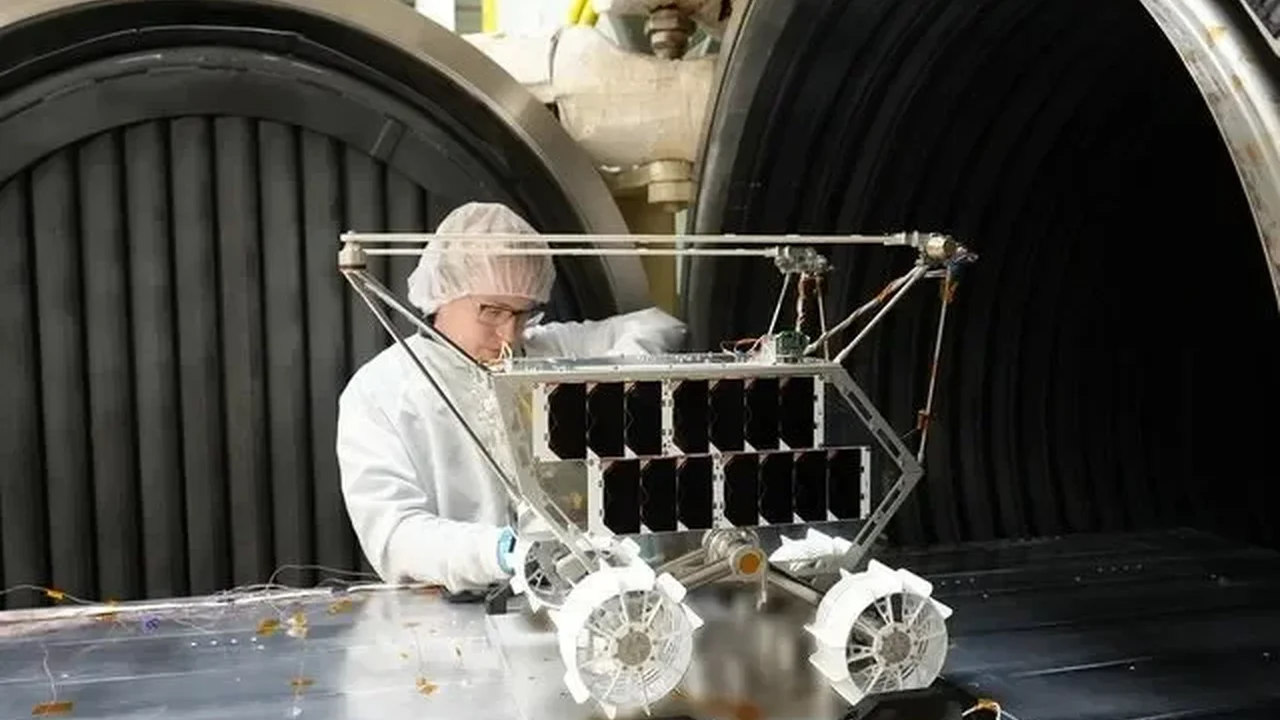
Nvidia's compact Jetson platform is preparing for an unusual milestone: a place on the Moon. Space robotics startup Lunar Outpost says its next lunar rover will use Jetson chips to manage its LiDAR system, potentially making it the first GPU to operate on the lunar surface.
The company is testing Jetson against its own flight computing hardware to evaluate how well GPU-powered systems perform in extreme space conditions. According to Lunar Outpost CEO Justin Cyrus, the goal is to combine proven autonomy with newer forms of physical AI that can react faster to complex environments.
The mission fits into a wider lunar push led by NASA, which is supporting private companies as they develop vehicles and sensors for exploring the Moon's terrain and resources. Nvidia has also announced a separate collaboration with Firefly Aerospace to use Jetson on a lunar-orbiting satellite that will process imagery and help map activity around the Moon.
Lunar Outpost's rover will travel aboard a lander from Intuitive Machines and is designed to enter craters and other hard-to-reach areas. A follow-up mission will target Reiner Gamma, a scientifically intriguing magnetic anomaly on the lunar surface. Both missions are expected to launch on a Falcon 9 rocket before the end of the year.
Jetson is smaller than Nvidia's flagship AI systems, but its low power use and local processing make it valuable for robotics that must make quick decisions without relying on constant remote control. That capability becomes especially important in space, where radiation, temperature swings, and long lunar nights create demanding operating conditions.
For Lunar Outpost, the broader vision is not just exploration, but building the foundations for a lasting human presence through autonomous machines. If these systems perform as planned, they could shape the next era of lunar infrastructure and robotic work beyond Earth.