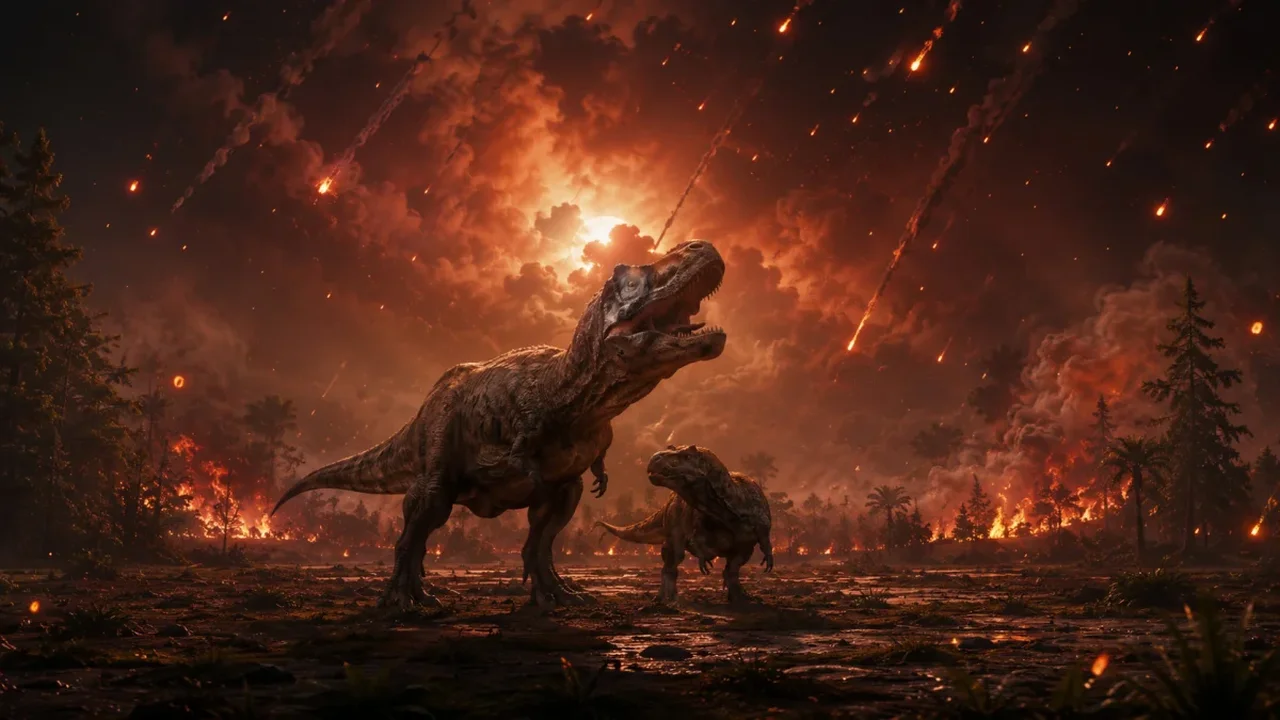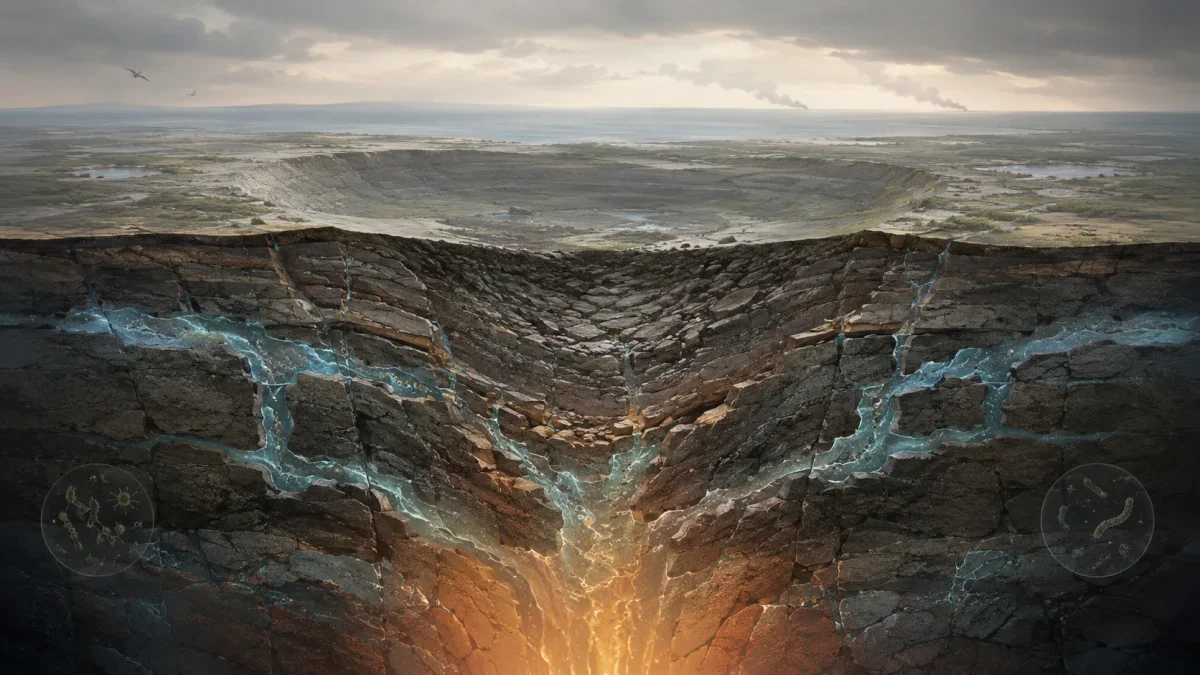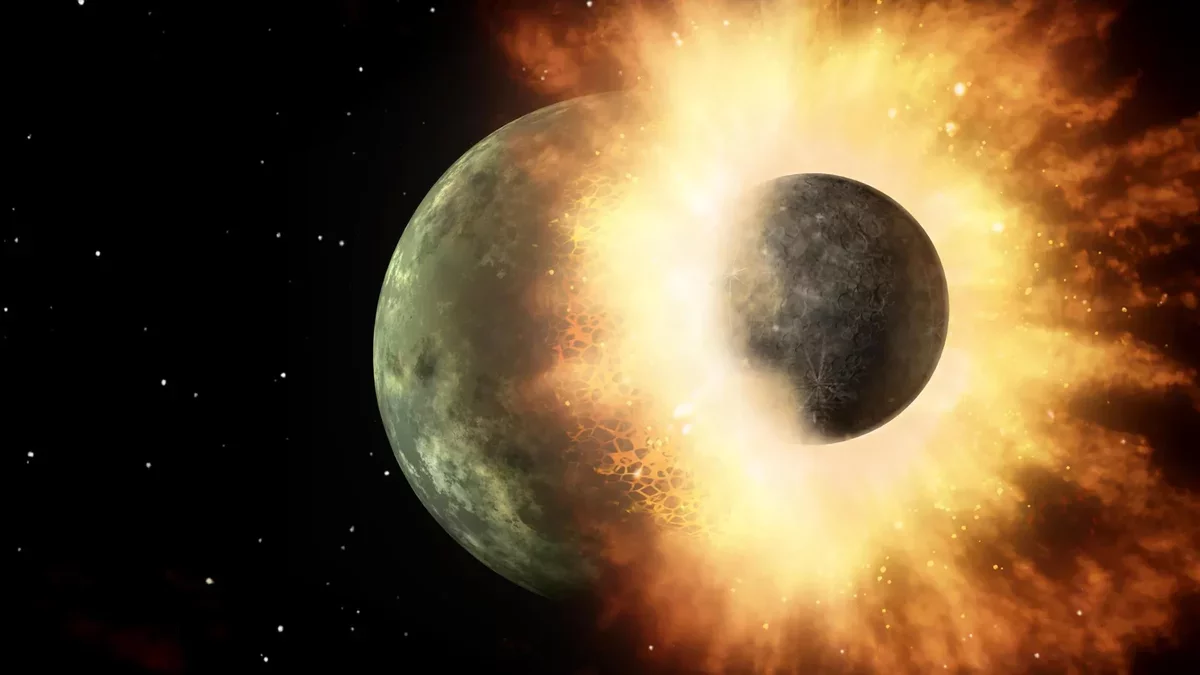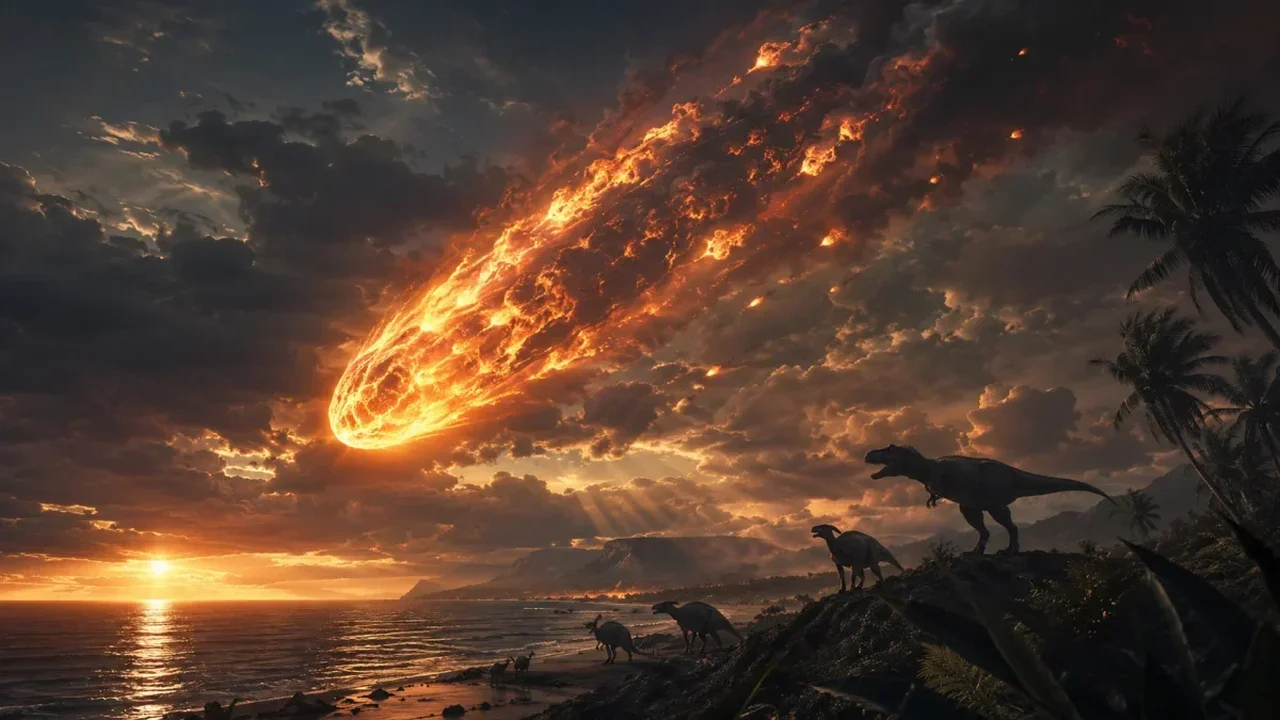
Scientists have taken a fresh step toward identifying the object that struck Earth 66 million years ago and helped end the age of dinosaurs. By studying nickel preserved in the thin clay layer left behind after the impact, researchers now say the Chicxulub asteroid was most likely a primitive CO chondrite, or possibly a closely related CT-type body.
The finding sharpens the picture of a projectile that vaporized on contact and left only microscopic traces across the planet. To build the case, the team analyzed boundary clay from sites in Denmark, Spain, and Italy, then compared its nickel isotope pattern with a range of carbonaceous meteorites. The chemical signature matched CO-like material more closely than the other candidates.
A More Precise Asteroid Profile
Nickel isotopes act like a cosmic fingerprint. Because asteroids formed in different parts of the early solar system, they inherited slightly different isotope ratios. Those differences can survive even when the original rock is gone, allowing scientists to compare ancient debris with known meteorites.
The study suggests the impactor was relatively dry and contained less sulfur, carbon, and water than many earlier models assumed. That does not reduce the scale of the event, but it does refine how researchers think about the chemistry of the impact and the atmosphere that followed.
Earlier work using ruthenium isotopes had already shown that the Chicxulub object came from beyond Jupiter and belonged to the carbonaceous family. The new nickel analysis narrows that broad classification further, offering a clearer view of the asteroid's origin and composition.
What It Means for Earth's History
Researchers also note that the most lasting effect may have come not from sulfur alone, but from fine silicate dust thrown high into the atmosphere. That dust could have blocked sunlight for years, cooled the planet, and disrupted photosynthesis on a global scale.
One mystery remains: the exact path that carried this rare object into Earth's orbit. Even so, the study adds a powerful new layer to our understanding of one of the most consequential moments in planetary history. In the future, such isotope-based detective work could help scientists better trace the origins of ancient impacts across the solar system.