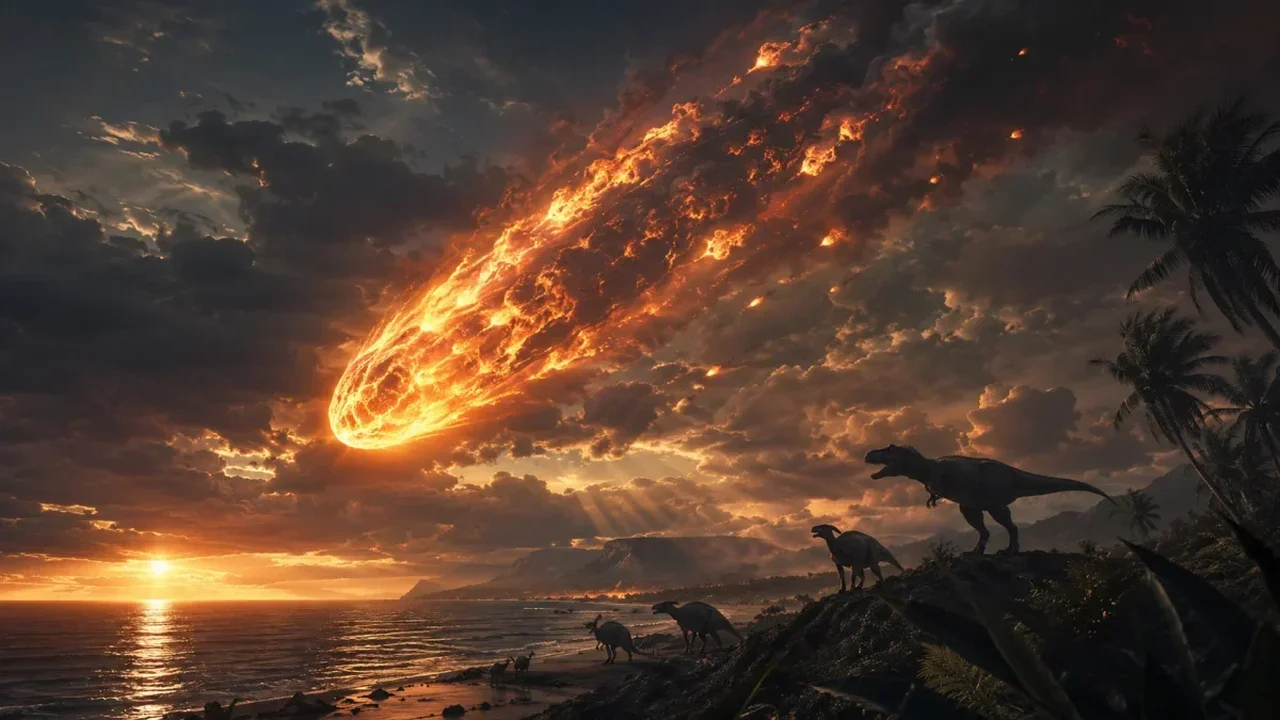
The asteroid impact that occurred 66 million years ago, which is widely recognized for bringing an end to the age of dinosaurs, may have also created conditions favorable for life to thrive underground for an astonishing eight million years, according to a recent study.
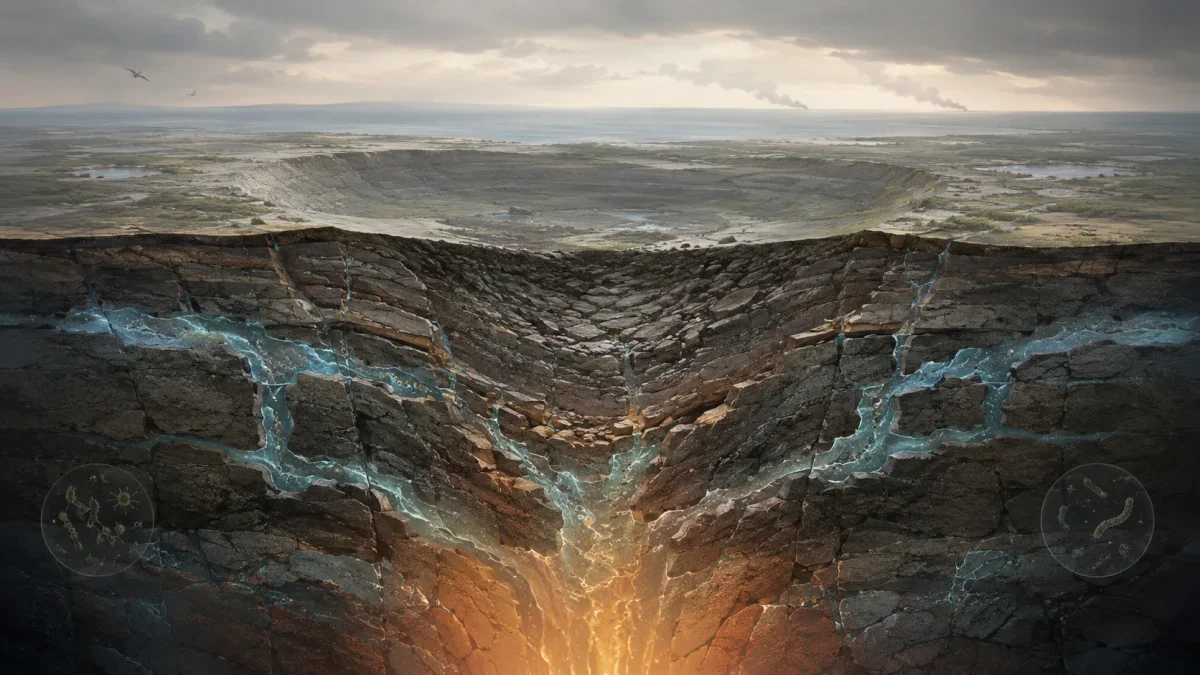
Researchers propose that hot water continued to circulate through the rocks beneath the Chicxulub crater far longer than previously thought, extending the active hydrothermal system's lifespan from an estimated two million years to eight million years. This groundbreaking finding suggests that the crater could represent the longest-lasting hydrothermal system formed by an asteroid impact.
"Wherever on Earth you find flowing warm water, you find life. Previous studies indicated that the hydrothermal system at Chicxulub lasted for about two million years," stated Annemarie Pickersgill, the lead author and a research fellow at the University of Glasgow's Centre for the Isotope Sciences.
If validated, these findings would significantly alter our understanding of how long such environments can persist following a catastrophic event.
Uncovering Geological Insights from the Chicxulub Crater
Modern Earth showcases similar habitats around volcanic regions and deep-sea vents, where life flourishes without sunlight. The challenge has been to ascertain the longevity of such environments in ancient craters due to limited direct evidence.
The research team analyzed rocks obtained during a drilling expedition aimed at the crater's peak ring, focusing on minerals that formed from hot fluids circulating through fractures created by the impact. By examining argon isotopes within these minerals, scientists were able to establish a timeline of hydrothermal activity.
The results revealed that some minerals formed shortly after the asteroid's impact, while others dated back to approximately 58 million years ago, confirming an active hydrothermal system for around eight million years.
"Our findings indicate that hydrothermal activity persisted for at least eight million years, significantly longer than prior estimates, making it the longest-lived impact-generated hydrothermal system documented on Earth," the authors noted.
Understanding the Mechanisms Behind Sustained Hydrothermal Activity
The research also examined whether such a prolonged lifespan was geologically feasible. Advanced numerical simulations helped reconstruct heat and water movement through the impacted crust, revealing that the collision created optimal conditions for sustained hydrothermal activity.
The shattered rocks allowed for water circulation, while residual heat from the impact and geothermal heat from the Earth's interior maintained the system's activity over millions of years.
Implications for Earth and Beyond
This study presents a transformative perspective on asteroid impacts, suggesting that they could foster life rather than solely cause destruction. This is particularly relevant for understanding early Earth, where impacts were more frequent.
"The porous, fractured rocks formed by impacts can create microenvironments that protect microorganisms from extreme conditions, allowing life to flourish," Pickersgill added.
Moreover, these findings could significantly influence the search for extraterrestrial life. Mars, with its numerous impact craters, may also have hosted similar hydrothermal systems, making them prime candidates for future exploration.
As we advance in space exploration, the insights gained from this study could guide missions aimed at identifying impact craters that might have supported life.
The full study is published in the journal Communications Earth & Environment.