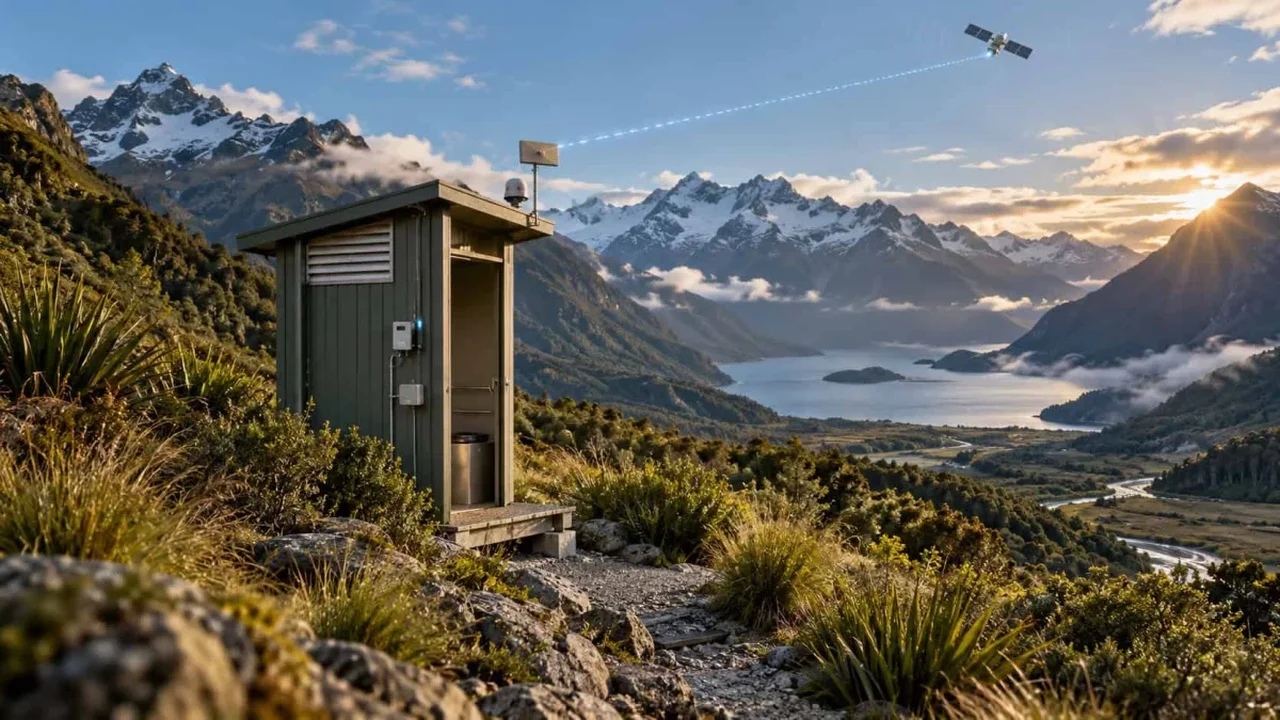
In New Zealand's remote parks, checking whether a public toilet needs servicing can take hours of travel. A new pilot is using satellite-connected sensors to help conservation staff monitor facilities from afar--and could eventually support wildlife protection too.
Remote facilities send updates
The Department of Conservation (DOC), working with telecommunications provider One NZ and SpaceX's Starlink network, has begun testing connected sensors at more than 20 isolated sites. More than 50 devices are being installed across locations including Mount Aspiring, Fiordland and Tongariro national parks.
The sensors monitor wastewater levels and facility use, giving staff information to plan maintenance when it is needed rather than relying only on routine inspections. DOC manages about 2,000 public conservation toilets, many in places where access is difficult.
DOC estimates that more targeted servicing on some busy trails could save more than NZ$1 million over six years and prevent around 30 tonnes of carbon dioxide emissions, partly by reducing unnecessary vehicle trips and helicopter flights.
From facilities to wildlife monitoring
The pilot is part of a broader effort to apply remote connectivity to conservation work. DOC is also trialling connected predator traps and wildlife cameras, which could report activity without requiring teams to visit each device as often.
Satellite links can reach areas beyond conventional mobile coverage, making them useful for sending small amounts of sensor data from isolated habitats. The pilot combines different connectivity methods, and its initial focus is on monitoring--not transmitting large video files.
By making remote facilities and conservation equipment easier to monitor, the project could help teams direct their time and resources where they are most useful. If expanded successfully, connected sensing may become an increasingly practical tool for caring for New Zealand's wilderness.