The Cryogenian Period, occurring between 720 and 635 million years ago, is a fascinating chapter in Earth's history. For a long time, scientists believed that during this era, the planet's climate system effectively came to a halt.
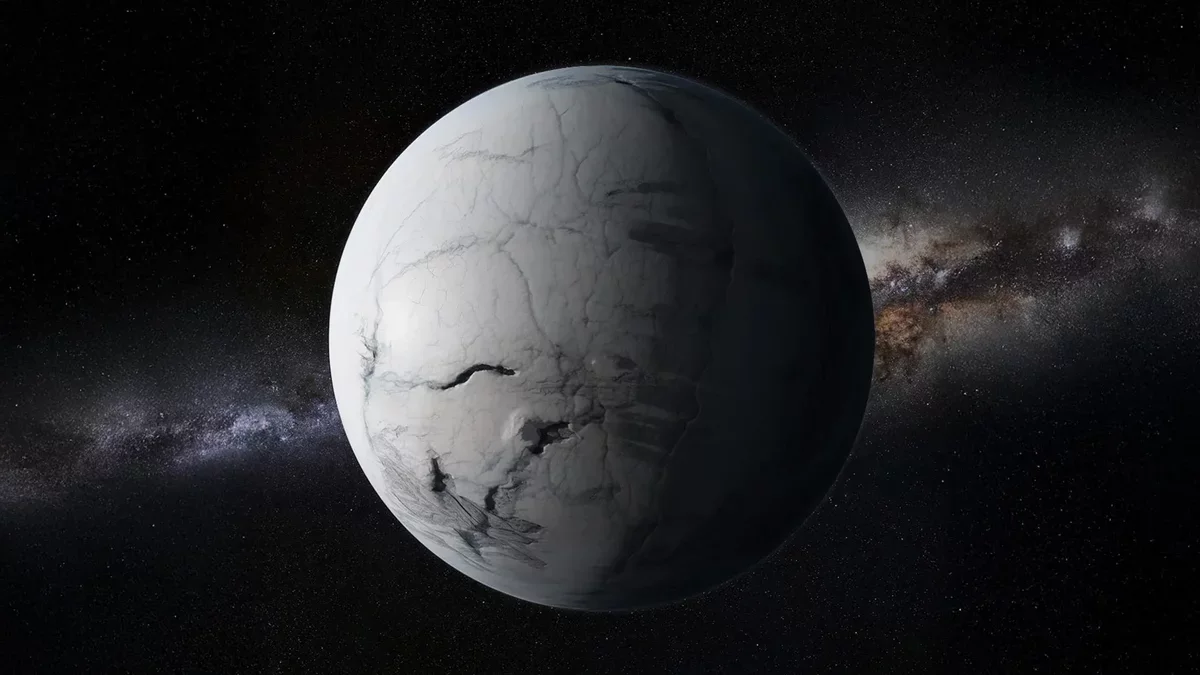
During this time, enormous ice sheets extended to the tropics, enveloping much of the planet in ice. From a cosmic perspective, Earth may have appeared as an immense snowball. Under these circumstances, experts thought that interactions between the atmosphere and oceans largely ceased, leading to a suppression of short-term climate changes for millions of years.
However, a groundbreaking study published in Earth and Planetary Science Letters contests this long-held belief. The research suggests that at least during one phase of Snowball Earth, climate fluctuations continued on yearly, decadal, and even century-long timescales, mirroring patterns observed in today's climate systems.
Scottish Varves Reveal 57 Million-Year-Old Climate Patterns
This revelation is based on exceptionally well-preserved layered rocks known as varves found on the Garvellach Islands off the west coast of Scotland. These sediments formed during the Sturtian glaciation, the most intense episode of Snowball Earth, which lasted approximately 57 million years.
Thomas Gernon, a Professor of Earth and Planetary Science at Southampton and co-author of the study, remarked: "These rocks preserve the complete range of climate rhythms we recognize today--annual seasons, solar cycles, and interannual oscillations--all occurring during Snowball Earth. This is astonishing. It indicates that the climate system has an inherent tendency to oscillate, even under extreme conditions, if given the slightest opportunity."
The research team meticulously examined 2,600 individual layers within the Port Askaig Formation. Each layer corresponds to a single year of sediment accumulation, providing a year-by-year archive of ancient climate conditions.
Lead author Dr. Chloe Griffin, a Research Fellow in Earth Science at the University of Southampton, stated: "These rocks are remarkable. They function like a natural data logger, documenting year-by-year climate changes during one of the coldest periods in Earth's history. Until now, it was unclear whether climate variability on these timescales could exist during Snowball Earth, as no one had discovered a record like this from within the glaciation itself."
Microscopic analyses suggest that these layers formed due to seasonal freeze and thaw cycles in tranquil, deep waters beneath the ice cover. When researchers applied statistical methods to the variations in layer thickness, they identified distinct repeating patterns.
"We found compelling evidence for recurring climate cycles operating every few years to decades," Dr. Griffin noted. "Some of these closely resemble modern climate patterns, such as El Niño-like oscillations and solar cycles."
A Brief Pulse of Climate Activity Amidst Ice
Despite these intriguing findings, the researchers do not believe that such variability characterized the entire Snowball Earth period.
"Our results imply that this type of climate variability was more of an exception than the norm," explained Professor Gernon. "The overarching state of Snowball Earth was extremely cold and stable. What we observe here is likely a short-lived disturbance, lasting thousands of years, against the backdrop of an otherwise deeply frozen planet."
To further explore how this phenomenon could occur, the team conducted climate simulations of a frozen Earth. The models indicated that if the oceans were entirely sealed beneath ice, most climate oscillations would be suppressed. However, if even a small portion of the ocean surface, around 15 percent, remained ice-free, interactions between the atmosphere and ocean could resume.
Dr. Minmin Fu, a Lecturer in Climate Science at the University of Southampton and leader of the modeling work, stated: "Our models demonstrated that vast open oceans are not necessary. Even limited areas of open water in the tropics can facilitate climate modes similar to those we observe today, producing the kinds of signals recorded in the rocks."
These findings support the notion that Snowball Earth was not perpetually frozen. Instead, it might have experienced intervals sometimes referred to as 'slushball' or more extensive 'waterbelt' states, during which pockets of open ocean emerged.
The Significance of Scotland's Geological Record
The Garvellach Islands site played a crucial role in reconstructing this ancient climate narrative.
Dr. Elias Rugen, a Research Fellow at Southampton who has studied the Garvellach Islands for the past five years, commented: "These deposits are among the best-preserved Snowball Earth rocks globally. Through them, we can decipher the climate history of a frozen planet, one year at a time."
Gaining insights into how Earth's climate behaved during Snowball Earth provides knowledge that extends far beyond this ancient epoch.
Professor Gernon concluded: "This research enhances our understanding of the resilience and sensitivity of the climate system. It illustrates that even under the most extreme conditions Earth has ever encountered, the system could be activated. This has significant implications for how planets respond to major disturbances, including our own in the future."
The study received support from the WoodNext Foundation, which sustains Professor Gernon's research group at the University of Southampton.