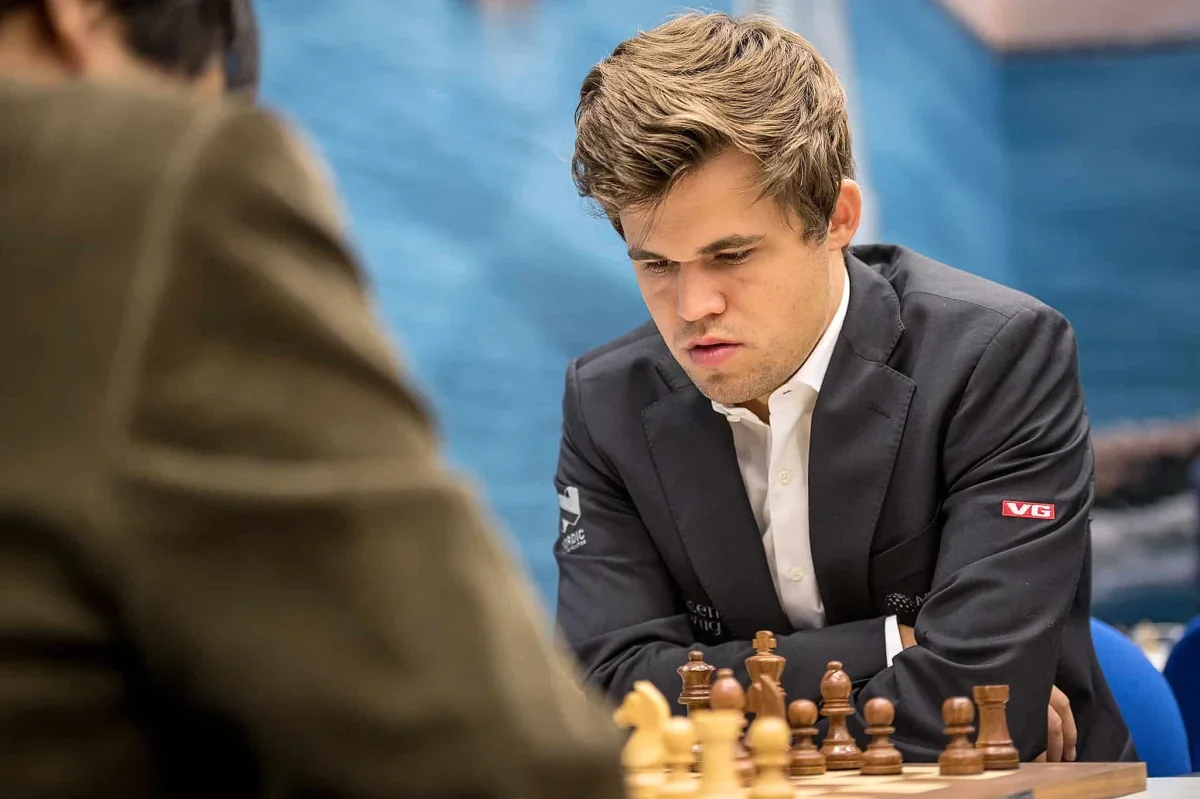
A recent study analyzing over 215,000 chess moves from approximately 3,600 professional games has uncovered intriguing insights into decision-making in chess. Contrary to the common belief that good decisions require time, elite chess players often perform better when they make faster moves. This finding challenges traditional notions about deliberation in strategic thinking.
The research, led by Professor Uwe Sunde, utilized advanced chess engines to evaluate the quality of moves made by top players. The study revealed that quicker decisions correlated with higher-quality moves across various time formats, including classical, rapid, and blitz chess. Interestingly, the quality of moves declined when players took longer, particularly in blitz games where time is severely limited.
Chess is often viewed as a game of deep thought and strategy. However, for skilled players, it heavily relies on pattern recognition. Many moves become apparent intuitively, as experienced players can quickly identify successful strategies based on their extensive background. Sunde emphasized that the intuition displayed by grandmasters is not mere guesswork; it is a refined skill developed through years of practice and exposure to numerous game scenarios.
While faster decisions often lead to better outcomes, the study also highlighted that slower deliberations do not inherently produce poor choices. Extended pauses typically indicate uncertainty or complexity in the position, prompting players to reassess their strategies. This phenomenon underscores the importance of recognizing when to trust one's gut feeling versus when to engage in deeper analysis.
Moreover, the research suggests that intuition is context-dependent. A chess expert may excel in recognizing patterns on the board but may struggle in unfamiliar situations, such as financial markets. This distinction is crucial, as it illustrates that expertise in one area does not automatically translate to others.
The implications of these findings extend beyond chess, offering valuable lessons for decision-making in everyday life. Individuals are encouraged to assess their experiences and familiarity with a situation before relying on intuition. If one feels confident in their understanding of the patterns involved, trusting their instincts could lead to more effective outcomes.
Ultimately, the study sheds light on the intricate balance between speed and accuracy in decision-making. As we continue to explore the dynamics of strategic thinking, the insights gained from chess may pave the way for advancements in various fields, enhancing our understanding of how we make choices in complex scenarios.
Reference: Uwe Sunde et al, Speed and quality of complex strategic decisions, Proceedings of the National Academy of Sciences (2026).