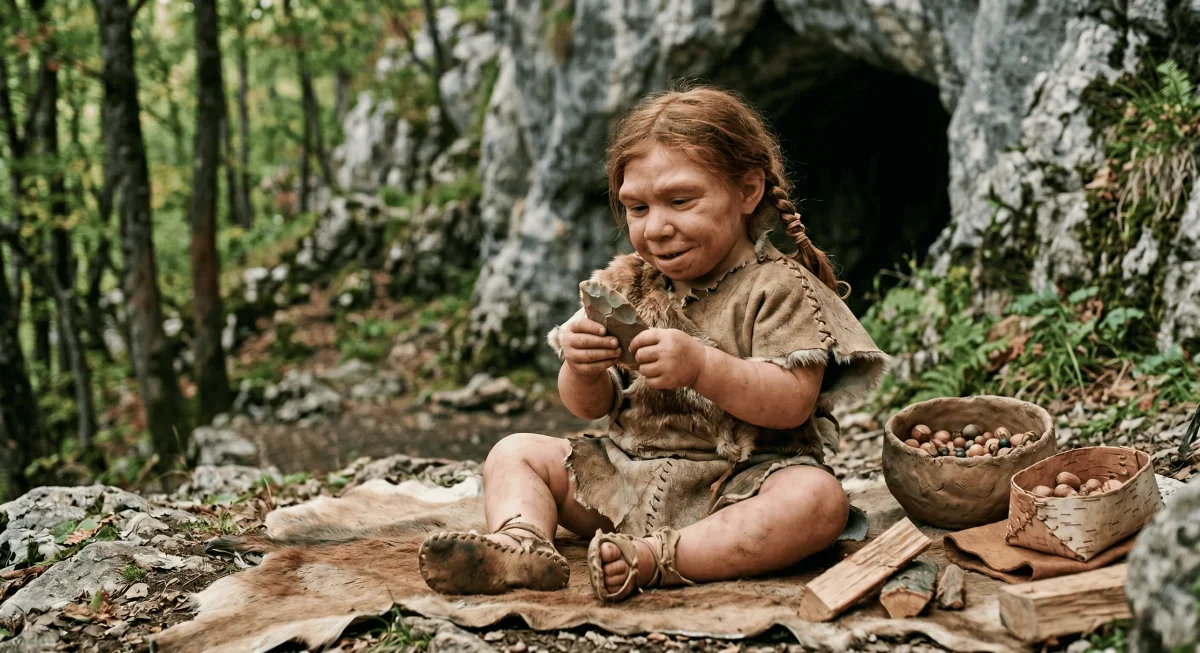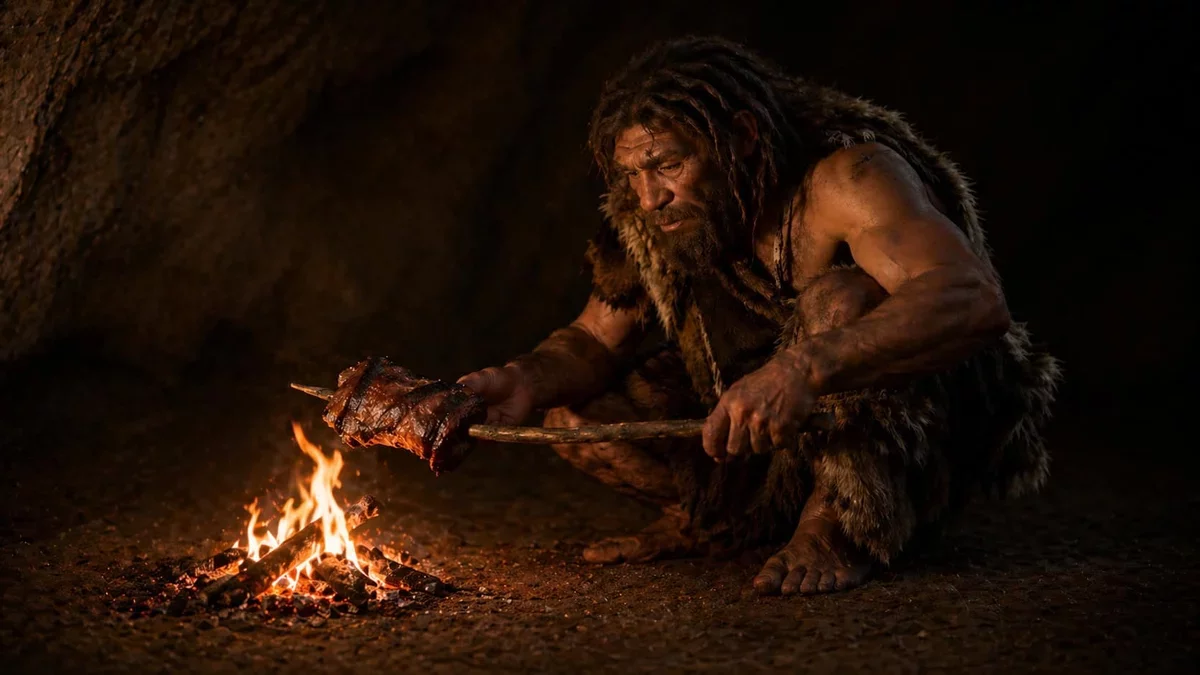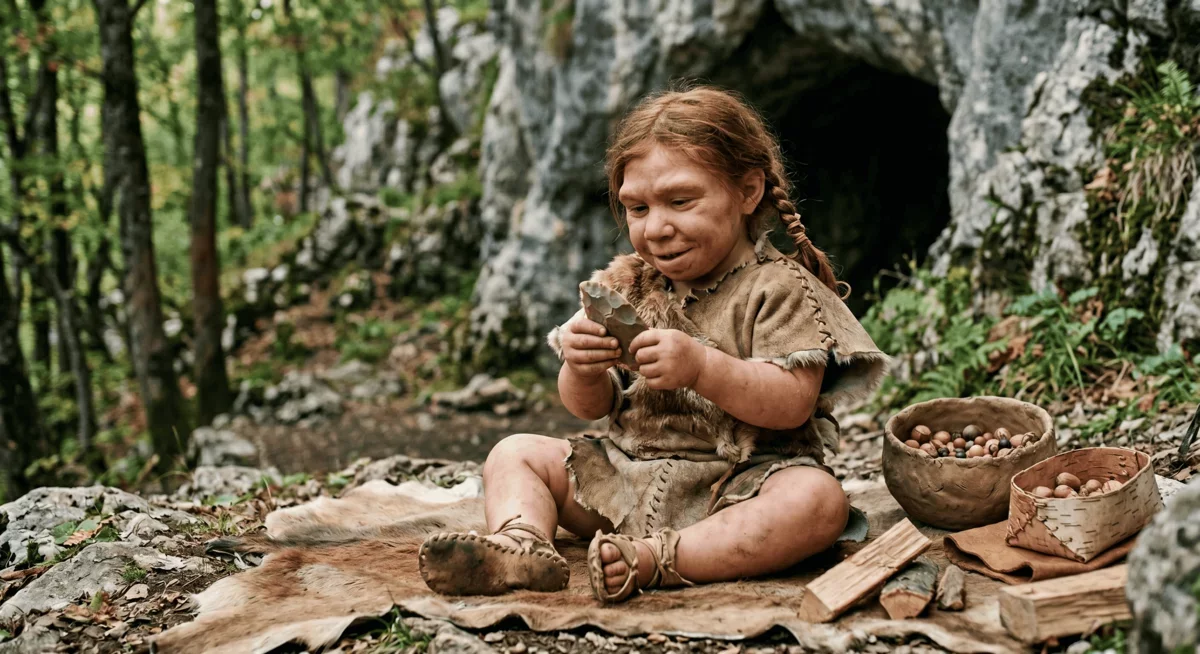
A recent study led by Ariane Burke, an anthropology professor at Université de Montréal and head of the Hominin Dispersals Research Group, has shed new light on the factors contributing to the extinction of Neanderthals. Collaborating with her doctoral students, Benjamin Albouy and Simon Paquin, Burke utilized models traditionally employed in studying plant and animal distributions to explore ancient human populations. This innovative approach merges archaeological findings with ethnographic data to gain a deeper understanding of early human lifestyles and movements.
The research focused on Europe during the last glacial cycle, spanning from 60,000 to 35,000 years ago, a time characterized by significant climate fluctuations. This era witnessed the emergence of Homo sapiens in the archaeological record and the eventual disappearance of Neanderthals.
Findings indicate that the commonly held theories attributing Neanderthal extinction solely to climate stress or direct competition are insufficient. Instead, the results reveal a complex interplay of climate, geography, population dynamics, and interspecies interactions, with conditions varying across regions.
Innovative Modeling of Ancient Habitats
Burke and her team adapted species distribution models used in ecology to ancient human populations. They employed archaeological sites as indicators of Neanderthal and Homo sapiens presence. The researchers constructed habitat suitability models for both species, integrating archaeological records with environmental data, including geographical features and climate variability metrics.
Subsequently, Burke compared the outcomes and refined the models to pinpoint "core" regions that could support stable populations, which were also interconnected with other productive areas.
"Given the absence of precise demographic data from 35,000 years ago, we leveraged ethnographic data from well-documented ancient hunter-gatherer groups to inform our models," Burke explained. "For instance, these data suggest that a local group of 25 to 50 individuals typically occupied an annual territory of about 2,500 km²."
Social Networks as a Survival Mechanism
As the analysis progressed, notable distinctions between Neanderthals and Homo sapiens emerged. Areas conducive to Homo sapiens exhibited greater interconnectivity than those inhabited by Neanderthals. Burke emphasized that this connectivity was vital, as it enabled populations to form networks that facilitated movement and resource sharing during environmental or demographic challenges.
"These networks serve as a safety net," Burke stated. "They foster the exchange of information regarding resources and animal migrations, the establishment of partnerships, and temporary access to other territories in times of crisis."
While Neanderthals were not entirely isolated, the models suggest their connections were weaker and less reliable, particularly in Central and Eastern Europe.
Impact of Climate Variability
The study also highlighted that climate variability--how rapidly and unpredictably conditions changed--had a more significant influence on populations than average temperature or rainfall. Burke noted, "Climate variability appears to have played a major role, indicating that humans have historically been sensitive to environmental fluctuations."
However, climate alone cannot account for Neanderthal extinction. Evidence shows that Neanderthals survived previous glacial periods, demonstrating their adaptability to harsh conditions. The study posits that their disappearance likely resulted from a combination of climate instability, population pressures, and social structures, with regional differences playing a crucial role.
Ultimately, Burke believes these findings underscore a vital lesson about human survival, both historically and in contemporary contexts. "Human migration has always been driven by the pursuit of favorable conditions and the desire for social connections," she remarked. "Survival hinges not solely on intelligence or technology, but on our capacity to foster and maintain connections with one another."