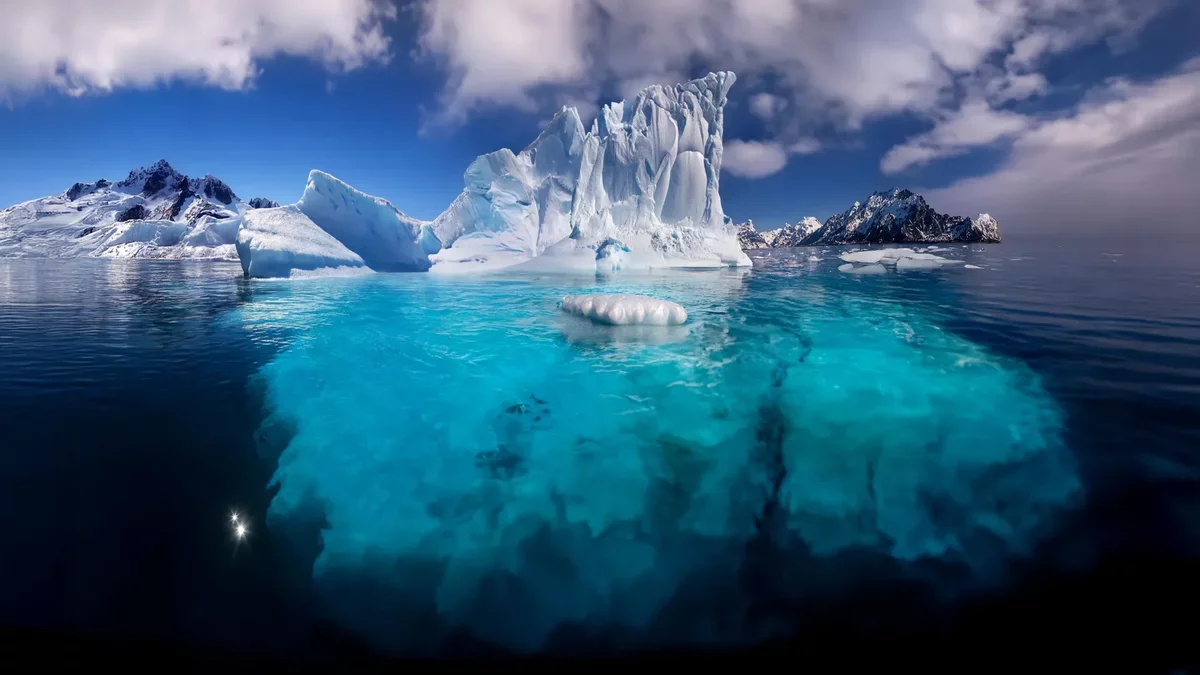
Recent research from Norway has unveiled a significant process contributing to the deterioration of ice shelves in Antarctica. These ice shelves act as crucial barriers, slowing the flow of vast glaciers into the ocean. However, scientists have discovered that long channels formed on the undersides of these ice shelves can trap warmer ocean water, exacerbating melting in specific regions.
This research has implications that extend beyond Antarctica. As these ice shelves weaken, their ability to restrain the glaciers behind them diminishes, potentially leading to accelerated sea level rise worldwide.
Researchers have noted that similar instability patterns have been observed in various parts of Antarctica. The Intergovernmental Panel on Climate Change (IPCC) has previously highlighted the weakening of polar ice shelves as a significant uncertainty in sea level predictions, presenting a notable climate risk.
Understanding Hidden Channels
The study focused on the Fimbulisen Ice Shelf located in East Antarctica. Findings suggest that the ice shelf's underside shape significantly influences seawater circulation beneath it. In areas where deep channels are present, ocean currents can create localized circulation patterns that retain warmer water against the ice, rather than allowing it to disperse quickly. This localized warmth notably increases melting rates in those specific areas.
Researchers found that melting rates within these channels can increase dramatically, sometimes by an order of magnitude. Essentially, the ice shelf's structure plays a critical role in determining where heat accumulates and the extent of damage it can inflict.
Lead author Tore Hattermann from the iC3 Polar Research Hub in Tromsø, Norway, stated, "The shape of the ice shelf underside is not just a passive feature; it actively traps ocean heat in areas where additional melting is most impactful."
The Fimbulisen Ice Shelf, situated in a colder section of East Antarctica, has traditionally been perceived as less vulnerable compared to other regions. Hattermann noted that even minor amounts of warmer water can significantly heighten melting within the channels, which could ultimately destabilize the entire ice shelf.
Research Methodology
The research team utilized a detailed mapping of the Fimbulisen Ice Shelf's underside alongside a high-resolution computer model of the ocean cavity beneath it. By comparing various scenarios, they were able to isolate the effects of the channels on ocean circulation and melting.
Incorporating long-term observations from the region, the researchers emphasized the importance of merging extensive measurements with advanced modeling to comprehend the intricate features concealed beneath Antarctic ice shelves. Hattermann, who has dedicated extensive time to research in Antarctica, highlighted the significance of this approach.
Implications of Accelerated Ice Melt
Intensified melting in these channels may trigger a feedback loop, leading to uneven thinning of the ice shelf and compromising its structural stability. If the ice shelves weaken sufficiently, they may no longer effectively impede the glaciers flowing into the ocean.
"Current climate models do not capture this effect," Hattermann cautioned, indicating that they might underestimate the sensitivity of the so-called 'cold' ice shelves along East Antarctica's coastline to minor warming changes. These alterations have already been observed and are expected to intensify in the future.
This research not only enhances our understanding of climate and ice sheet models but also holds significant implications for global coastal planning and adaptation strategies reliant on precise sea level rise projections. Furthermore, it may influence ocean circulation patterns and marine ecosystems as meltwater enters the Southern Ocean.
The study titled "Channelized topography amplifies melt-sensitivity of cold Antarctic ice shelves" was published in the journal Nature Communications.